
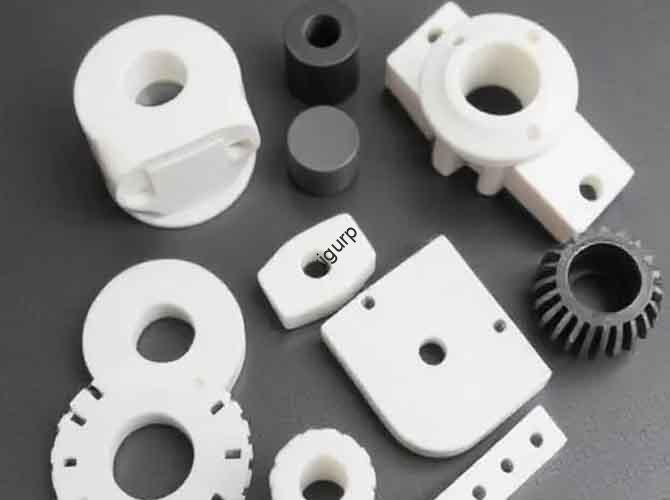
Plastic plates are widely used in industries like electronics, automotor, y aeroespacial, pero logrando alta calidad, consistent results with Placas de plástico de mecanizado CNC requires understanding material traits, optimizando procesos, y evitando errores comunes. Esta guía resuelve los puntos débiles clave, desde errores en la selección de materiales hasta deformaciones en el mecanizado, desglosando las ventajas principales, propiedades de los materiales, flujos de trabajo paso a paso, y consejos prácticos.
1. Core Advantages of CNC Machining Plastic Plates
En comparación con los métodos de corte tradicionales. (p.ej., manual sawing, die-cutting), CNC machining stands out for solving industry-specific challenges. Below is a detailed breakdown of its key benefits:
| Advantage Category | How It Solves Problems | Real-World Impact |
| Alta precisión & Calidad de la superficie | Achieves dimensional tolerances of ±0.01–±0.1mm and smooth surfaces (Ra ≤ 1.6μm) without excessive post-processing | Produces electronic device casings with tight fits—no gaps between plastic plates and components |
| High Material Utilization | Cuts parts according to digital designs, reducir el desperdicio al 5-10% (vs. 30–40% with traditional methods) | A manufacturer making 1,000 plastic brackets saves 20kg of material monthly—lowering costs by $300+ |
| Capacidad de formas complejas | Handles bends, lo más hondo, protuberancias, and internal cavities that die-cutting can’t replicate | Creates custom automotive interior panels with integrated storage slots—simplifying assembly by 30% |
| Excellent Repeatability | Mass-produces identical parts (consistency rate ≥99%) once the program is set | Ensures every plastic plate for medical device housings meets the same safety standards |
| Rentable para lotes pequeños | Eliminates mold costs (which can reach \(5,000–\)50,000), making 10–100 part runs affordable | A startup making prototype plastic enclosures saves $10,000 vs. mold-based production |
Analogy: CNC machining plastic plates is like using a high-precision cookie cutter with a digital brain. Instead of wasting dough (material) and making uneven cookies (regiones) with a manual cutter, it creates perfect, identical pieces every time—even for complex shapes.
2. Common Plastic Plate Materials for CNC Machining
Choosing the wrong material leads to 60% of machining failures (p.ej., deformación, poor durability). Use this table to match materials to your needs:
| Tipo de material | Propiedades clave | Aplicaciones ideales | Machining Tips |
| ABS | Good impact strength, resistencia al calor (hasta 90°C), fácil de mecanizar | Electronic device shells, autopartes, componentes de juguete | Utilice herramientas de carburo; moderate cutting speed (1,500–2,500 RPM) |
| Nylon (6/66) | Alta resistencia mecánica, abrasion resistance; prone to water absorption | Engranajes, aspectos, poleas, guías | Dry material before machining (to avoid deformation); use coolant to reduce friction |
| policarbonato (ordenador personal) | Alta dureza, claridad óptica, resistencia al impacto | Fluid devices, automotive glass substitutes, electronic covers | Avoid high cutting speeds (risk of melting); use sharp tools for smooth surfaces |
| POM (Delrín) | Highest machinability among plastics, baja fricción, high dimensional stability | Piezas de precisión (p.ej., sensor mounts, componentes de la válvula) | Utilice acero de alta velocidad (HSS) herramientas; low feed rate (50–100 mm/min) para mayor precisión |
| PTFE (teflón) | Resistencia química, resistencia al calor (hasta 260°C), baja fricción | Linings, sellos, inserts for chemical equipment | Use specialized carbide tools; slow cutting speed (800–1,200 RPM) to avoid chip buildup |
| PEAD | Ligero, high impact strength, resistencia a la intemperie | Outdoor furniture parts, plumbing components | Use HSS tools; high feed rate (150–250 mm/min) for efficiency |
| OJEADA | High-performance: resistencia al calor (up to 240°C), resistencia química, metal replacement potential | Biomedical parts (p.ej., instrumentos quirúrgicos), componentes aeroespaciales | Utilice herramientas recubiertas de diamante; high cutting speed (2,000–3000 rpm) para precisión |
Ejemplo: If you’re making a plastic plate for a chemical storage tank, PTFE is essential—its chemical resistance prevents corrosion, while other materials like ABS would degrade quickly.
3. Step-by-Step CNC Machining Plastic Plates Workflow
Skipping steps or using incorrect settings ruins parts. Follow this structured process for consistent results:
3.1 Pre-Machining Preparation
- Material Inspection:
- Check for defects (p.ej., grietas, pandeo) in plastic plates—even a 1mm warp can cause machining errors.
- Dry moisture-sensitive materials (p.ej., nylon) at 80–100°C for 2–4 hours to prevent deformation.
- Programación & Optimización del diseño:
- Use CAD/CAM software (p.ej., SolidWorks, cámara maestra) para crear un modelo digital.
- Optimize the tool path: Minimize sharp turns (reduce el desgaste de la herramienta) and nest parts closely (saves material).
Estudio de caso: A manufacturer once skipped drying nylon plates before machining. The moisture caused the plates to warp during cutting—scrapping 50 espacios en blanco para engranajes ($250 in material) and delaying production by 3 días.
3.2 Ejecución de mecanizado: Key Process Controls
| Paso del proceso | Critical Actions | Why It Matters |
| Selección de herramientas | Choose HSS tools for soft plastics (p.ej., PEAD); carbide tools for hard/plastic (p.ej., OJEADA) | Dull or wrong tools cause melting, rough surfaces |
| Cutting Parameter Setting | – Velocidad: 800–3000 rpm (slower for PTFE, faster for ABS)- Tasa de alimentación: 50–250 mm/min (slower for precision parts)- Profundidad de corte: 1–5mm (shallower for thin plates) | Incorrect parameters lead to overheating, rotura de herramienta |
| Enfriamiento & Lubricación | Use water-based coolant for most plastics; avoid oil-based lubricants (can stain PC/PTFE) | Reduces tool temperature by 40%; prevents melting |
| Clamping | Use vacuum chucks (for thin plates ≤3mm) or soft-jaw clamps (for thick plates) to avoid pressure marks | Excessive force deforms plastic plates—ruining dimensions |
3.3 Postprocesamiento: Finish for Quality
- Desbarbado: Remove sharp edges with sandpaper (400–800 mesh) or an ultrasonic cleaner—prevents injury and improves fit.
- Grinding/Polishing: For visible parts (p.ej., electronic covers), polish with 1,200–2,000 mesh sandpaper to achieve Ra ≤ 0.8μm.
- Cleaning: Wipe parts with isopropyl alcohol to remove coolant residue—critical for parts that contact food/medical devices.
4. La perspectiva de la tecnología Yigu
En Yigu Tecnología, we see CNC machining plastic plates as a cornerstone of modern lightweight manufacturing. Many clients struggle with material waste and deformation—our advice is to prioritize pre-machining drying (for nylon/PC) and tool-path optimization. We’re integrating AI into our CNC solutions to auto-adjust cutting parameters based on material type (p.ej., slowing speed for PTFE), Reducir los residuos mediante 25% and defect rates by 30%. For small businesses, we recommend starting with ABS (fácil de mecanizar) before moving to high-performance plastics like PEEK. As demand for lightweight, custom plastic parts grows, we’re committed to making CNC machining accessible and efficient for every user.
5. Preguntas frecuentes: Answers to Common Questions
Q1: Can I machine thin plastic plates (≤1mm) with CNC?
A1: Sí, but use a vacuum chuck to avoid bending and a small carbide tool (2–4mm diameter). Lower the feed rate to 50–80 mm/min and depth of cut to 0.5–1mm—this prevents tearing and deformation.
Q2: How do I fix melted edges on CNC-machined plastic plates?
A2: Primero, increase cutting speed by 500–1,000 RPM and feed rate by 20–30% (reduces tool contact time). Segundo, boost coolant flow to cool the material faster. If edges are already melted, sand them with 400-mesh sandpaper to smooth.
Q3: Is CNC machining plastic plates more expensive than die-cutting for large batches?
A3: For batches of 10,000+ regiones, die-cutting is cheaper (mold costs are spread across more parts). For batches under 5,000, CNC machining is better—no mold costs, and faster setup (1–2 days vs. 2–4 weeks for mold production).