
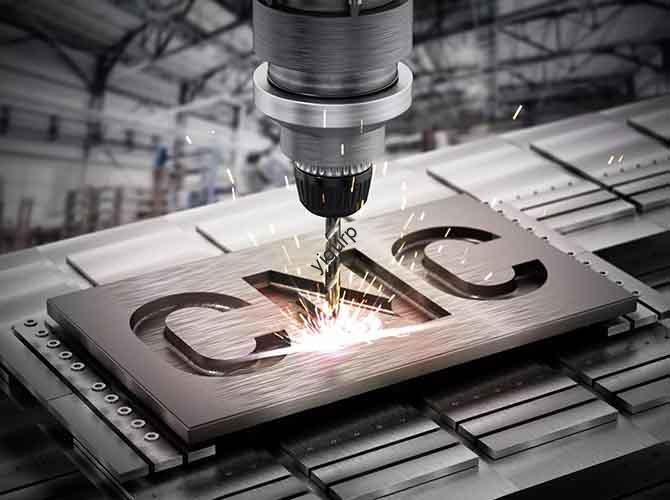
In the automotive manufacturing landscape, car parts machining stands as a cornerstone of quality, eficiencia, and innovation. Among the various technologies shaping this field, Control numérico por computadora (CNC) machining has emerged as the gold standard, revolutionizing how critical automotive components are designed and produced. This guide is tailored for industry professionals, automotive engineers, procurement managers, and enthusiasts seeking a deep, actionable understanding of CNC machining in car parts machining. We’ll explore its core principles, transformative impact on the automotive sector, key applications, advantages and limitations, comparisons with alternative technologies, future trends, and practical insights to help you make informed decisions about car parts machining procesos. By the end, you’ll have a holistic view of how CNC machining elevates car parts machining and what to expect as the industry evolves.
1. Introduction to CNC Machining in Car Parts Manufacturing
1.1 What is CNC Machining?
CNC machining is a subtractive manufacturing process that uses computerized controls to operate and manipulate machine tools (p.ej., molinos, tornos, enrutadores) for producing precision parts. A diferencia del mecanizado manual tradicional, which relies on human operators to guide tools, CNC systems follow pre-programmed G-code instructions to execute cuts, ejercicios, and finishes with consistent accuracy. Para car parts machining, this precision is non-negotiable—automotive components demand tight tolerances (a menudo tan bajo como ±0,001 pulgadas) to ensure compatibility, seguridad, y rendimiento.
Key Fact: According to the Association for Manufacturing Technology (AMT), CNC machining accounts for over 75% of all precision car parts machining operations globally, a testament to its reliability in the automotive sector.
1.2 Why CNC Machining is Critical for Car Parts Machining
The automotive industry’s relentless pursuit of safety, eficiencia, and customization has made CNC machining indispensable for car parts machining. Here’s why it stands out:
- Safety Compliance: Automotive components like brake calipers and steering shafts require zero defects—CNC’s consistency reduces failure risks, helping manufacturers meet global safety standards (p.ej., ISO 13485).
- Efficiency at Scale: Las máquinas CNC funcionan 24/7 con mínima intervención humana, enabling high-volume production of parts like engine pistons (arriba a 10,000 units per day per machine).
- Adaptability: As consumer demand for personalized vehicles grows, CNC machining allows quick programming changes to produce custom car parts machining soluciones (p.ej., racing car components).
2. How CNC Machining Transformed the Automotive Sector
2.1 From Manual to CNC: A Paradigm Shift in Car Parts Machining
Before CNC machining, car parts machining relied on manual lathes and mills, which were prone to human error, inconsistent quality, and slow production. Por ejemplo, machining a single engine crankshaft manually took 8–10 hours and required a highly skilled operator, with a defect rate of 5–7%. The adoption of CNC machining in the 1980s changed this:
Estudio de caso: Ford’s CNC Transition (1990s) Ford Motor Company invested $2 billion in CNC machining for its engine plants in the 1990s. The result? Crankshaft production time dropped to 45 minutes per unit, defect rates fell to 0.2%, and production capacity increased by 300%. This shift not only reduced costs but also enabled Ford to launch its Taurus model with a more reliable V6 engine, boosting market share by 15% within two years.
Hoy, nearly all Tier 1 automotive suppliers use CNC machining as their primary car parts machining método, a stark contrast to just 20% en 1990 (AMT data).
2.2 The Ripple Effect on Car Parts Machining Ecosystem
CNC machining’s adoption has transformed the entire car parts machining supply chain: from raw material suppliers (who now provide CNC-optimized alloys) to logistics (faster production cycles reduce inventory costs) and aftermarket services (precision parts last longer, lowering replacement demand).
3. Key Applications of CNC Machining in Car Parts Machining
CNC machining is used across nearly every major automotive system. Below are its most critical applications, with real-world examples and technical details:
3.1 Engine Manufacturing: The Heart of Car Parts Machining
Engine components are the most demanding in car parts machining, requiring extreme precision to handle high temperatures and pressures. CNC machining is used to produce:
| Component | CNC Process | Tolerance Requirement | Material |
|---|---|---|---|
| Cylinder Heads | Fresado CNC & Perforación | ±0,0005 pulgadas (asientos de válvula) | Aleación de aluminio (6061-T6) |
| Crankshafts | Torneado CNC & Molienda | ±0,001 pulgadas (journal diameter) | High-Strength Steel (4140) |
| Pistones | Torno CNC & Broaching | ±0.002 inches (piston skirt) | Cast Aluminum (A380) |
Estudio de caso: Toyota’s Hybrid Engine CNC Machining Toyota uses 5-axis CNC mills to machine cylinder heads for its Prius hybrid engines. The 5-axis capability allows complex cuts for the engine’s variable valve timing system, improving fuel efficiency by 8% compared to traditional 3-axis machining. This precision also reduces friction between components, extending the engine’s lifespan by 20%.
3.2 Body Manufacturing: Precision for Aerodynamics & Safety
CNC machining plays a key role in car parts machining for body components, where aerodynamics and structural integrity are critical. Applications include:
- Body Frames: CNC plasma cutting and milling shape high-strength steel frames for vehicles like the Tesla Model 3, ensuring uniform thickness (±0,003 pulgadas) for crash safety.
- Door Handles & Trim: CNC routers produce plastic and aluminum trim parts with smooth finishes, enhancing aesthetics and fit.
3.3 Chassis System: Stability Through Precision Car Parts Machining
The chassis (suspension, brakes, ejes) is vital for vehicle stability, and CNC machining ensures these parts perform under stress. Por ejemplo:
Brake calipers, machined via CNC milling, require precise bore diameters to ensure proper brake fluid flow. A leading brake supplier, Brembo, uses CNC machining to produce calipers with a tolerance of ±0.0008 inches, reducing stopping distances by 5% compared to non-CNC parts.
3.4 Custom Car Parts Machining: Meeting Personalization Demand
The rise of aftermarket and racing car culture has driven demand for custom car parts machining. CNC machining’s flexibility makes it ideal for this niche:
Estudio de caso: Custom Racing Exhaust Manifolds A California-based racing parts manufacturer uses 4-axis CNC mills to produce custom exhaust manifolds for high-performance cars (p.ej., Chevrolet Corvette). By programming unique designs based on customer engine specs, they reduce backpressure by 12% and increase horsepower by 15%. CNC machining allows them to produce 50 custom units per week with a lead time of just 3 días, a feat impossible with manual methods.
4. Advantages of CNC Machining for Car Parts Machining
CNC machining offers distinct advantages over other car parts machining methods, which we’ve organized into a structured comparison with traditional manual machining:
| Advantage | Mecanizado CNC | Manual Machining |
|---|---|---|
| Precisión | ±0.0001–±0.001 inches | ±0.005–±0.01 inches |
| Consistencia | 99.8% defect-free rate for high-volume production | 5–7% defect rate |
| Production Speed | 2–10x faster for complex parts | Lento, operator-dependent |
| Labor Requirements | 1 operator for 3–5 machines | 1 operator per machine |
| Flexibilidad | Quick programming changes for custom parts | Requires tool and setup reconfiguration (hours/days) |
Additional advantages specific to car parts machining include compatibility with a wide range of materials (aluminio, acero, titanio, plástica) and the ability to produce complex geometries (p.ej., turbocharger components) that are impossible with manual methods.
5. Limitations of CNC Machining in Car Parts Machining
While CNC machining is dominant in car parts machining, it’s not without limitations. Understanding these helps manufacturers choose the right process for their needs:
5.1 High Initial Investment
CNC machines are costly—entry-level 3-axis mills start at $50,000, while 5-axis machines (critical for complex car parts machining) can exceed $500,000. Smaller suppliers may struggle with this upfront cost, leading to reliance on contract manufacturers.
5.2 Skilled Labor Gap
Operating and programming CNC machines requires specialized training. According to the U.S. Bureau of Labor Statistics, there will be a shortage of 600,000 skilled CNC operators in the U.S. por 2030, which could slow adoption of advanced car parts machining tecnologías.
5.3 Material Waste
As a subtractive process, CNC machining generates material waste (15–30% for most automotive alloys). For expensive materials like titanium (used in high-performance car parts), this waste increases production costs.
5.4 Limitations for Very Small Batch Sizes
For batches of 1–5 parts, CNC machining’s programming and setup time (2–4 horas) make it less cost-effective than 3D printing, though it still offers better precision for car parts machining.
6. Mecanizado CNC: Prototyping vs. Production in Car Parts Machining
CNC machining is used for both prototyping and production in car parts machining, but its application differs in each phase. Below is a breakdown of key use cases and benefits:
6.1 Prototyping Applications
Automotive engineers rely on CNC machining for functional prototypes because it produces parts with the same material and precision as final production components. This ensures accurate testing of fit, form, and function:
- Engine Component Testing: Prototyping new piston designs with CNC machining allows engineers to test heat resistance and friction in real engine environments.
- Suspension Prototypes: Custom suspension brackets can be machined quickly to test handling for new vehicle models.
Key Benefit: CNC prototypes reduce time-to-market by 30% compared to traditional prototyping methods, as they require no tooling changes for small batches.
6.2 Production Applications
For high-volume car parts machining (10,000+ unidades), CNC machining is unrivaled in efficiency and consistency. Examples include:
- Mass-produced engine valves (1 million+ units per year per machine)
- Transmission gears for passenger vehicles
- Brake rotors and calipers
Modern CNC production lines often integrate automation (p.ej., robotic part loading/unloading) to further increase efficiency, with some facilities achieving 95% machine utilization rates.
7. CNC vs. 3D Printing for Car Parts Machining
3impresión D (fabricación aditiva) is often compared to CNC machining forcar parts machining. While both have their place, their strengths and weaknesses make them suitable for different applications. Below is a detailed comparison:
| Factor | Mecanizado CNC | 3Impresión D |
|---|---|---|
| Process Type | sustractivo (removes material) | Additive (builds layer by layer) |
| Precisión | Higher (±0.0001–±0.001 inches) | Más bajo (±0.005–±0.01 inches for FDM; better for resin) |
| Material Range | Wide (rieles, plástica, compuestos) | Limited (specialized filaments/resins; metal 3D printing is costly) |
| Production Speed (Alto volumen) | Rápido (2–10x faster than 3D printing) | Lento (not suitable for mass production) |
| Material Waste | 15–30% | 5–10% (more sustainable for small batches) |
| Costo (Lotes pequeños: 1–50 unidades) | Higher (setup/programming costs) | Más bajo (no setup costs) |
| Mejor para (Car Parts Machining) | Alto volumen, precision parts (engine, brakes, chasis) | Custom prototypes, low-volume niche parts (racing car components) |
Industry Insight: Most automotive manufacturers use a hybrid approach—3D printing for initial prototypes and CNC machining for production car parts machining. Por ejemplo, BMW uses 3D printing to prototype i8 engine components, then switches to CNC machining for mass production.
8. The Future of CNC Machining in Car Parts Machining
As the automotive industry shifts toward electric vehicles (vehículos eléctricos) and smart manufacturing, CNC machining for car parts machining is evolving to meet new demands. Below are the key trends shaping its future:
8.1 Integration with AI and Machine Learning
AI-powered CNC systems are becoming more common in car parts machining. These systems can: (1) Predict tool wear and schedule maintenance before failures occur (reducing downtime by 25% according to McKinsey), (2) Optimize cutting parameters for faster production, y (3) Detect defects in real time. Por ejemplo, Fanuc’s AI-enabled CNC mills use machine learning to adjust feed rates and spindle speeds, mejorando car parts machining efficiency by 18%.
8.2 IoT Connectivity for Smart Car Parts Machining
Industrial IoT (IIoT) allows CNC machines to connect to the cloud, enabling remote monitoring and data analysis. This is critical for global car parts machining supply chains—managers can track production metrics (p.ej., tiempo de ciclo, tasa de defectos) from anywhere, ensuring consistent quality across facilities. A 2024 study by Deloitte found that IIoT-integrated CNC systems reduce production costs by 12% for automotive suppliers.
8.3 Adaptation to EV-Specific Car Parts Machining
EVs require newcar parts machining soluciones, such as battery housings, electric motor components, and lightweight chassis parts. CNC machining is adapting by: (1) Using 5-axis machines to produce complex battery housing geometries, (2) Machining lightweight materials like carbon fiber composites, y (3) Increasing precision for EV motor stators (tolerances as low as ±0.0005 inches).
8.4 Sustainable Car Parts Machining with CNC
To reduce environmental impact, CNC manufacturers are adopting sustainable practices: (1) Using recycled materials for car parts machining, (2) Optimizing cutting parameters to reduce energy consumption (by up to 20%), y (3) Implementing closed-loop systems to reuse coolant and reduce waste. Por ejemplo, Volkswagen’s CNC facilities have reduced water usage by 30% through closed-loop coolant systems.
9. Yigu Technology’s Perspective on Car Parts Machining
En Yigu Tecnología, we’ve been at the forefront of advancing CNC machining for car parts machining for over a decade. Our experience working with Tier 1 automotive suppliers and EV manufacturers has shown us that precision, eficiencia, and adaptability are the cornerstones of successfulcar parts machining.
We believe the future of car parts machining lies in the integration of smart technologies—AI, IoT, and hybrid manufacturing (CNC + 3impresión D). As the industry shifts to EVs, manufacturers must prioritize CNC systems that can handle lightweight materials and complex geometries while maintaining sustainability. Our team of engineers specializes in custom CNC solutions for car parts machining, from prototype development to high-volume production, and we’re committed to helping our clients navigate these industry changes with innovative, cost-effective technologies.
One key insight we’ve gained is that collaboration is critical—automotive manufacturers, CNC suppliers, and material providers must work together to optimize car parts machining procesos. By sharing data and expertise, we can reduce waste, improve efficiency, and deliver safer, higher-quality automotive components.
10. FAQ About CNC Machining for Car Parts Machining
Q1: What is the typical lead time for CNC car parts machining? A: Lead time depends on batch size and part complexity. Para prototipos (1–10 units), lead time is 3–7 days. Para producción de gran volumen (10,000+ unidades), lead time is 2–4 weeks (including setup and programming). Rush orders can be fulfilled in 1–2 days for small batches with expedited programming.
Q2: What materials are most commonly used in CNC car parts machining? A: The most common materials are aluminum alloys (6061-T6, A380) for engine and body parts, high-strength steel (4140, 1045) for chassis and brake components, y plasticos (ABS, nylon) for interior trim. For high-performance and EV parts, titanium and carbon fiber composites are increasingly used.
Q3: How does CNC machining ensure quality in car parts machining? A: CNC machining ensures quality through: (1) Pre-programmed precision (tolerancias estrictas), (2) Real-time monitoring (AI/IIoT systems), (3) Regular tool calibration, y (4) Post-machining inspections (p.ej., CMM—Coordinate Measuring Machine). Most manufacturers also follow ISO 9001 y la IATF 16949 certifications for car parts machining.
Q4: Is CNC machining cost-effective for small-batch car parts machining? A: For batches of 1–50 units, CNC machining is often less cost-effective than 3D printing due to setup and programming costs. Sin embargo, if precision or material compatibility is critical (p.ej., functional prototypes), CNC machining is still the better choice. For batches of 50+ unidades, CNC machining becomes more cost-effective as setup costs are spread across more parts.
Q5: How will EVs impact the future of CNC car parts machining? A: EVs will drive demand for new car parts machining capacidades, including machining of battery housings, electric motor components, and lightweight chassis parts. CNC machining will need to adapt to handle new materials (p.ej., carbon fiber) and complex geometries, while also improving sustainability. AI and IoT integration will be key to meeting the increased precision and efficiency demands of EV manufacturing.