
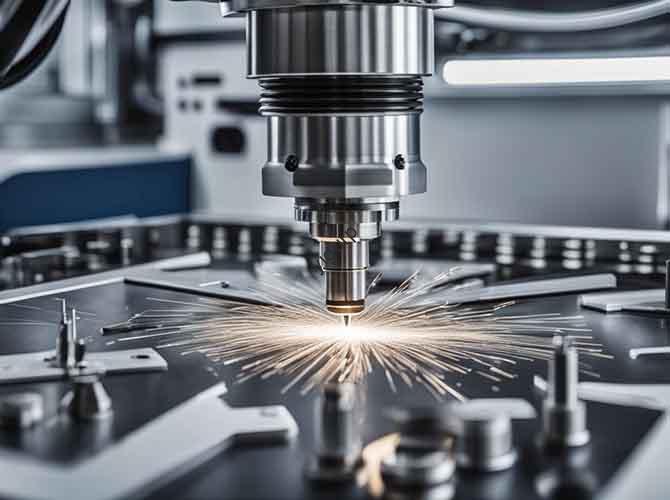
En el vertiginoso mundo de la electrónica de consumo, Mecanizado CNC de productos 3C (computadoras, equipo de comunicacion, electrónica de consumo) es la piedra angular de una producción de alta calidad. Unlike traditional manual machining—limited by consistency and precision—CNC technology uses computer-controlled tools to create complex, componentes diminutos (p.ej., marcos de teléfonos inteligentes, soportes para lentes de cámara) con precisión a nivel de micras. Esta guía explora la selección de materiales., core machining processes, quality control measures, aplicaciones del mundo real, and why CNC machining is irreplaceable for 3C product manufacturing.
1. Critical Material Selection for CNC Machining 3C Products
The performance, peso, and cost of 3C products depend heavily on material choice. Mecanizado CNC de productos 3C uses both metallic and non-metallic materials, each optimized for specific components. Below is a detailed breakdown of the most common materials, sus propiedades, and ideal applications.
1.1 Material Comparison Chart
| Categoría de material | Specific Materials | Propiedades clave | Ideal 3C Components | Machining Notes |
| Metallic Materials | Aleación de aluminio (p.ej., 6061, 7075) | – Excelente conductividad térmica/eléctrica.. – Ligero (densidad: 2.7 gramos/cm³) + alta resistencia. – Buena maquinabilidad (low cutting force). | Smartphone/tablet shells, carcasas para portátiles, heat dissipation frames. | Use high-speed milling (3,000–6,000 RPM) para superficies lisas; post-process with anodization for corrosion resistance. |
| Acero inoxidable (p.ej., 304, 316l) | – Alta resistencia a la tracción (500–700MPa). – Resistencia superior a la corrosión. – Harder than aluminum (requires specialized tools). | Mobile phone frames, soportes para lentes de cámara, USB connectors. | Use coated carbide tools (TiAlN) to reduce wear; lower cutting speed (100–200 m/min) to avoid tool overheating. | |
| Copper Alloy (p.ej., C1100, C3600) | – Exceptional electrical conductivity (98% of pure copper). – Good thermal conductivity. – Suave (prone to burrs during machining). | Computer CPU coolers, mobile phone heat sinks, circuit board connectors. | Use sharp tools (high rake angle) to minimize burrs; control cutting temperature (<150°C) to avoid thermal deformation. | |
| Non-Metallic Materials | Plásticos de ingeniería (p.ej., ABS, PC/ABS, Pensilvania) | – Ligero (densidad: 1.0–1.2 g/cm³). – Alta resistencia al impacto + good insulation. – Low cost vs. rieles. | 3C product shells (p.ej., wireless earbud cases), botones, internal brackets. | Use high-speed milling (8,000–12.000 rpm) for high surface quality; avoid high temperatures (punto de fusión: 180–250°C). |
| Materiales cerámicos (p.ej., alúmina, circonita) | – Ultra-high hardness (HV 1,500–2,000). – Excellent wear/scratch resistance. – Strong insulation. | Mobile phone camera protective lenses, fingerprint recognition module covers. | Use diamond tools (p.ej., diamond end mills) for cutting; low feed rate (0.01–0.03 mm/rev) para evitar grietas. |
2. Core CNC Machining Processes for 3C Products
Mecanizado CNC de productos 3C involves a sequential workflow to transform raw materials into precise, componentes funcionales. Each process step is optimized for 3C products’ small size (a menudo <100milímetros) y tolerancias estrictas (±0,01mm). Below is the step-by-step process, with key details for each stage.
2.1 Step-by-Step Machining Workflow
- Corte (Preparación de materiales)
- Objetivo: Trim raw materials (p.ej., aluminum blocks, láminas de plástico) into small, manageable blanks (size slightly larger than the final component).
- Equipo: Sawing machines (para metales), laser cutters (for plastics/ceramics), or waterjet cutters (for heat-sensitive materials like copper).
- Key Requirement: Ensure blank flatness (≤0.1 mm) to avoid machining errors in subsequent steps.
- Mecanizado en desbaste
- Objetivo: Quickly remove 80–90% of excess material to form the component’s basic shape (p.ej., smartphone shell outline, camera lens holder cavity).
- Proceso: Use CNC milling machines (3-axis or 5-axis) with large-diameter tools (10–16 mm) for high material removal rate.
- Parameters: Depth of cut (2–5 milímetros), tasa de avance (0.1–0.3 mm/rev), velocidad del husillo (2,000–4,000 RPM for metals; 5,000–8,000 RPM for plastics).
- Finishing Machining
- Objetivo: Achieve the final dimensional accuracy and surface quality required for 3C products.
- Proceso: Use small-diameter, high-precision tools (2–6 mm) and CNC lathes (for cylindrical parts like USB connectors).
- Critical Parameters:
- Control de tolerancia: ±0.005–±0.01 mm (p.ej., camera lens holder concentricity).
- Rugosidad de la superficie: Real academia de bellas artes < 0.8 µm (for visible components like phone shells).
- Velocidad del husillo: 4,000–8.000 rpm (rieles); 8,000–12.000 rpm (plástica).
- Perforación & tocando
- Perforación: Create small holes (0.5–3 mm) for screws, positioning pins, or heat dissipation. Use high-precision drill bits (tolerance H7) and peck drilling (intermittent feeding) to avoid chip clogging.
- tocando: Machine internal threads (M1–M3) in drilled holes for component assembly (p.ej., attaching phone shells to internal brackets). Use spiral-flute taps for metals and straight-flute taps for plastics.
- Key Check: Ensure hole position accuracy (≤0.02 mm) to avoid assembly misalignment.
- biselado
- Objetivo: Quitar los bordes afilados (left by cutting/drilling) to improve user safety (p.ej., no sharp corners on phone frames) and component fit.
- Herramientas: Chamfering knives (para metales) or grinding wheels (for ceramics).
- Estándar: Chamfer size 0.1–0.5 mm (small enough to be unnoticeable, but effective at eliminating sharpness).
- Pulido (Postprocesamiento)
- Objetivo: Enhance surface appearance and corrosion resistance (para metales).
- Métodos:
- Pulido mecánico: Use abrasive papers (400–2,000 grit) para metales; buffing wheels for mirror-like finishes (p.ej., stainless steel phone frames).
- Pulido químico: For aluminum alloys—immerse in chemical solutions to remove surface defects (faster than mechanical polishing for large batches).
- Pulido electroquímico: For copper components—improves conductivity while polishing (ideal for heat sinks).
3. Strict Quality Control for CNC Machined 3C Products
3C products demand near-perfect quality—even tiny defects (p.ej., a 0.02 mm misalignment) can cause functional failures (p.ej., camera lens blur, loose component fit). Mecanizado CNC de productos 3C uses four layers of quality control to ensure compliance with design standards.
3.1 Medidas de control de calidad
| Control Category | Herramientas & Métodos | Key Inspection Items | Acceptance Criteria |
| Dimensional Accuracy Control | – Calibrador (for simple dimensions, p.ej., component length). – micrómetros (for small diameters, p.ej., drill holes). – Máquinas de medición de coordenadas (CMM, para geometrías complejas, p.ej., phone shell curves). | – Longitud, ancho, height of components. – Hole diameter and position. – Concentricity of cylindrical parts (p.ej., USB connectors). | Tolerancia: ±0.005–±0.01 mm (critical components like camera holders); ±0.02–±0.05 mm (non-critical parts like brackets). |
| Surface Roughness Control | – Probadores de rugosidad de superficies (contact or non-contact). – Optical microscopes (to check for scratches). | – valor ra (arithmetic mean deviation). – Presence of scratches, rebabas, or tool marks. | Visible components: Real academia de bellas artes < 0.8 µm (no visible scratches); Internal parts: Real academia de bellas artes < 1.6 µm. |
| Forma & Position Tolerance Control | – Straightness testers (for flat components like laptop casings). – Perpendicularity gauges (for hole-to-surface angles). | – Flatness of large surfaces. – Perpendicularity of holes to component surfaces. – Parallelism of matching parts (p.ej., phone front/back shells). | Llanura: ≤0.1 mm/m; Perpendicularity: ≤0.02 mm; Paralelismo: ≤0.03 mm. |
| Material Quality Testing | – Hardness testers (p.ej., Rockwell for metals, Shore for plastics). – Spectrometers (to verify chemical composition of metals). – Ultrasonic testers (to detect internal defects in ceramics/metals). | – Material hardness (p.ej., aleación de aluminio: HRC 10–15; acero inoxidable: HRC 20–30). – Chemical composition (p.ej., 304 acero inoxidable: 18–20% Cr, 8–10.5% Ni). – Internal cracks or porosity. | Dureza: ±1 HRC of design value; No internal defects (100% inspection for critical components). |
4. Real-World Applications of CNC Machining 3C Products
Mecanizado CNC de productos 3C is used across all segments of the 3C industry, solving unique challenges—from miniaturization to mass production. Below are key applications with case studies.
4.1 Aplicaciones específicas de la industria
| 3C Product Category | Ejemplos de aplicación | Machining Challenges & Soluciones |
| Teléfonos inteligentes & Tablets | – Aluminum alloy shells (p.ej., iPhone 15 Pro titanium frame). – Stainless steel camera lens holders. – Copper heat sinks for 5G chips. Caso: A smartphone manufacturer used 5-axis CNC milling to produce curved aluminum shells—achieving a flatness of 0.05 mm and reducing assembly errors by 40%. | Desafío: Miniaturización (componentes <5 milímetros) + complex curves. Solución: 5-máquinas CNC de eje + high-precision tools (0.5–2 mm diameter). |
| Computers & portátiles | – Carcasas para portátiles (PC/ABS plastic + fresado CNC). – CPU coolers (aleación de cobre + perforación de precisión). – Keyboard brackets (aleación de aluminio + chamfering). Caso: A laptop brand used CNC polishing to finish aluminum casings—Ra value reached 0.4 µm, improving the premium look and reducing fingerprint adhesion by 30%. | Desafío: Large surface area (carcasas para portátiles >300 milímetros) + flatness requirements. Solución: Large-worktable CNC mills + multi-step polishing (400–2,000 grit). |
| Consumer Electronics Accessories | – Wireless earbud cases (Plástico ABS + fresado de alta velocidad). – Smartwatch frames (acero inoxidable + pulido electroquímico). – Camera lens protective covers (cerámico + diamond tool machining). Caso: An accessory maker used CNC tapping to machine M1.2 threads in earbud cases—thread precision reached 6H, ensuring secure assembly of charging ports. | Desafío: Small thread sizes (M1–M2) + plastic material (prone to thread stripping). Solución: Specialized plastic taps + low feed rate (0.01–0.02 mm/rev). |
Yigu Technology’s Perspective on CNC Machining 3C Products
En Yigu Tecnología, we see Mecanizado CNC de productos 3C as a key driver of electronics innovation. Our solutions integrate high-precision 5-axis CNC machines (optimized for aluminum, acero inoxidable, y ceramica) with AI-driven process monitoring—reducing machining errors by 45% and cutting production time by 30%. We’ve supported 3C clients in achieving micron-level tolerances (±0,005 mm) for camera components and improving surface quality (Real academia de bellas artes < 0.4 µm) for premium phone shells. As 3C products become smaller and more complex, we’re investing in ultra-high-speed CNC tools (15,000+ RPM) to meet the demand for faster, more precise manufacturing.
Preguntas frecuentes: Common Questions About CNC Machining 3C Products
- q: Why is aluminum alloy the most common material for 3C product shells?
A: Aluminum alloy balances three critical needs for 3C shells: 1) Ligero (reduces product weight—e.g., a 150g phone vs. 200g with stainless steel); 2) Buena maquinabilidad (fast milling, low tool wear); 3) Atractivo estético (anodization creates colorful, scratch-resistant finishes). It’s also cheaper than titanium or stainless steel for large-volume production.
- q: What’s the difference between 3-axis and 5-axis CNC machining for 3C products?
A: 3-axis CNC machines move along X/Y/Z axes—ideal for simple, flat components (p.ej., laptop brackets). 5-axis machines add two rotational axes, enabling machining of complex curved surfaces (p.ej., smartphone camera bumps, curved phone shells) in one setup—reducing assembly errors and cutting production time by 20–30%.
- q: How do you avoid burrs when CNC machining 3C products, especially plastics and copper?
A: para plasticos: Use sharp, high-rake-angle tools (to minimize material tearing) and high spindle speeds (8,000–12.000 rpm). For copper: Use spiral-flute tools (to evacuate chips quickly) and peck feeding (intermittent cutting to reduce heat buildup). Postprocesamiento (p.ej., ultrasonic cleaning for plastics, electrochemical deburring for copper) also removes remaining burrs.