
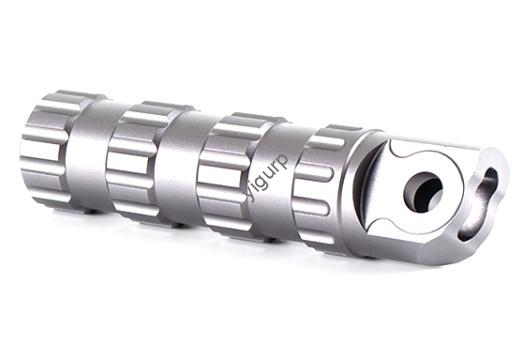
Para ingenieros de producto, equipos de adquisiciones, y diseñadores que trabajan en piezas con características finas o geometrías complejas, CNC dynamic machining prototype models are a game-changer. Esta alta precisión, método eficiente utiliza control numérico por computadora (CNC) Tecnología para convertir diseños digitales en prototipos físicos, lo que le ayudará a evitar errores costosos y acelerar el desarrollo de productos.. En esta guía, we’ll break down every stage of creating CNC dynamic machining prototype models, share real-world examples, and provide data to help you decide if this method is right for your project.
1. What Are CNC Dynamic Machining Prototype Models?
Before diving into the process, let’s clarify what makes CNC dynamic machining prototype models unique. Unlike basic CNC machining (which often uses fixed paths for simple parts), dynamic machining uses advanced CNC programs to adjust tool paths, velocidades, and feeds in real time. This allows for:
- Precisión: Lograr tolerancias estrictas (often ±0.005–0.02 mm) for fine features like tiny holes or thin walls.
- Eficiencia: Reducing material waste by optimizing cutting paths.
- Complejidad: Machining parts with curved surfaces, socavados, or intricate patterns that other methods (like 3D printing) struggle with.
A perfect example is an aerospace startup that used CNC dynamic machining prototype models to create a titanium engine component prototype. The part had 12 tiny cooling channels (each just 0.5 mm de ancho)—a detail that 3D printing couldn’t replicate accurately, but dynamic CNC machining handled with ease.
2. Step-by-Step Process for CNC Dynamic Machining Prototype Models
Creating CNC dynamic machining prototype models involves five core steps—each critical to ensuring accuracy and quality. Follow this breakdown to avoid common pitfalls.
Paso 1: Diseño & Programación
The first step is to turn your prototype idea into a digital blueprint and a CNC program that guides the machine.
- 3D Model Design: Use software like SolidWorks or AutoCAD to create a detailed 3D model of the prototype. Por ejemplo, a medical device company designing a surgical tool prototype spent 2 days refining their 3D model to include a 1 mm-wide gripping surface—ensuring the dynamic machining program could target that feature.
- CNC Program Writing: Translate the 3D model into a G-code program (El lenguaje que entienden las máquinas CNC.). This program specifies:
- Tool paths (where the cutting tool will move).
- Cutting speeds (how fast the tool spins).
- Feed rates (how quickly the tool moves across the material).
- Para propina: Have a CNC programmer review the program—they can spot issues like overlapping tool paths that could damage the part or machine.
Paso 2: Configuración de la máquina
Once the program is ready, prepare the CNC machine and materials for machining.
- Selección de materiales: Choose a material that matches your prototype’s needs (p.ej., aluminio para piezas ligeras, stainless steel for durability). A automotive parts supplier used aluminum for a suspension prototype—its low density made it easy to machine, while still mimicking the strength of the final steel part.
- Tool Choice: Pick a cutting tool based on the material and features. Por ejemplo:
- Use a ball-end mill for curved surfaces.
- Use a drill bit for precise holes.
- Material Mounting: Secure the material to the machine’s worktable using clamps or vices. Loose material leads to vibrations, which ruin precision—so double-check the fasteners!
- Parameter Setting: Input machining parameters (like spindle speed) into the CNC machine. For a plastic prototype, a team set the spindle speed to 10,000 RPM—fast enough to cut smoothly, but slow enough to avoid melting the plastic.
Paso 3: Proceso de mecanizado
Start the CNC program and let the dynamic machining begin. During this stage:
- The machine uses the program to move the cutting tool dynamically, removing material layer by layer.
- The tool adjusts its path in real time to avoid collisions and maintain precision. Por ejemplo, when machining a prototype with a deep hole, the tool slowed down slightly as it reached the bottom—preventing tool breakage.
- Key Metric: Most CNC dynamic machining prototype models take 3–7 days to complete, dependiendo de la complejidad. A simple plastic prototype (p.ej., a phone case) might take 3 días, while a complex metal part (p.ej., un componente del motor) could take 7 días.
Paso 4: Escucha & Adjustment
Don’t leave the machine unattended! Operators need to:
- Check for desgaste de herramientas: Dull tools produce rough surfaces. A furniture prototype team noticed their tool was wearing down halfway through machining—they replaced it, saving the $200 part from being scrapped.
- Inspect workpiece quality: Use calipers or a coordinate measuring machine (MMC) to check dimensions. If a part is 0.01 mm too small, adjust the feed rate slightly for the next cut.
- Fix issues quickly: If the cutting fluid (which cools the tool and material) runs low, pause the machine to refill it—overheating can warp the prototype.
Paso 5: Postprocesamiento & Inspección
Después del mecanizado, finish the prototype and verify it meets design standards.
- Cleaning: Remove cutting fluid, metal shavings, or plastic debris from the prototype. A electronics team used compressed air to clean a circuit board prototype—ensuring no debris got stuck in tiny slots.
- Refinamiento: Sand rough edges or add coatings (p.ej., a UV-resistant coating for outdoor prototypes). A garden tool prototype needed 2 hours of sanding to smooth a sharp edge—making it safer for user testing.
- Inspección: Use tools like CMMs to check if dimensions and surface quality match the 3D model. A aerospace prototype failed inspection once—its 2 mm hole was 0.008 mm too small. The team adjusted the drill bit size and re-machined the part, which passed the second time.
3. Error Control for CNC Dynamic Machining Prototype Models
To ensure your prototype meets design requirements, focus on these error control strategies:
| Error Source | How to Control It | Example of Impact |
| Machine Tool Accuracy | Calibrate the CNC machine monthly using a laser interferometer. | A machine that was 0.01 mm out of calibration produced a prototype with a misaligned hole—delaying testing by 2 días. |
| Selección de herramientas | Choose a tool with a sharp cutting edge and the right material (p.ej., carbide for metal). | A dull tool left scratches on a plastic prototype—requiring extra sanding and adding 1 day to the process. |
| Workpiece Clamping | Use enough clamps to prevent vibration; avoid over-clamping (which warps the material). | A loosely clamped aluminum prototype vibrated during machining—its final width was 0.02 mm wider than designed. |
| Program Errors | Test the program on a dummy material (p.ej., espuma) before machining the real part. | A faulty program once caused the tool to cut through a steel prototype—wasting $500 in material. |
4. Why Choose CNC Dynamic Machining Prototype Models?
Here’s how CNC dynamic machining prototype models compare to other prototype methods—helping you decide if it’s the right fit:
| Prototype Method | Mejor para | Exactitud (Tolerancia) | Plazo de entrega | Rango de costos |
| CNC Dynamic Machining | Fine features, geometrías complejas | ±0.005–0.02 mm | 3–7 días | $200–$2,000+ |
| 3Impresión D | Simple shapes, fast iterations | ±0.1–0.5 mm | 12–48 hrs | $50–$500 |
| Silicone Replica | Pequeños lotes (10–50 unidades) | ±0.2–1.0 mm | 2–5 días | $100–$800 |
When to Use CNC Dynamic Machining: If your prototype needs tight tolerances (p.ej., a sensor with a 0.5 mm de separación) or complex features (p.ej., a curved handle with undercuts), this method is ideal. Por ejemplo, a robotics company chose CNC dynamic machining prototype models for their robot arm joint prototype—it had 3 rotating parts that needed to fit together with 0.01 mm precision, which 3D printing couldn’t achieve.
Yigu Technology’s Perspective on CNC Dynamic Machining Prototype Models
En Yigu Tecnología, we believe CNC dynamic machining prototype models are essential for high-precision product development. Our experienced team (incluido 10+ CNC programmers) ensures every step—from design to inspection—is done right. We’ve helped clients like a automotive startup create engine component prototypes with ±0.007 mm tolerance, cutting their testing time by 30%. We also hold ISO9001, ISO14001, and IATF16949 certifications, so you can trust the quality. For projects needing fine features, CNC dynamic machining prototype models are our go-to—they turn complex designs into reliable prototypes that accelerate product launches.
Preguntas frecuentes
- q: How long does it take to create a CNC dynamic machining prototype model?
A: Most prototypes take 3–7 days. Piezas simples (p.ej., a plastic bracket) may take 3 días, while complex metal parts (p.ej., componentes aeroespaciales) can take up to 7 days—plus 1–2 days for post-processing.
- q: What materials can be used for CNC dynamic machining prototype models?
A: Common materials include aluminum, acero inoxidable, plástico (p.ej., ABS, ordenador personal), and titanium. Choose a material that matches your prototype’s purpose—for example, use titanium for high-temperature parts.
- q: Is CNC dynamic machining more expensive than 3D printing for prototypes?
A: Sí, but it’s worth it for precision. 3D printing costs $50–$500, while CNC dynamic machining costs $200–$2,000+. If your prototype needs tight tolerances or complex features, the extra cost avoids costly errors in later stages.