
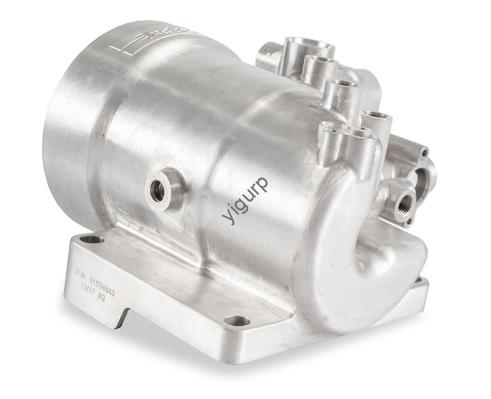
CNC box prototype machining is a cornerstone of manufacturing complex, Piezas en forma de caja de alta precisión: piense en carcasas de cajas de cambios., carcasas de motor, o recintos para equipos industriales. A diferencia del mecanizado manual tradicional (que lucha con las estrechas tolerancias y las intrincadas estructuras de los prototipos de cajas), CNC (Control numérico por computadora) La tecnología ofrece consistencia, resultados automatizados. For product engineers testing new designs or procurement specialists sourcing reliable prototypes, understanding the ins and outs ofCNC box prototype machining is key to avoiding delays, reduciendo el desperdicio, and ensuring final parts meet performance standards. Esta guía desglosa todo el proceso., with real-world examples and data to make every step actionable.
1. What Is CNC Box Prototype Machining?
Before diving into the process, let’s clarify what makesCNC box prototype machining unique. Box prototypes are specialized parts that serve as supports or protectors for internal components (p.ej., engranajes, circuits) in machinery. They’re defined by:
- Complex structures: Multiple faces, agujeros, and grooves (often with varying depths and positions).
- High precision demands: Tolerances as tight as ±0.01mm for critical features like hole alignment.
- Tough materials: Most box prototypes use cast iron or cast steel (known for durability but poor cutting performance)—making CNC’s automated control essential.
Why CNC Is Non-Negotiable: A manual machinist might take 8 hours to make a single gearbox box prototype with inconsistent hole positions. ConCNC box prototype machining, the same part can be made in 2 horas, with every hole aligned to within ±0.005mm.
2. Pre-Machining: Design Planning & Preparación
El éxito deCNC box prototype machining starts before the machine powers on. This phase focuses on planning every detail to avoid costly mistakes later.
2.1 Design Planning: Map Out Every Feature
Design planning is about translating part drawings into a actionable machining plan. Here’s what to include:
- Machining sequence: Decide the order of operations (p.ej., roughing first, then hole processing, then finishing). Por ejemplo, a gearbox box prototype should have its outer faces rough-machined before drilling holes—this prevents hole misalignment from material movement.
- Machine & selección de herramientas: Choose equipment matching the prototype’s needs. A 3-axis CNC mill works for simple box prototypes, mientras que los complejos (with angled holes) need a 5-axis machine. For tools, use carbide end mills for cast steel (they resist wear better than HSS tools).
- Fixture choice: Fixtures hold the material in place during machining. A custom vice with rubber grips works for small box prototypes, while large ones need a modular fixture system to distribute pressure evenly.
Ejemplo del mundo real: An industrial equipment manufacturer was making a pump housing box prototype. Inicialmente, they skipped fixture planning and used a generic vice—this caused the material to shift during machining, ruining 3 prototipos. After switching to a custom fixture, they produced 10 flawless prototypes in a row.
2.2 Selección de materiales & Prep for Box Prototypes
Box prototypes need materials that balance strength, maquinabilidad, y costo. Below’s a breakdown of top options:
| Tipo de material | Propiedades clave | Ideal Box Prototype Uses | maquinabilidad (1–10) | Costo (USD/kilo) |
|---|---|---|---|---|
| Gray Cast Iron (HT200) | Alta rigidez, good vibration damping | Gearbox housings, carcasas de motor | 5 | $1.8 – $3.0 |
| Ductile Cast Iron (QT450) | Stronger than gray iron, dúctil | Heavy-duty equipment enclosures | 4 | $2.5 – $4.0 |
| Acero carbono (45#) | Alta resistencia, resistente al desgaste | Small box prototypes (p.ej., carcasas de sensores) | 6 | $2.0 – $3.5 |
Material Prep Tips:
- Inspect for defects: Cast iron often has internal pores—use ultrasonic testing to reject faulty blanks (a porous blank will crack during machining).
- Cut blanks to size: Trim the raw material to a “blank” slightly larger than the final prototype (add 5–10mm on all sides for machining allowance).
3. Core CNC Box Prototype Machining Stages
CNC box prototype machining happens in four sequential stages, each focusing on a specific goal—from removing excess material to refining details.
3.1 Roughing: Shape the Prototype Foundation
Roughing’s job is to quickly remove most of the machining allowance (usually 3–5mm) and create a basic box shape. Key steps:
- Operations: Use face milling to flatten the box’s top/bottom faces, and end milling to rough out side walls. For large boxes, use a fly cutter to cover more surface area faster.
- Parameters: Prioritize speed over precision—use a high feed rate (200–300 mm/min for cast iron) and deep cuts (2–3mm per pass).
- Tool Care: Keep tools sharp—dull end mills cause “chatter” (vibración), leaving rough surfaces that take longer to finish.
Data Point: A study found that optimizing roughing parameters (p.ej., increasing feed rate by 20%) cuts roughing time by 35% without reducing quality.
3.2 Hole Processing: The Most Critical Step for Box Prototypes
Holes are the trickiest part ofCNC box prototype machining—they’re often numerous (10+ per prototype) and require tight positional accuracy (p.ej., holes for bolts must align within ±0.02mm). Common methods:
- Perforación: Creates initial holes (slightly smaller than final size) for cast iron—use a twist drill with a 118° point angle.
- Aburrido: Enlarges holes to exact size and improves roundness—critical for holes that hold bearings (which need perfect roundness to avoid friction).
- escariado: Smooths hole surfaces and tightens tolerances—use a carbide reamer for cast iron to get a surface roughness of Ra 1.6 µm.
Estudio de caso: A automotive supplier needed a gearbox box prototype with 12 agujeros para pernos. They used drilling → boring → reaming:
- Drilled holes to 9.8mm (final size: 10milímetros).
- Bored to 9.95mm to correct roundness.
- Reamed to 10mm with Ra 1.6 µm.
All holes aligned within ±0.01mm, and the prototype fit perfectly with the gear assembly.
3.3 Refinamiento: Refine to Final Specs
Finishing ensures the prototype meets all dimensional and surface quality requirements. Key steps:
- Precision milling: Use a high-precision end mill (with a runout of ≤0.002mm) to trim walls to final thickness (p.ej., 10mm ±0.01mm).
- Surface treatment prep: For cast iron prototypes, use a sanding disc to remove tool marks—this helps with later rust-proofing.
- Temperature control: Cast iron heats up during finishing—pause machining every 15 minutes to let the part cool (heat causes thermal expansion, which distorts dimensions).
3.4 Inspección & Correction: Catch Errors Before It’s Too Late
NoCNC box prototype machining process is perfect—inspection ensures you catch defects early. Use these tools and checks:
- Calibrador & micrómetros: Measure hole diameters, wall thicknesses, and face flatness.
- Máquina de medición de coordenadas (MMC): For complex prototypes, a CMM maps every feature in 3D—verify positional accuracy of holes and grooves.
- Surface Roughness Tester: Check that surfaces meet Ra requirements (p.ej., Real academia de bellas artes 3.2 μm for non-critical faces, Real academia de bellas artes 1.6 μm for sealing surfaces).
Common Correction Steps:
- If a hole is too small: Ream it to the correct size (don’t re-drill—this risks breaking the tool).
- If a wall is too thick: Do a light finishing pass (0.1mm de profundidad) to trim it down.
4. Post-mecanizado: Final Treatments for Durability
Once the prototype passes inspection, post-treatment steps improve its longevity and appearance:
- Cleaning: Use a degreaser to remove coolant and metal chips—pay extra attention to holes (chips stuck inside cause assembly issues).
- Rust Prevention: For cast iron or steel prototypes, apply a thin layer of anti-rust oil or a phosphate coating (prevents oxidation during storage).
- Cuadro: For prototypes used in customer demos, apply a heat-resistant paint (p.ej., epoxy paint) to match the final production part’s look.
Yigu Technology’s View on CNC Box Prototype Machining
En Yigu Tecnología, nos especializamos enCNC box prototype machining para automoción, industrial, y clientes aeroespaciales. Encima 10 años, we’ve refined our process to prioritize precision and efficiency: we use 5-axis CNC mills for complex hole patterns, select gray cast iron (HT200) for most gearbox prototypes (balancing cost and rigidity), and employ CMM inspections for 100% de piezas. Our team also offers design support—we help clients optimize box prototypes for machining (p.ej., simplifying groove shapes to cut time by 25%). For us, great CNC box prototypes aren’t just about meeting specs—they’re about helping clients test and launch better products faster.
FAQ About CNC Box Prototype Machining
Q1: How long does CNC box prototype machining take?
A: It depends on size and complexity. A small sensor housing (100x80x50mm) takes 3–4 hours. A large gearbox housing (500x300x200mm) con 20 holes takes 8–10 hours. Batch size also matters—10 identical prototypes take ~1.5x longer than 1, thanks to repeatable CNC settings.
Q2: What’s the most common mistake in CNC box prototype machining?
A: Poor hole alignment. This usually happens from skipping fixture planning (material shifts during machining) or using dull boring tools. Always use a custom fixture and replace tools after 8 hours of cast iron machining to avoid this.
Q3: Can CNC box prototype machining use plastic materials?
A: Sí! For non-structural box prototypes (p.ej., cajas electrónicas), plastics like ABS or PC work well. They’re cheaper and faster to machine than metal—though they don’t match cast iron’s rigidity. We often recommend plastic for early design tests, then metal for final prototypes.