
Our Ceramic CNC Machining Services
At Yigu Technology, we excel in Ceramic CNC Machining—delivering high-precision, durable ceramic components tailored to your industry’s unique needs. Leveraging our advanced technical abilities and strict quality control, we transform various ceramic materials into tight-tolerance parts, whether for aerospace, electronics, or medical applications. Trust us to turn your designs into reliable, high-performance solutions with fast turnaround times.
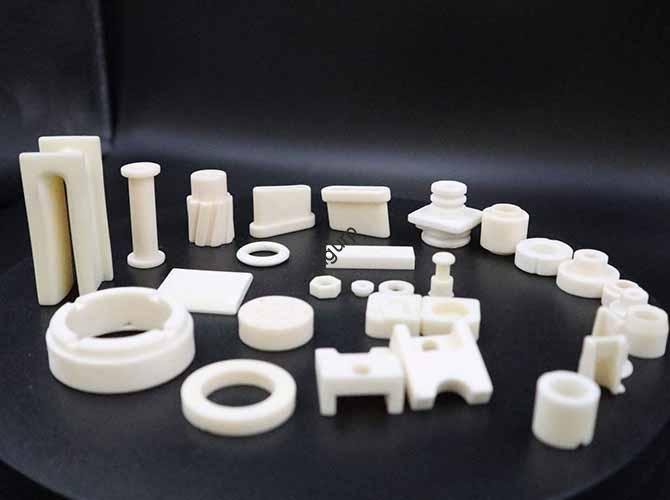
What is Ceramic CNC Machining?
Ceramic CNC Machining refers to the automated process of shaping, cutting, and finishing ceramic materials using Computer Numerical Control (CNC) technology. This basic concept combines the rigidity and precision of CNC systems with specialized tools to handle the hardness and brittleness of ceramics—materials that are challenging to machine with traditional methods.
At its core, this overview involves using pre-programmed software to control tools like mills, lathes, and grinders, ensuring consistent dimensional accuracy across every part. Unlike manual machining, Ceramic CNC Machining eliminates human error, making it ideal for producing complex, repeatable components. Below is a simple breakdown of key terms in this field:
| Term | Explanation |
| Ceramic CNC Machining | Automated shaping of ceramic materials via CNC technology |
| Ceramic Materials | Hard, heat-resistant materials like alumina, zirconia, and silicon carbide |
| Dimensional Accuracy | Ability to produce parts that match exact design specifications |
| CNC Tools | Specialized cutters, grinders, and drills designed for ceramic hardness |
Our Capabilities: What We Can Do for Your Ceramic Projects
At Yigu Technology, our Ceramic CNC Machining capabilities are built on years of expertise and state-of-the-art equipment. We don’t just offer machining services—we provide end-to-end solutions to meet even the most demanding requirements. Here’s a detailed look at our technical abilities and services offered:
| Capability | Key Features | Ideal For |
| Complex Part Machining | Handle intricate geometries (e.g., thin walls, small holes) with tight tolerances (down to ±0.001 mm) | Aerospace components, medical device parts |
| High-Volume Production | Scale from small batches (50–100 parts) to large runs (10,000+ parts) with consistent quality | Electronic components, industrial fasteners |
| Material Versatility | Machine all major ceramic materials (alumina, zirconia, silicon nitride, etc.) | Custom projects across industries |
| Precision Grinding | Achieve smooth surface finishes (Ra 0.1 μm) and flatness (±0.005 mm) | Optical components, semiconductor parts |
| Prototype Development | Deliver functional prototypes in 5–7 business days for design validation | New product launches, R&D projects |
Our skills extend beyond machining—we also offer design consultation to optimize your part for manufacturability, ensuring cost savings and faster production times.
Process: How Ceramic CNC Machining Works
The Ceramic CNC Machining process flow is a structured sequence of steps, each optimized to handle the unique properties of ceramics (e.g., hardness, brittleness). Below is a step-by-step explanation of our production process:
- Design & Programming: Our engineers review your 3D CAD files to create a detailed machining program. We select the right tools and procedures to minimize material waste and avoid cracking—critical for fragile ceramics.
- Material Preparation: We source high-quality ceramic materials (e.g., alumina blocks, zirconia rods) and cut them into blanks that fit our CNC machines. Each blank is inspected for defects (e.g., cracks, impurities) before machining.
- Machine Setup: Technicians calibrate CNC machines, install specialized tools (e.g., diamond-coated cutters for hard ceramics), and secure the blank with precision fixtures. Proper setup ensures stability during machining.
- Rough Machining: We remove excess material using high-speed milling or turning. This step shapes the part into its basic form, with a focus on efficiency—we use coolants to reduce heat buildup, which can damage ceramics.
- Finishing Operations: The part undergoes precision grinding and polishing to achieve the desired surface quality and tolerances. For parts needing extra protection, we apply coatings (e.g., anti-corrosion layers) at this stage.
Inspection & Quality Control: Every part is tested using advanced tools like CMM (Coordinate Measuring Machine) and optical comparators to verify dimensional accuracy and tolerance levels. Only parts that meet our strict standards (ISO 9001 certified) are shipped.
Materials: Types of Ceramics Used in CNC Machining
Choosing the right ceramic material is critical for your part’s performance. At Yigu Technology, we work with a wide range of materials used in Ceramic CNC Machining, each with unique properties. Below is a comparison of the most common materials:
| Ceramic Type | Material Properties | Advantages | Ideal Applications |
| Alumina (Al₂O₃) | High hardness (9 on Mohs scale), excellent chemical resistance, good thermal conductivity | Cost-effective, widely available | Industrial valves, electrical insulators, wear parts |
| Zirconia (ZrO₂) | High toughness (10x more than alumina), biocompatibility, low thermal conductivity | Resistant to impact and cracking | Medical implants (e.g., hip joints), dental crowns, cutting tools |
| Silicon Carbide (SiC) | Extreme hardness (9.5 on Mohs scale), high temperature resistance (up to 1600°C), low friction | Ideal for high-wear, high-heat environments | Aerospace turbine parts, semiconductor wafers, pump seals |
| Silicon Nitride (Si₃N₄) | High strength at high temperatures, excellent thermal shock resistance | Doesn’t crack under rapid temperature changes | Engine components, bearings, molten metal handling parts |
| Aluminum Nitride (AlN) | High thermal conductivity (200 W/m·K), excellent electrical insulation | Ideal for heat dissipation in electronics | LED substrates, power semiconductor packages |
Our team helps with material selection, matching your project’s requirements (e.g., temperature, corrosion, biocompatibility) to the right ceramic.
Surface Treatment: Enhancing Ceramic Part Performance
Surface treatment is a key step in Ceramic CNC Machining, as it improves a part’s functionality, durability, and appearance. Below are the treatment methods we offer, along with their benefits:
- Polishing: Creates a smooth, mirror-like surface (Ra 0.02 μm) that reduces friction and improves aesthetics. Used for optical components (e.g., lenses) and medical devices where cleanliness is critical.
- Coatings: Applies thin layers to enhance specific properties—for example, titanium nitride (TiN) coatings boost wear resistance, while PTFE coatings add non-stick properties. Common in cutting tools and industrial parts.
- Sandblasting: Creates a matte, textured surface that improves adhesion for bonding or painting. Used in automotive components and consumer products.
- Heat Treatment: Subjects parts to controlled heating and cooling to reduce internal stress and improve strength. Critical for parts used in high-temperature environments (e.g., aerospace components).
- Chemical Etching: Uses acids to create precise patterns or remove surface defects. Ideal for microelectronics and sensor parts.
Each surface finishing method is tailored to your part’s application—we test treatments to ensure they meet industry standards (e.g., FDA for medical parts, RoHS for electronics).
Tolerances: Achieving Precision in Ceramic CNC Machining
Tolerances are a measure of how closely a part matches its design specifications—and in Ceramic CNC Machining, achieving tight tolerances is both a challenge and a strength of our process. Below is an overview of our tolerance ranges and how we ensure precision:
| Tolerance Type | Typical Range | Application Example | Measurement Method |
| Dimensional Tolerance | ±0.001 mm to ±0.01 mm | Microelectronics parts, optical lenses | CMM (Coordinate Measuring Machine) |
| Flatness Tolerance | ±0.005 mm per 100 mm | Semiconductor wafers, precision bearings | Optical Flatness Tester |
| Roundness Tolerance | ±0.002 mm | Ceramic shafts, valves | Roundness Tester |
| Surface Roughness Tolerance | Ra 0.02 μm to Ra 1.6 μm | Medical implants, hydraulic seals | Surface Profilometer |
To maintain this accuracy, we use:
- High-precision CNC machines (with positional accuracy of ±0.0005 mm)
- Specialized tools (e.g., diamond grinders) that minimize material vibration
- Real-time monitoring during machining to catch deviations early
- Post-machining inspection with calibrated tools
Our commitment to tight tolerances ensures your parts work seamlessly with other components—critical for industries like aerospace and medical.
Advantages: Why Choose Ceramic CNC Machining
Ceramic CNC Machining offers a range of benefits that make it the preferred choice for many industries. Here’s why it stands out from other machining methods:
- Superior Material Properties: Ceramics are harder, more heat-resistant, and more chemically stable than metals or plastics. This means parts last longer in harsh environments (e.g., high temperatures, corrosive chemicals).
- High Precision: CNC technology enables tight tolerances (down to ±0.001 mm) and consistent quality—even for complex parts. This is critical for industries like microelectronics and medical, where precision is non-negotiable.
- Cost-Effective for High-Volume Production: While initial setup costs may be higher, CNC automation reduces labor costs and waste for large runs. This makes it cheaper than manual machining for 1,000+ parts.
- Design Flexibility: CNC machines can handle intricate geometries (e.g., thin walls, small holes) that are impossible with traditional methods. This lets engineers create more innovative, efficient part designs.
- Low Maintenance: Ceramic parts are wear-resistant and don’t rust or corrode—so they require less maintenance than metal parts. This reduces long-term costs for industries like industrial equipment and automotive.
These advantages give your business a competitive edge—whether you’re looking to improve product durability, reduce costs, or innovate your design.
Applications Industry: Where Ceramic CNC Machined Parts Are Used
Ceramic CNC Machining serves a wide range of industries—each leveraging the unique properties of ceramics. Below are the key application areas and use cases:
| Industry | Common Applications | Key Ceramic Benefit Used |
| Aerospace | Turbine blades, engine components, heat shields | High temperature resistance, strength |
| Medical | Hip implants, dental crowns, surgical tools | Biocompatibility, corrosion resistance |
| Electronics | LED substrates, semiconductor wafers, electrical insulators | High thermal conductivity, electrical insulation |
| Industrial Equipment | Pump seals, valves, wear plates | Chemical resistance, low friction |
| Automotive | Sensor components, brake pads, fuel injectors | Heat resistance, durability |
| Optics | Lenses, mirrors, prisms | High surface precision, light transmission |
| Semiconductor | Wafer carriers, process chambers | High purity, chemical resistance |
Our real-world applications include a ceramic turbine blade for a leading aerospace company (with a tolerance of ±0.002 mm) and biocompatible zirconia hip implants for a medical device manufacturer.
Case Studies: Success Stories in Ceramic CNC Machining
Case Study 1: Aerospace Turbine Blades
- Challenge: A major aerospace client needed ceramic turbine blades that could withstand 1200°C temperatures and have a flatness tolerance of ±0.005 mm. Traditional metal blades were failing due to heat stress.
- Solution: We used silicon nitride (a heat-resistant ceramic) and our precision grinding capabilities. We optimized the machining program to avoid cracking, using coolants to control heat.
- Result: The blades met all tolerance requirements and lasted 3x longer than metal alternatives. The client reduced maintenance costs by 40% and ordered 5,000+ blades for their new engine line.
Case Study 2: Medical Zirconia Implants
- Challenge: A medical device company required biocompatible ceramic hip implants with a smooth surface finish (Ra 0.05 μm) to reduce patient discomfort. They needed prototypes in 10 days for FDA testing.
- Solution: We selected zirconia (a biocompatible ceramic) and used polishing and heat treatment to achieve the desired surface quality. Our rapid prototyping process delivered the parts in 8 days.
- Result: The implants passed FDA testing, and the client scaled production to 1,000 implants/month. Patients reported 50% less post-surgery pain compared to metal implants.
Case Study 3: Electronic LED Substrates
- Challenge: An electronics client needed aluminum nitride LED substrates with high thermal conductivity (200 W/m·K) and a dimensional tolerance of ±0.001 mm. The substrates had to fit into small LED fixtures.
- Solution: We used aluminum nitride and our high-precision CNC mills to create thin (0.5 mm) substrates. We applied a coating to improve electrical insulation.
Result: The substrates dissipated heat 2x better than plastic alternatives, extending LED lifespan by 30%. The client ordered 10,000 substrates for their new LED bulb line.
Why Choose Us: Yigu Technology’s Competitive Advantages
When you partner with Yigu Technology for Ceramic CNC Machining, you get more than just parts—you get a trusted partner invested in your success. Here are the reasons to choose us:
- Expertise in Ceramic Machining: Our team has 12+ years of experience working with all types of ceramics. We understand the unique challenges of machining hard, brittle materials and have solutions to avoid common issues (e.g., cracking, waste).
- State-of-the-Art Equipment: We use the latest CNC machines (e.g., 5-axis mills, diamond grinders) and inspection tools to ensure precision and quality. Our equipment is calibrated monthly to maintain accuracy.
- Customized Solutions: We don’t offer one-size-fits-all services—we work with you to understand your project’s needs (e.g., material, tolerance, volume) and tailor our process to meet them. This includes design consultation to optimize your part for manufacturability.
- Fast Turnaround Times: We deliver prototypes in 5–7 days and production runs in 2–4 weeks—faster than many competitors. Our 24/7 machining operations ensure we meet tight deadlines.
- Competitive Pricing: We optimize our process to reduce waste and labor costs, passing savings to you. For high-volume orders, we offer bulk discounts without compromising quality.
- Excellent Customer Service: We assign a dedicated account manager to every project, providing regular updates (e.g., design approval, machining progress, shipping) and answering questions within 24 hours.
Our unique selling points are our combination of expertise, precision, and customer focus—we’ve helped 500+ clients across industries bring their ceramic projects to life.