
Our Carbon Fiber Composite CNC Machining Services
At Yigu Technology, we specialize in Carbon Fiber Composite CNC Machining—blending cutting-edge equipment, technical expertise, and strict quality control to deliver custom solutions for aerospace, automotive, and medical industries. Our process unlocks the full potential of Carbon Fiber Reinforced Polymer (CFRP) and other composites, ensuring high strength-to-weight ratios, tight tolerances, and superior surface finishing. Whether you need precision components or complex prototypes, we turn your ideas into durable, high-performance reality.
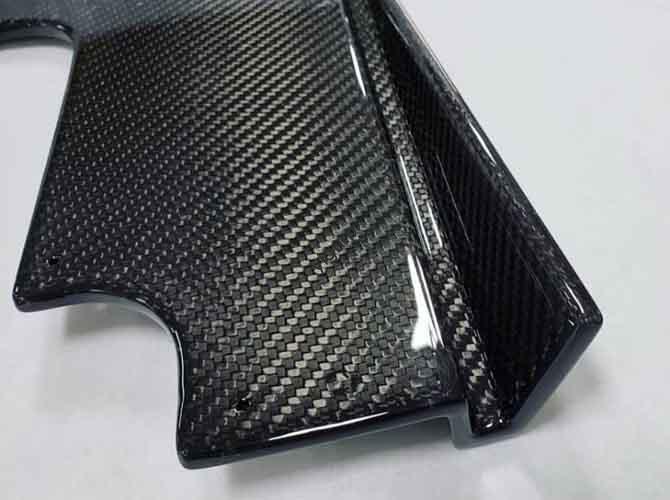
Understanding Carbon Fiber Composite CNC Machining
To grasp the value of this technology, let’s break down its core components. Carbon Fiber Composite refers to a material made of carbon fiber strands embedded in a polymer matrix (like epoxy resin), offering exceptional strength and lightness. CNC Machining (Computer Numerical Control Machining) is an automated process that uses pre-programmed software to control machine tools, ensuring consistent precision across every part.
Together, Carbon Fiber Composite CNC Machining combines these two elements to shape composite materials into intricate, high-performance components. Key terms in this space include:
- Material Properties: Carbon fiber composites boast high tensile strength, low weight, and corrosion resistance—outperforming metals like steel in many applications.
- Composite Structure: The layered (laminated) design of composites requires specialized machining to avoid delamination (separation of layers).
Machining Definition: For composites, this process focuses on minimizing material waste and preserving structural integrity, unlike traditional metal machining.
Our Capabilities
At Yigu Technology, we’ve built a suite of capabilities to meet the most demanding composite machining needs. Our strengths lie in five core areas:
| Capability | Description |
| Precision Machining | We achieve dimensional accuracy down to ±0.005mm, critical for aerospace and medical parts. |
| Custom Solutions | From one-off prototypes to high-volume production, we tailor processes to your unique design specs. |
| Advanced Equipment | Our fleet includes 5-axis CNC mills and laser cutting machines, optimized for composite materials. |
| Quality Control | Every part undergoes 3-step inspection (pre-machining, in-process, post-machining) using laser scanners. |
| Technical Expertise | Our engineers have 10+ years of experience in composite machining, solving challenges like delamination and tool wear. |
Process: Step-by-Step Carbon Fiber Composite CNC Machining
Machining carbon fiber composites is more complex than metal—thanks to their layered structure. Our process follows a rigorous, 5-step workflow to ensure quality:
- CNC Programming: Our team writes custom G-code (machine instructions) based on your 3D design, accounting for composite thickness and fiber direction to avoid damage.
- Tool Selection: We use diamond-coated end mills and carbide tools—specifically designed to cut composites without fraying or delaminating fibers.
- Cutting Process: The CNC machine operates at controlled speeds (typically 1,500–3,000 RPM for CFRP) to minimize heat buildup, which can weaken the polymer matrix.
- Material Handling: Composites are secured with vacuum clamps to prevent movement during machining, preserving dimensional accuracy.
Quality Inspection: Each part is scanned with a coordinate measuring machine (CMM) to verify it meets your tolerance requirements.
Materials: The Building Blocks of Our Components
We work with a range of composite materials, each chosen for its unique properties and application fit. Below is a breakdown of our most commonly used materials:
| Material Type | Key Features | Typical Applications |
| Carbon Fiber Reinforced Polymer (CFRP) | Highest strength-to-weight ratio; corrosion-resistant | Aerospace wings, automotive chassis |
| Thermoset Composites | Hardens permanently when cured; high heat resistance | Industrial machinery parts |
| Thermoplastic Composites | Re-moldable when heated; easy to repair | Sports equipment (bicycle frames) |
| Epoxy Resin | Acts as a matrix for carbon fibers; strong adhesion | Medical device housings |
| Prepreg Materials | Pre-impregnated carbon fibers; consistent quality | High-performance aerospace components |
Surface Treatment: Enhancing Aesthetics and Performance
After machining, surface treatment is critical to improve durability, appearance, and functionality. Our surface treatment options include:
- Sanding: Uses fine-grit sandpaper to smooth rough edges and remove machining marks, preparing the surface for further treatment.
- Polishing: Creates a glossy finish using abrasive compounds, ideal for parts where aesthetics matter (e.g., sports equipment).
- Coating: Applies a protective layer (like polyurethane) to resist scratches, UV damage, and chemical exposure.
- Painting: Uses high-temperature-resistant paints for parts in harsh environments (e.g., automotive engine components).
Surface Finishing: A final quality check to ensure uniformity—we meet ISO 8501-1 standards for surface cleanliness.
Tolerances: Achieving Uncompromising Precision
Tolerances (allowable deviations from the design) are make-or-break for composite components, especially in industries like aerospace. At Yigu Technology, we prioritize:
- Precision Tolerances: For most parts, we maintain ±0.01mm—well above industry averages for composite machining.
- Tight Tolerances: For critical applications (e.g., medical implants), we achieve ±0.005mm using advanced measurement tools.
- Dimensional Accuracy: Our CMMs (Coordinate Measuring Machines) can detect deviations as small as 0.001mm, ensuring consistency.
- Measurement Techniques: We use both contact (CMM) and non-contact (laser scanning) methods to verify tolerances.
- Quality Standards: All parts comply with AS9100 (aerospace) and ISO 13485 (medical) standards for tolerance control.
Table: Tolerance Comparison by Industry
| Industry | Typical Tolerance Requirement | Our Achievable Tolerance |
| Aerospace | ±0.02mm | ±0.008mm |
| Automotive | ±0.05mm | ±0.01mm |
| Medical Devices | ±0.01mm | ±0.005mm |
Advantages: Why Choose Carbon Fiber Composite CNC Machining?
This technology offers unmatched benefits over traditional metal machining and other composite fabrication methods:
- High Strength-to-Weight Ratio: Carbon fiber composites are 5x stronger than steel but 70% lighter—reducing fuel consumption in aerospace/automotive applications.
- Corrosion Resistance: Unlike metals, composites don’t rust or degrade in wet/chemical environments, extending part lifespan.
- Dimensional Stability: Composites have low thermal expansion, meaning they don’t warp in extreme temperatures (critical for industrial machinery).
- Customizability: CNC machining allows for complex shapes (e.g., curved aerospace parts) that are impossible with manual methods.
Cost-Effectiveness: While upfront costs are higher than metals, composites last longer and require less maintenance—lowering total ownership costs by 30–40% (per industry data).
Applications Industry: Where Our Components Shine
Our Carbon Fiber Composite CNC Machined parts power innovation across five key industries:
- Aerospace: Engine components, wing spars, and interior panels—reducing aircraft weight by up to 20%.
- Automotive: Lightweight chassis parts, battery housings, and body panels—improving electric vehicle (EV) range by 15–20%.
- Sports Equipment: Bicycle frames, golf club shafts, and tennis rackets—enhancing performance with lighter, stiffer materials.
- Industrial Machinery: Gear housings, conveyor belts, and pump parts—resisting wear and corrosion in harsh factories.
Medical Devices: Surgical instruments, implantable components, and diagnostic equipment—meeting strict biocompatibility standards.
Case Studies: Real-World Success with Yigu Technology
Case Study 1: Aerospace Engine Bracket
- Challenge: A leading aerospace client needed a lightweight engine bracket that could withstand 500°C temperatures.
- Solution: We used Prepreg CFRP and 5-axis CNC machining to create a bracket with ±0.008mm tolerance. We applied a heat-resistant coating for durability.
- Outcome: The bracket reduced engine weight by 18% and passed 1,000+ hours of thermal testing. The client renewed their contract for 5,000 units/year.
Case Study 2: Medical Implant Component
- Challenge: A medical device company required a biocompatible composite part for spinal implants.
- Solution: We machined Epoxy Resin-based composites with ±0.005mm tolerance, followed by sanding and sterilization.
Outcome: The part met ISO 13485 standards and was approved for clinical use. The client reported zero defects in 2,000+ units.
Why Choose Us: Yigu Technology’s Competitive Edge
When you partner with us, you get more than just machining—you get a trusted collaborator. Here’s why clients choose Yigu Technology:
- Expertise: Our engineers have 10+ years of composite machining experience—we solve problems others can’t (e.g., reducing delamination rates by 90%).
- Quality: We maintain a 99.8% defect-free rate, verified by third-party audits (AS9100, ISO 13485).
- Reliability: We meet 100% of delivery deadlines, thanks to our in-house production and inventory management.
- Customer Service: Our team provides 24/7 support—from design 咨询 (consultation) to post-delivery follow-up.
Innovation: We invest 15% of revenue in R&D—recently launching a new laser-based machining method that cuts production time by 25%.