
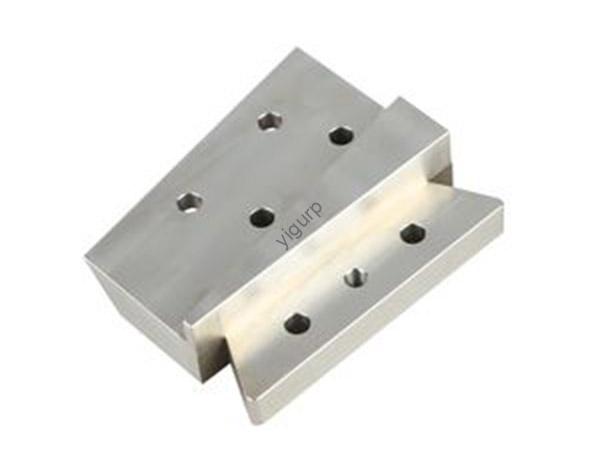
Si está buscando un acero para herramientas que equilibre la dureza, resistencia al desgaste, y facilidad de uso, AISI A2 tool steel is a top contender. Como acero para herramientas de trabajo en frío, está diseñado para herramientas que cortan, forma, o formar materiales sin romperse o desgastarse demasiado pronto, lo que lo convierte en uno de los favoritos en el trabajo con metales., moldura de plastico, y la industria automotriz. En esta guía, desglosaremos sus propiedades clave, aplicaciones del mundo real, como se hace, y cómo se compara con otros materiales. Al final, you’ll know if it’s the right fit for your tooling needs.
1. Material Properties of AISI A2 Tool Steel
AISI A2’s performance comes from its carefully crafted chemical composition and well-balanced properties. Let’s explore each category in simple, practical terms:
Composición química
Elalloying elements in AISI A2 work together to create a material that’s both tough and wear-resistant. Here’s a breakdown of typical content and their roles:
| Element | Typical Content | Role in AISI A2 Performance |
|---|---|---|
| Carbon (do) | 0.95–1.05% | Forms small, hard carbides to boost wear resistance—critical for cutting tools. |
| Chromium (cr) | 4.75–5.50% | Enhances hardenability (so the steel hardens evenly) and adds mild wear resistance. |
| Manganese (Mn) | 0.30–0.50% | Improves machinability and helps the steel respond better to heat treatment. |
| Silicio (Y) | 0.20–0.40% | Strengthens the steel during heat treatment and prevents oxide formation on the surface. |
| Molybdenum (Mes) | 0.90–1.20% | Boosts toughness and reduces brittleness after quenching—key for tools that face impacts. |
| Vanadium (V) | 0.15–0.30% | Refines the steel’s grain structure, making it more durable and less likely to crack. |
| Tungsten (W.) | ≤ 0.10% | Present in small amounts (if at all) and has minimal impact on overall performance. |
Physical Properties
These traits describe how AISI A2 behaves in everyday conditions (like heating, enfriamiento, or handling):
- Densidad: ~7.85 g/cm³ (same as most steels—easy to calculate tool weight for designs or shipping).
- Conductividad térmica: ~30 W/(m·K) (dissipates heat better than higher-chromium steels like AISI D2—good for tools that warm up during use).
- Thermal expansion coefficient: ~11.5 × 10⁻⁶/°C (minimizes warping when heated, keeping tools precise).
- Specific heat capacity: ~460 J/(kg·K) (handles temperature swings, from cold workshops to warm machining centers).
- Magnetic properties: Ferromagnetic (works with magnetic tool holders in CNC machines or bench grinders).
Propiedades mecánicas
These are the “workhorse” features that make AISI A2 ideal for real-world tools:
- Resistencia a la tracción: ≥ 2,200 MPa (después del tratamiento térmico)—strong enough to handle cutting or stamping forces.
- Yield strength: ≥ 1,800 MPa (resists permanent bending, so tools keep their shape even under stress).
- Dureza: 57–61 HRC (Rockwell), ~580–620 HV (Vickers), ~550–600 HBW (Brinell)—hard enough for cutting, but not so hard that it’s brittle.
- Impact toughness: ~25–35 J (at room temperature)—one of its best traits! Tougher than AISI D2 or D3, so it resists breaking from accidental impacts.
- Fatigue strength: ~850 MPa (resists damage from repeated use, perfect for high-cycle tools like stamping dies).
- Resistencia al desgaste: Very good—2x better than AISI O1 (thanks to chromium carbides), but less than AISI D2.
Other Properties
- Resistencia a la corrosión: Moderate—resists mild rust better than plain carbon steels (works well in indoor workshops; add a coating for outdoor use).
- Hardenability: Excellent—hardens evenly even in thick tool sections (ideal for large dies or long blades).
- Tempering resistance: Maintains hardness up to ~280°C (suitable for tools that get slightly warm during use, like milling cutters).
- Estabilidad dimensional: High—minimal shrinkage after heat treatment (critical for precision tools like injection mold inserts).
2. Applications of AISI A2 Tool Steel
AISI A2’s mix of toughness and wear resistance makes it versatile across industries. Here are its most common uses:
Metalworking Industry
It’s perfect for tools that need to cut metal without breaking:
- herramientas de corte: Lathe tools (for turning steel or aluminum), milling cutters (for shaping parts), and broaches (for creating slots in gears).
- Lathe tools: Stay sharp longer than AISI O1 and resist chipping if you hit a hard spot in the metal.
- Milling cutters: Used in CNC machines for general-purpose cutting—works well with both ferrous and non-ferrous metals.
- Broaches: Create precise, smooth slots without requiring frequent sharpening.
Plastic Molding Industry
Its dimensional stability and toughness work for mold components:
- Insertos para moldes de inyección: Make plastic parts (like toy components or electronics housings)—maintain precision over 300,000+ ciclos.
- Compression molds: Shape plastic parts under pressure—resist wear from repeated contact with molten plastic and don’t crack from clamping forces.
Woodworking Industry
It’s a great choice for tools that cut wood (especially hard woods):
- Planer blades: Smooth hardwoods like oak or maple—stay sharp longer than high-speed steel blades.
- Router bits: Carve grooves or patterns in wood—tough enough to handle knots without breaking.
- Saw blades: Cut thick wood planks—reduce the need for blade changes and sharpening.
Industria automotriz
Its strength and toughness work for heavy-duty tooling:
- Stamping dies: Shape metal sheets into car parts (like door panels or fenders)—resist wear from high pressure and don’t crack from repeated use.
- Punches: Create holes in metal components (like chassis brackets)—tough enough to punch through thick steel without bending.
- Dies for forging: Shape hot metal into automotive parts (like connecting rods)—resist heat and wear.
General Engineering
It’s used for cold-work tools that shape metal at room temperature:
- Cold work tools: Bending dies (for pipes or metal sheets), herramientas de formación (for making brackets), and shear blades (for cutting metal sheets).
- Cold forming tools: Shape metal into parts (like bolts or nuts) using pressure—tough enough to handle high forces without breaking.
- Cold extrusion tools: Push metal through a die to create complex shapes (like aluminum profiles)—maintain precision and resist wear.
3. Manufacturing Techniques for AISI A2 Tool Steel
Producing AISI A2 requires precise steps to ensure its balanced properties. Here’s the process:
1. Steelmaking Process
- Electric Arc Furnace (EAF): The most common method. Scrap steel is melted in an EAF, y alloying elements (cr, Mes, V) are added to reach AISI A2’s exact composition.
- Basic Oxygen Furnace (BOF): Rare for AISI A2 (used only for large-scale production of tool steels).
2. Rolling and Forging
- Hot rolling: The steel is heated to ~1,100–1,200°C and rolled into bars, platos, or sheets (the starting shape for tools).
- Cold rolling: Optional for thin sheets—smoothes the surface and increases hardness slightly (used for precision parts like small blades).
- Drop forging: Uses a hammer to shape hot steel into tool blanks (like die blocks or cutter bodies).
- Press forging: Uses a hydraulic press to create precise shapes (for complex tools like injection mold inserts).
3. Tratamiento térmico
Heat treatment is critical to unlock AISI A2’s properties. The typical process is:
- Austenitizing: Heat the steel to 850–900°C and hold for 1–2 hours (converts the structure to austenite, preparing it for hardening).
- Temple: Cool rapidly in oil (converts austenite to martensite, creating high hardness without excessive brittleness).
- Tempering: Reheat to 180–250°C and hold for 2–4 hours (reduces brittleness while keeping hardness and boosting toughness).
- Cryogenic treatment: Opcional (cool to -80 to -196°C after quenching)—eliminates retained austenite, improving dimensional stability and wear resistance.
4. Tratamiento superficial
- Molienda: Uses abrasive wheels to shape the tool to precise dimensions (p.ej., sharpening a milling cutter or flattening a die surface).
- Pulido: Crea una superficie lisa (critical for injection mold inserts, which need to transfer a glossy finish to plastic parts).
- Revestimiento: Options include titanium nitride (Estaño) or diamond-like carbon (contenido descargable)—boost wear resistance by 20–30% (ideal for high-cycle tools like stamping dies).
5. Control de calidad
Every batch of AISI A2 is tested to meet strict standards:
- Chemical analysis: Uses spectrometry to check element levels (ensures it matches AISI A2’s specs).
- Mechanical testing: Includes hardness tests (to verify HRC), impact tests (to check toughness), and tensile tests (to measure strength).
- Non-destructive testing (END): Uses ultrasonic or magnetic particle testing to find hidden cracks or defects (critical for tools that face high pressure).
4. Estudios de caso: AISI A2 Tool Steel in Action
Real-world examples show how AISI A2 solves common tooling problems. Here are three detailed cases:
Estudio de caso 1: Metalworking Milling Cutters
Application Background: A U.S.-based machine shop used AISI O1 milling cutters to machine steel parts for furniture. The cutters dulled after 400 regiones, requiring sharpening (costing $120/sharpen, 8 sharpenings/month). Performance Improvement: They switched to AISI A2 cutters (coated with TiN). The cutters lasted 1,100 parts—2.75x longer.Cost-Benefit Analysis: Monthly sharpening costs dropped to $436 (de $960), saving $6,288/year. Machining time also fell by 12% (fewer tool changes), allowing the shop to take on more orders.
Estudio de caso 2: Plastic Injection Mold Inserts
Application Background: A German plastic parts manufacturer used AISI P20 mold inserts to make plastic toy components. The inserts wore out after 200,000 ciclos, requiring replacement (costing $1,800/insert, 5 replacements/year). Performance Improvement: They switched to AISI A2 inserts. The inserts lasted 500,000 cycles—2.5x longer.Cost-Benefit Analysis: Annual replacement costs dropped to $720 (de $9,000), saving $8,280/year. The toy parts also had fewer defects (1% vs. 5% antes), reducing scrap costs by $2,000/year.
Estudio de caso 3: Automotive Stamping Dies
Application Background: A Mexican automotive supplier used AISI D2 stamping dies to make car fenders. The dies cracked after 30,000 ciclos (due to low toughness), requiring expensive repairs (costing $3,000/repair, 4 repairs/year). Performance Improvement: They switched to AISI A2 dies. The dies lasted 80,000 cycles and didn’t crack—2.6x longer life with zero repairs.Cost-Benefit Analysis: Annual repair costs dropped to $0 (de $12,000), saving $12,000/year. Downtime for repairs also fell by 100%, increasing production capacity by 15%.
5. AISI A2 Tool Steel vs. Other Materials
How does AISI A2 compare to other tool steels and non-steel materials? Let’s use data to decide:
Comparison with Other Tool Steels
AISI A2 is often compared to AISI M2, O1, T7, D2, and D3 (common tool steels). Here’s how they stack up:
| Propiedad | AISI A2 | AISI M2 | AISI O1 | AISI S7 | AISI D2 | AISI D3 |
|---|---|---|---|---|---|---|
| Dureza (CDH) | 57–61 | 60–65 | 57–60 | 54–58 | 58–62 | 60–65 |
| Resistencia al desgaste | Very Good | Very Good | Bien | Very Good | Excelente | Excelente |
| Impact Toughness | Bien | Moderado | Bajo | Excelente | Moderado | Moderado |
| Costo | Medio | Alto | Bajo | Alto | Medio | Medio-alto |
| maquinabilidad | Bien | Moderado | Bien | Bien | Moderado | Moderado |
| Mejor para | Balanced needs | High-speed cutting | Light wear | Shock loads | Heavy wear | Extreme wear |
Comparison with Non-Steel Materials
AISI A2 also competes with carbides, cerámica, and polycrystalline diamond (PCD):
| Material | Dureza (CDH) | Resistencia al desgaste | Impact Toughness | Costo | maquinabilidad |
|---|---|---|---|---|---|
| Acero para herramientas AISI A2 | 57–61 | Very Good | Bien | Medio | Bien |
| Tungsten Carbide | 70–75 | Very Excellent | Bajo | Alto | Pobre |
| Alumina Ceramic | 85–90 | Very Excellent | Muy bajo | muy alto | Impossible |
| Diamante policristalino (PCD) | 90–95 | Excelente | Muy bajo | muy alto | Impossible |
Key Takeaway: AISI A2 is the “sweet spot” for most tooling needs—it’s tougher than D2/D3, more wear-resistant than O1, and more affordable than M2/S7. For tools that don’t need extreme wear resistance (like D3) or shock resistance (like S7), AISI A2 delivers the best balance of performance and cost.
Yigu Technology’s Perspective on AISI A2 Tool Steel
En Yigu Tecnología, we recommend AISI A2 to clients who need a versatile tool steel—especially small to mid-sized shops or businesses new to tool steel selection. Its balance of toughness, resistencia al desgaste, and machinability makes it easy to work with, while its performance solves common problems like frequent tool changes or cracking. Many customers switch from AISI O1 or D2 and see 2–3x longer tool life with fewer headaches. For most cold-work tooling applications (like general cutting, moldura, or stamping), AISI A2 is our go-to recommendation—it’s reliable, rentable, and delivers consistent results.
FAQ About AISI A2 Tool Steel
- Can AISI A2 be used for high-speed cutting?
It works for moderate-speed cutting (arriba a 180 m/min for steel). For high-speed cutting (encima 300 m/mi), AISI M2 or carbides are better—they handle heat more effectively and stay sharp longer at high speeds. - Is AISI A2 easier to machine than AISI D2?
Sí! AISI A2 has lower chromium content than D2, which makes it softer in its pre-heat-treated state. You can machine it with standard carbide tools (no need for special equipment) and get cleaner cuts with less tool wear. - Does AISI A2 need to be quenched in oil, or can I use water?
Oil quenching is recommended. Water quenching will make AISI A2 harder, but it also increases the risk of cracking (due to rapid cooling). Oil quenching cools the steel more slowly, balancing hardness and toughness without cracking.