
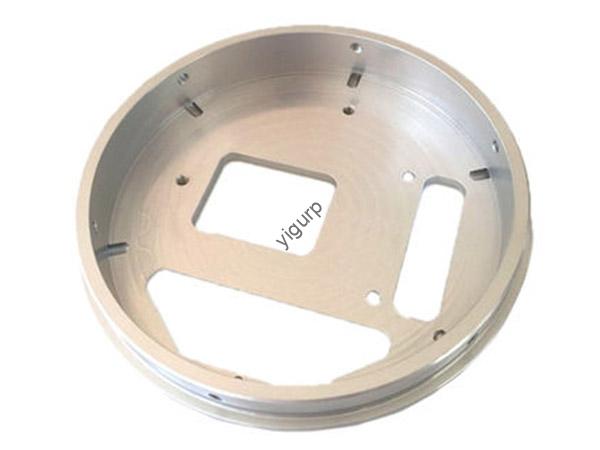
El acero inoxidable AISI 347H es un acero con alto contenido de carbono., Aleación austenítica estabilizada con niobio diseñada para ambientes corrosivos y de temperaturas extremadamente altas.. Su mayor contenido de carbono (vs. estándar 347) aumenta la resistencia a la fluencia, convirtiéndolo en la mejor opción para plantas de energía, refinerías, e instalaciones químicas. Esta guía cubre todo, desde sus especificaciones principales hasta usos en el mundo real., helping you make informed decisions for high-heat projects.
1. Descripción general de materiales & Especificaciones clave
Understanding AISI 347H’s composition and standards is essential to leveraging its full potential. A continuación se muestra un desglose claro de sus propiedades esenciales..
Composición química & Estándares
ElAISI 347H composition includes 17–19% chromium, 9–13% nickel, 0.80–1.50% niobium (plus tantalum), and a critical347H carbon 0.04–0.10 % —this higher carbon content enhances high-temperature strength. no hay un solo347H chemical formula; en cambio, Se adhiere a los estándares globales de coherencia.:
- 347H UNS S34709 (Sistema de numeración unificado)
- 347H ASTM A240 / 347H ASME SA-240 (para platos, hojas, y tiras)
- 347H EN 1.4912 equivalente (Estándar europeo para igualar el rendimiento)
Físico & Propiedades mecánicas
AISI 347H delivers reliable strength and stability across demanding applications. Las métricas clave están organizadas en la siguiente tabla.:
| Propiedad | Valor |
|---|---|
| Densidad | 8.0 gramos/cm³ |
| Punto de fusión | 1398 °C |
| Resistencia mínima a la tracción | 515 MPa |
| Límite elástico mínimo | 205 MPa |
| Minimum elongation | 35 % |
| Grain size | ASTM 7 or coarser (per ASME standards) |
A Japanese power plant uses347H ASTM A240 plates for boiler headers—they rely on the 515 MPa tensile strength to handle 700 °C temperatures and high pressure.
2. Propiedades de alta temperatura & Resistencia a la fluencia
AISI 347H’s greatest strength is its performance under sustained high heat. Its higher carbon content and niobium stabilization make it far more creep-resistant than standard 347.
Rasgos críticos de alta temperatura
- Fuerza de fluencia: El 347H 100,000-hour creep strength (a key industry benchmark) is ~115 MPa at 650 °C—meaning it can operate for decades without deforming. Para tareas más cortas, 347H short-time tensile at 700 °C is ~300 MPa.
- Resistencia a la oxidación: Resiste la oxidación y la incrustación hasta 1050 °C—347H oxidation resistance up to 1050 °C makes it ideal for furnace radiant tubes and flare stacks. El 347H steam oxidation rate is also low (≤0.15 mm/year at 800 °C in pure steam).
- Allowable Stress: Por 347H ASME Section II allowable stresses, it’s approved for pressure vessels at temperatures up to 870 °C.
- Service Limit: El 347H service temperature limit es 870 °C for continuous use and 980 °C for intermittent exposure.
Un estudio de caso: A European refinery installed347H refinery hydrocracker tubes (operando en 850 °C). Después 12 años, the tubes showed no creep or oxidation, saving the refinery $200,000 en costos de reposición.
3. Resistencia a la corrosión & Stabilization Benefits
While AISI 347H is known for high heat resistance, its niobium stabilization also delivers exceptional corrosion protection—even in harsh chemicals.
Rasgos clave de resistencia a la corrosión
- Intergranular Corrosion Immunity: Niobium binds with carbon to form NbC (niobium carbide), preventing chromium depletion at grain boundaries. This gives 347H intergranular corrosion immunity y 347H weld decay resistance—a major upgrade over unstabillized alloys like 304.
- Pitting & Stress Corrosion: 347H pitting corrosion vs 316H is competitive—347H resists small holes (pitting) in acidic environments, while 316H excels in chlorides. It also has strong 347H chloride stress corrosion cracking resistance for marine or chemical applications.
- Chemical Performance: Se encarga 347H nitric acid service (resists dilute nitric acid up to 60 °C) and has a low 347H caustic corrosion rate (≤0.02 mm/year in 10% sodium hydroxide). It also resists 347H polythionic acid cracking (a risk in refineries after shutdowns).
Estados Unidos. chemical plant switched from 316H to 347H for acid reactor vessels—347H intergranular corrosion immunity eliminated leaks, and the higher carbon handled 750 °C operating temperatures.
4. Tratamiento térmico & Control de microestructura
Proper heat treatment is critical to unlocking AISI 347H’s full potential. It ensures the alloy maintains strength, resiste la corrosión, and avoids harmful phases like sigma.
Key Heat Treatment Processes
- Recocido de solución: Calentar para 1050–1100°C, mantener durante 30 a 60 minutos, luego apagar con agua. Esto disuelve los carburos no deseados y restaura una estructura austenítica uniforme, fundamental para 347H carbide solution treatment.
- Stabilizing Anneal: Calentar para 870–900°C to ensure niobium fully reacts with carbon. This step enhances corrosion resistance and prevents sensitization.
- Grain Size Control: El 347H grain size control ASTM 7 min (coarser grains) is required by ASME standards—coarser grains improve creep resistance at high temperatures.
- Trabajo en caliente: Usar 1150–900°C como el 347H hot working range para forjar o laminar. Esto mantiene el material dúctil y evita grietas..
Otras consideraciones
- Evitación de la sensibilización: Avoid heating to 347H sensitization temperature 425–815 °C for long periods—this prevents chromium depletion.
- Alivio del estrés residual: Calentar a 450–600 °C para reducir las tensiones causadas por la soldadura o el conformado.. Even after this, 347H intergranular corrosion after PWHT remains minimal.
5. Soldadura, Fabricación & Directrices de mecanizado
Welding and machining AISI 347H require simple adjustments to preserve its high-temperature and corrosion properties.
Consejos de soldadura
- Metal de aportación: Usar 347H filler metal ER347H (for TIG/MIG welding) to match the base metal’s carbon and niobium content. 347H carbon matching filler is critical—using standard 347 filler reduces creep resistance.
- Precalentar & Pwht: 347H preheat temperature Por lo general, no se requiere para espesores de hasta 25 milímetros. For thicker parts, 347H post-weld heat treatment (Pwht) (600–650 °C) helps restore 347H HAZ creep strength (heat-affected zone) and relieve stress.
- Soldabilidad: 347H weldability rating is “excellent”—it has low 347H hot cracking susceptibility when using proper parameters.
Mecanizado & formando
- Velocidades & Feeds: 347H machining speeds and feeds debe ser entre un 10% y un 15% más bajo que el acero al carbono. Por ejemplo, use 80–100 m/min speed with 347H coated carbide tool life (Los recubrimientos de TiAlN duran 2 veces más que las herramientas sin recubrimiento).
- Formabilidad & Distortion: 347H cold working limits allow moderate bending and forming. Para 347H distortion control techniques, use clamping during welding and slow cooling. For pressure vessels, follow 347H joint design for pressure vessels (thicker welds for strength).
6. Formularios de productos, Tallas & Cadena de suministro
AISI 347H is available in a wide range of forms to fit nearly any high-temperature project.
Formularios de productos comunes
- Platos: 347H stainless steel plate thickness chart va desde 3 mm a 200 milímetros, incluido 347H pressure vessel plate (certified to ASME SA-240).
- Tubería & tubos: 347H pipe schedule dimensions include Schedule 40 to Schedule 160; 347H seamless tube ASTM A312 is used for boiler and superheater tubes.
- Verja & Guarniciones: 347H round bar stockists offer 10–300 mm diameter bars; 347H forged fittings (elbows, tees) suit high-pressure piping.
- Formularios especiales: 347H coil slit widths (10–1250 mm), 347H flat bar tolerances (±0,1mm), y 347H hollow bar suppliers (for lightweight parts).
Consejos para la cadena de suministro
Work with347H round bar stockists and global distributors for quick access to common sizes. For unique parts, choose suppliers offering347H custom forgings (p.ej., furnace components).
7. Aplicaciones industriales & Use Cases
AISI 347H’s versatility makes it a top choice for high-heat, high-corrosion industries. Here are key applications:
- Generación de energía: 347H boiler tubes, 347H superheater headers, y 347H power plant headers handle 700–850 °C steam and pressure.
- Refining: 347H refinery hydrocracker tubes y 347H flare stack tips resist high heat and chemical exposure.
- Procesamiento químico: 347H heat exchanger shells y 347H ethylene cracking coils operate reliably in acidic, ambientes de alta temperatura.
- Other Uses: 347H furnace radiant tubes (1000 °C intermittent heat) y 347H steam distribution manifolds (corrosion-resistant steam flow).
Un ejemplo real: Estados Unidos. power plant replaced 321H boiler tubes with347H boiler tubes—the 347H tubes showed 50% less creep after 8 años, extending maintenance intervals.
La perspectiva de la tecnología Yigu
En Yigu Tecnología, we recommend AISI 347H for clients needing high-temperature creep resistance and corrosion protection. Nosotros obtenemos347H ASTM A240 platos y347H seamless tube ASTM A312 de molinos certificados, ensuring compliance with ASME standards. For power and refinery clients, priorizamos347H 100,000-hour creep strength verificación. Nuestro equipo asesora en soldadura (usando347H filler metal ER347H) and heat treatment to maximize performance. For long-term high-heat projects, AISI 347H is a cost-effective, reliable choice.
Preguntas frecuentes
- ¿Cuál es la diferencia entre AISI? 347 and 347H?
347H has a higher carbon content (0.04–0.10% vs. 347es ≤0,08%), boosting 347H high-temperature strength y resistencia a la fluencia. Both use niobium for corrosion protection, but 347H is better for long-term high-heat service (p.ej., boiler tubes), mientras 347 suits lower-heat applications. - Do I need preheat for welding AISI 347H?
No-347H preheat temperature is not required for thicknesses up to 25 milímetros. For thicker parts (>25 mm), a 100–150 °C preheat reduces cracking risk. Always use 347H filler metal ER347H and optional PWHT to restore HAZ strength. - Can AISI 347H resist sulfuric acid?
Sí-347H sulfuric acid performance is strong in dilute solutions (≤20% concentration, ≤60 °C). It resists pitting and intergranular corrosion, making it suitable for chemical tanks and piping handling mild sulfuric acid. For concentrated acid, consider 317L.