
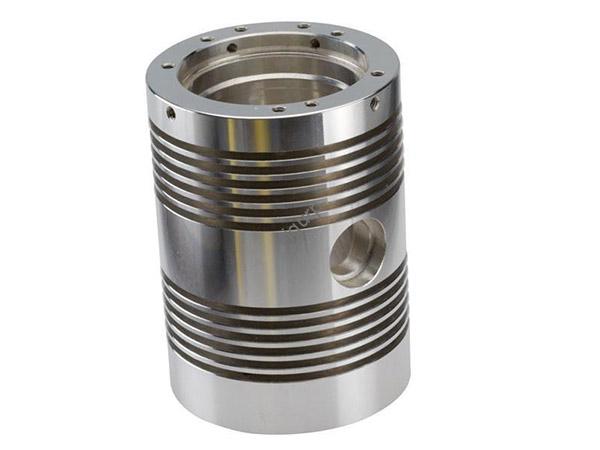
El acero inoxidable AISI 316Ti es una variante estabilizada con titanio del clásico 316 aleación, construido para enfrentar la corrosión intergranular y los desafíos de alta temperatura. Ya sea que esté en procesamiento químico, productos farmaceuticos, o automotriz, Comprender sus especificaciones y puntos fuertes puede ayudarle a elegir el material adecuado para su proyecto.. Esta guía cubre todo, desde su composición hasta usos en el mundo real., with practical tips for fabrication.
1. Descripción general de materiales & Especificaciones clave
Getting to know AISI 316Ti’s core details is the first step in using it effectively. Below is a breakdown of its chemical makeup, estándares globales, and key properties.
Composición química & Estándares
ElAISI 316Ti composition includes titanium (0.10–0.30%), which sets it apart from regular 316. Unlike a simple316Ti chemical formula, it follows strict elemental ranges: 16–18% chromium, 10–14% nickel, 2–3% molybdenum, y un316Ti carbon content limit of ≤0.08%. This titanium addition prevents harmful carbide formation. It’s governed by major standards:
- 316Ti UNS S31635 (Sistema de numeración unificado)
- 316Ti EN 1.4571 equivalente (Estándar europeo para igualar el rendimiento)
- 316Ti ASTM A240 / 316Ti ASME SA-240 (para platos, hojas, y tiras)
Mecánico & Propiedades físicas
AISI 316Ti delivers reliable performance across applications. Key metrics are shown in the table below:
| Propiedad | Valor |
|---|---|
| Densidad | 7.98 gramos/cm³ |
| Punto de fusión | 1390 °C |
| Fuerza de producción | 205 MPa (mínimo) |
| Resistencia a la tracción | 515 MPa (mínimo) |
| Titanium stabilization ratio | Typically 4–6x the carbon content (ensures full stabilization) |
A pharmaceutical company in Germany, Por ejemplo, chose316Ti ASTM A240 plates for drug storage tanks because its mechanical properties met strict hygiene and strength requirements.
2. Titanium Stabilization & Intergranular Corrosion Resistance
The biggest advantage of AISI 316Ti is itstitanium stabilization—a game-changer for fighting intergranular corrosion (IGC), which can weaken metals at the grain boundaries.
How Titanium Stabilization Works
- 316Ti titanium carbide precipitation: Titanium binds with carbon to form TiC (titanium carbide) instead of Cr₂₃C₆ (chromium carbide). This stops chromium depletion at grain boundaries, the main cause of IGC.
- 316Ti sensitization immunity: Unlike 316L, it resists sensitization (a state that makes metal prone to IGC) even after heating to 450–850 °C. Tests like 316Ti intergranular corrosion test ASTM A262 (Practice C) confirm its resistance.
- 316Ti vs 316L sensitization: 316L relies on low carbon to avoid IGC, but 316Ti’s titanium makes it more durable in repeated heating (p.ej., welding or heat cycling).
Critical Processes for Stability
- 316Ti stabilization anneal 900–950 °C: Heating to this range ensures titanium fully reacts with carbon. Slow cooling after annealing preserves this stability.
- 316Ti service temperature limit for IGC: It stays immune to IGC up to 800 °C, making it ideal for high-heat equipment like heat exchangers.
3. Propiedades de alta temperatura & Fuerza de fluencia
AISI 316Ti shines in high-temperature environments, thanks to its stable structure and resistance to creep (slow deformation under stress).
Key High-Temperature Metrics
- 316Ti high-temperature oxidation resistance: It resists scaling (surface damage from oxygen) arriba a 316Ti scaling temperature de 870 °C, with a slow 316Ti steam oxidation rate (≤0.15 mm/year at 800 °C in steam).
- Fuerza de fluencia: El 316Ti 100,000-hour creep strength is ~90 MPa at 600 °C, y 316Ti creep rupture life at 600 °C exceeds 50,000 hours under typical stress.
- Allowable Stress: Por 316Ti allowable stress ASME Section II-D, it’s approved for use in pressure vessels at temperatures up to 815 °C.
- 316Ti vs 316H elevated-temperature strength: 316H has higher short-term strength, but 316Ti offers better long-term creep stability and corrosion resistance at high heat.
Un estudio de caso: A chemical plant in Texas used316Ti heat exchanger tubes (operando en 650 °C) para 12 years—no creep-related failures occurred, saving them from costly downtime.
4. Soldadura, Fabricación & Directrices de mecanizado
Working with AISI 316Ti is straightforward, but following best practices ensures you keep its properties intact.
Consejos de soldadura
- Metal de aportación: Usar 316Ti filler metal ER316Ti to match the base metal’s titanium content—this preserves corrosion resistance in the weld.
- Precalentar & Pwht: 316Ti preheat not required for most thicknesses (arriba a 25 milímetros). 316Ti post-weld heat treatment (600–650 °C) is optional but helps relieve residual stress.
- Parameters: Para 316Ti TIG welding parameters, use 100–150 amps, 10–15 volts, and argon shielding gas. This minimizes 316Ti hot cracking susceptibility.
- HAZ Stabilization: The heat-affected zone (ZAT) stays stable because titanium in the base metal prevents chromium carbide formation.
Mecanizado & formando
- Velocidades & Feeds: 316Ti machining speeds and feeds debe ser entre un 10% y un 15% más bajo que el acero al carbono. Por ejemplo, use 90–110 m/min speed with 316Ti tool life with TiN-coated inserts (lasts 2x longer than uncoated tools).
- Formabilidad: 316Ti formability deep drawing works well for parts like automotive exhaust components—just use lubrication to avoid scratching.
- Distortion Control: 316Ti distortion control techniques (p.ej., sujeción durante la soldadura, slow cooling) keep parts true to size.
5. Formularios de productos, Tallas & Cadena de suministro
AISI 316Ti comes in a wide range of forms to fit different projects, from small tubes to large plates.
Formularios de productos comunes
- Platos & Hojas: 316Ti stainless steel plate thickness chart va desde 3 mm a 200 milímetros; 316Ti sheet gauge sizes (16 gauge to 1/2 pulgada) are ideal for architectural or food-grade uses.
- Tubería & tubos: 316Ti seamless pipe ASTM A213 (for high-pressure applications) y 316Ti welded tube ASTM A312 (for low-pressure piping).
- Verja & Guarniciones: 316Ti round bar tolerances (±0.1 mm for precision parts), 316Ti angle iron sizes (20×20 milímetros a 100×100 milímetros), y 316Ti forged fittings dimensions (1/2 inch to 24 pulgadas).
- Coils: 316Ti coil slit widths (10 mm a 1250 milímetros) for large-scale fabrication.
Consejos para la cadena de suministro
Work with316Ti global distributors to get consistent quality. Many suppliers offer custom cuts—for example, 316Ti flat bar stock can be cut to length for immediate use, saving time on fabrication.
6. Aplicaciones industriales & Use Cases
AISI 316Ti’s versatility makes it a top choice across industries. Here are some common uses:
- Procesamiento químico: 316Ti chemical processing columns resist corrosive fluids like acids and solvents.
- Pharmaceuticals: 316Ti pharmaceutical vessels meet strict hygiene standards (no metal leaching into drugs).
- Alimento & Bebida: 316Ti brewery hot liquor tanks y 316Ti food-grade piping handle high temperatures and cleaning chemicals.
- Automotor: 316Ti automotive exhaust systems y 316Ti marine exhaust elbows resist rust from road salt or seawater.
- Specialized Uses: 316Ti aircraft hydraulic tubing (lightweight and strong) y 316Ti nuclear waste containers (corrosion-resistant for long-term storage).
Un ejemplo real: A European brewery replaced their 304 stainless steel tanks with316Ti brewery hot liquor tanks—cleaning cycles became longer (from weekly to monthly) because 316Ti resisted scale buildup.
La perspectiva de la tecnología Yigu
En Yigu Tecnología, we see AISI 316Ti as a go-to for clients needing corrosion and high-temperature resistance. Nosotros obtenemos316Ti seamless pipe ASTM A213 y316Ti ASTM A240 plates from trusted mills, Garantizar el cumplimiento de los estándares globales.. For pharmaceutical and food clients, we prioritize material traceability to meet hygiene rules. Our team also advises on welding—using316Ti filler metal ER316Ti is key to avoiding post-weld corrosion. For projects where long-term durability matters, AISI 316Ti is a reliable, elección rentable.
Preguntas frecuentes
- What’s the difference between AISI 316Ti and 316L?
316Ti uses titanium to prevent intergranular corrosion (IGC), making it better for repeated heating (p.ej., soldadura). 316L relies on low carbon to avoid IGC but is less stable at high temperatures. 316Ti also has better long-term creep strength, while 316L is cheaper for low-heat, low-corrosion uses. - Do I need post-weld heat treatment (Pwht) for AISI 316Ti?
No, 316Ti preheat not required and PWHT is optional for most applications. Titanium stabilizes the weld’s heat-affected zone (ZAT), so corrosion resistance stays intact without PWHT. Only use PWHT if you need to relieve high residual stress (p.ej., thick-walled pressure vessels). - Can AISI 316Ti be used in marine environments?
Sí-316Ti marine exhaust elbows and other parts resist seawater corrosion well. Its molybdenum content fights pitting (small holes from saltwater), and titanium prevents IGC from repeated exposure to salt and moisture. It’s more durable than 304 stainless steel in marine settings.