
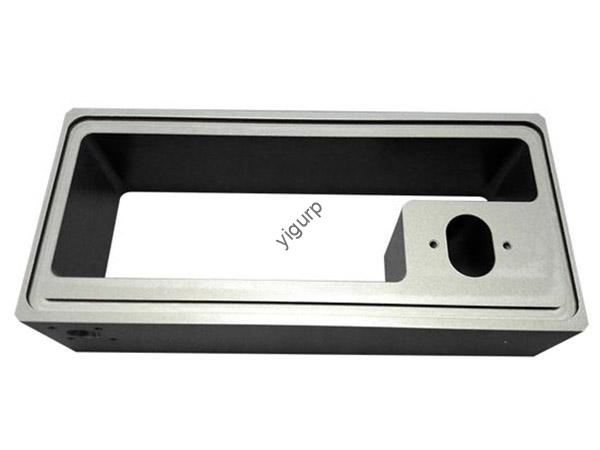
AISI 2205 El acero dúplex es un versátil., Aleación de alto rendimiento que combina la resistencia del acero ferrítico y la resistencia a la corrosión del acero austenítico.. es unico2205 ferrite-austenite balance 50-50 microstructure makes it ideal for harsh environments like offshore oil rigs, plantas quimicas, e instalaciones desaladoras. Esta guía desglosa sus especificaciones clave., rasgos de desempeño, and real-world uses to help you make informed material choices.
1. Descripción general de materiales & Especificaciones clave
Understanding 2205’s composition and standards is the first step to leveraging its full potential. A continuación se muestra un desglose claro de sus propiedades esenciales..
Composición química & Estándares
El2205 duplex steel composition includes 21–23% chromium, 4.5–6.5% nickel, 2.5–3.5% molybdenum, and 0.08–0.20% nitrogen—these elements create the alloy’s balanced microstructure. It adheres to global standards for consistency:
- 2205 UNS S32205 (Sistema de numeración unificado)
- 2205 EN 1.4462 equivalente (Estándar europeo para igualar el rendimiento)
- 2205 ASTM A240 / 2205 ASME SA-240 (para platos, hojas, y tiras)
Físico & Propiedades mecánicas
2205 duplex steel delivers exceptional strength—far higher than austenitic alloys like 316L. Las métricas clave están organizadas en la siguiente tabla.:
| Propiedad | Valor |
|---|---|
| Densidad | 7.82 gramos/cm³ |
| Melting range | 1420–1465 °C |
| Límite elástico mínimo | 450 MPa (2x higher than 316L) |
| Resistencia mínima a la tracción | 620 MPa |
| Dureza Brinell | 293 media pensión (máximo) |
An offshore oil company in Norway uses2205 ASTM A240 plates for subsea manifolds—they rely on the 450 MPa yield strength to handle deep-sea pressure (arriba a 300 bar) y corrosión.
2. Resistencia a la corrosión & Desempeño ambiental
2205’s biggest advantage is its industry-leading corrosion resistance. Es2205 PREN 35–40 (Pitting Resistance Equivalent Number) is far higher than 316L’s PREN of ~24, making it resistant to pitting, crevice corrosion, and stress cracking in harsh fluids.
Rasgos clave de resistencia a la corrosión
- Pitting & Crevice Corrosion: It has exceptional 2205 pitting corrosion resistance and a high 2205 crevice corrosion threshold—even in tight gaps (p.ej., heat exchanger gaskets) exposed to seawater.
- Stress Corrosion Cracking: It offers 2205 chloride stress corrosion cracking immunity—critical for offshore and desalination applications where chloride levels are high.
- Sour Service: It meets 2205 sour service NACE MR0175 estándares, resisting 2205 sulfide stress cracking in oil and gas wells with high hydrogen sulfide (H₂S) levels.
- Resistencia química: Se encarga 2205 sulfuric acid performance (resists 20% sulfuric acid up to 60 °C) y 2205 nitric acid resistance (ideal for chemical processing).
2205 vs 316L corrosion comparison: A desalination plant in Saudi Arabia tested both alloys—316L pipes failed after 2 years due to pitting, mientras2205 seawater corrosion rate (≤0.01 mm/year) kept 2205 pipes operational for 10+ años.
3. High-Temperature & Low-Temperature Properties
2205 performs well across a wide temperature range, though it’s optimized for moderate heat and cold environments.
High-Temperature Traits
- Fortaleza & Oxidación: It maintains 2205 resistencia a altas temperaturas arriba a 300 °C, con 2205 resistencia a la oxidación hasta 300 °C (suitable for warm chemical processes). El 2205 continuous service temperature es 300 °C—beyond this, avoid prolonged exposure to prevent sigma phase formation.
- Resistencia a la fluencia: 2205 creep rupture data shows it can last 10,000+ horas en 250 °C under light stress, making it ideal for heat exchanger tubes.
Low-Temperature Traits
- Toughness: It has excellent 2205 low-temperature toughness, con 2205 impact energy at -46 °C of ≥40 J (no brittle fracture). Es 2205 cryogenic ductility also makes it suitable for cold-climate offshore projects (p.ej., Arctic oil rigs).
Un estudio de caso: A Canadian geothermal plant used2205 geothermal heat exchangers (operando en 280 °C). Después 5 años, no corrosion or creep deformation occurred—unlike the previous carbon steel exchangers that failed every 18 meses.
4. Tratamiento térmico & Microstructure Balance
Proper heat treatment is critical to maintaining 2205’s 50-50 ferrite-austenite balance and avoiding harmful phases like sigma or chi.
Procesos esenciales de tratamiento térmico
- Recocido de solución: Calentar para 1020–1100°C, mantener durante 30 a 60 minutos, luego apagar con agua (el 2205 water quench requirement is non-negotiable—it prevents sigma phase formation and restores the balanced microstructure).
- Trabajo en caliente: Usar 1150–950 °C como el 2205 hot working range para forjar o laminar. This keeps the material ductile and preserves the ferrite-austenite balance.
- Alivio del estrés residual: Heat to 400–450 °C to reduce stresses from welding or forming. Avoid 475 °C (el 2205 embrittlement at 475 °C temperatura) to prevent loss of toughness.
Control de microestructura
- Ferrite Content: Maintain 2205 ferrite content 35–55 % (tested via magnetic methods) to ensure strength and corrosion resistance.
- Sigma Phase Prevention: Avoid heating to 500–800 °C for long periods—2205 sigma phase formation kinetics accelerates in this range, making the material brittle.
5. Soldadura, Fabricación & Directrices de mecanizado
Soldadura 2205 requires careful heat input control to preserve its microstructure, but it’s still highly workable with the right techniques.
Consejos de soldadura
- Consumables: Usar 2205 welding consumables 2209 (for TIG/MIG welding) o 2205 MIG wire 2209—these match 2205’s composition and maintain the ferrite-austenite balance in the weld.
- Heat Input & Interpass Temperature: Control 2205 heat input 0.5–2.5 kJ/mm (low heat = less ferrite formation) and keep 2205 interpass temperature 150 °C max (prevents sigma phase).
- Root Gas Purge: Use argon gas to purge the weld root (critical for austenitic formation and corrosion resistance). Después de soldar, llevar a cabo 2205 post-weld cleaning (molienda + pickling) to remove scale.
Mecanizado & formando
- Velocidades & Feeds: 2205 machining speeds and feeds should be 10–15% lower than austenitic steel. Usar 2205 tool life with coated carbide (TiAlN coatings work best—they resist wear from the alloy’s high strength).
- Formabilidad: 2205 formability limits are moderate—cold bending is possible, but avoid excessive strain (anneal after heavy forming to restore toughness). Usar 2205 distortion control techniques (p.ej., sujeción durante la soldadura) para mantener las piezas fieles al tamaño.
6. Formularios de productos, Tallas & Cadena de suministro
2205 is available in a wide range of forms to fit nearly any high-corrosion, high-strength project.
Formularios de productos comunes
- Platos & Hojas: 2205 duplex plate thicknesses rango de 3 mm a 200 milímetros; 2205 sheet gauge chart incluye 16 indicador (1.5 milímetros) a 1/2 pulgada (12.7 milímetros) for chemical vessel liners.
- Tubería & tubos: 2205 seamless pipe ASTM A790 (for high-pressure offshore piping) y 2205 welded pipe ASTM A928 (for low-pressure desalination lines).
- Verja & Guarniciones: 2205 round bar stock (10 mm a 300 mm de diámetro), 2205 angle iron sizes (20×20 milímetros a 100×100 milímetros), y 2205 marine fasteners (for ship hulls).
- Formularios especiales: 2205 coil slit widths (10 mm a 1250 milímetros), 2205 hollow bar suppliers (for lightweight parts), 2205 custom forgings (p.ej., cuerpos de válvulas), y 2205 clad plate suppliers (for cost-effective large structures).
Consejos para la cadena de suministro
Work with global suppliers who stock2205 seamless pipe ASTM A790 y2205 clad plate suppliers—these forms have longer lead times. For urgent offshore projects, prioritize suppliers with ISO 13845 proceso de dar un título (for weld quality).
7. Aplicaciones industriales & Estudios de caso
2205’s strength and corrosion resistance make it a top choice for industries facing harsh conditions. Estos son los casos de uso clave:
- Offshore & Marina: 2205 offshore piping, 2205 subsea manifolds, y 2205 marine fasteners (resist seawater corrosion and deep-sea pressure).
- Químico & Proceso: 2205 chemical process vessels, 2205 heat exchanger tubes, y 2205 storage tanks for chlorides (handle acids and high-chloride fluids).
- Water Treatment: 2205 desalination evaporators y 2205 FGD scrubber systems (remove sulfur from power plant exhausts).
- Pulp & Paper: 2205 pulp & paper digesters (resist chlorine-based bleaches and high temperatures).
Un ejemplo real: Estados Unidos. oil company replaced 316L with 2205 for offshore risers—2205 sulfide stress cracking resistance eliminated riser failures, reduciendo los costos de mantenimiento mediante 80% and extending service life from 5 a 15 años.
La perspectiva de la tecnología Yigu
En Yigu Tecnología, recomendamos 2205 for clients needing strength + resistencia a la corrosión. Nosotros obtenemos2205 ASTM A240 platos y2205 seamless pipe ASTM A790 de molinos certificados, ensuring ferrite content 35–55% and PREN 35–40. For offshore clients, we provide welding support (usando2209 consumables) and NACE MR0175 testing. Mientras 2205 costs more than 316L, its 2x higher strength and 5x longer lifespan make it cost-effective for high-stress, high-corrosion projects.
Preguntas frecuentes
- What’s the main advantage of 2205 over 316L?
2205 offers 2x higher yield strength (450 MPa frente a. 316L’s 205 MPa) and far better corrosion resistance (PREN 35–40 vs. 316L’s ~24). It’s also immune to chloride stress corrosion cracking, making it ideal for offshore/desalination projects where 316L fails. - Poder 2205 be used at temperatures above 300 °C?
Avoid prolonged use above 300 °C (es continuous service temperature). At 300–500 °C, 2205 sigma phase formation kinetics accelerates, making the material brittle. Para 300 °C+ applications, choose 347H (resistencia a altas temperaturas) or 904L (resistencia a la corrosión). - Do I need to preheat 2205 before welding?
No—preheating isn’t required for 2205. Instead, focus on 2205 heat input control 0.5–2.5 kJ/mm, interpass temperature 150 °C max, and root gas purging. Usar 2205 welding consumables 2209 and post-weld cleaning to preserve performance.