
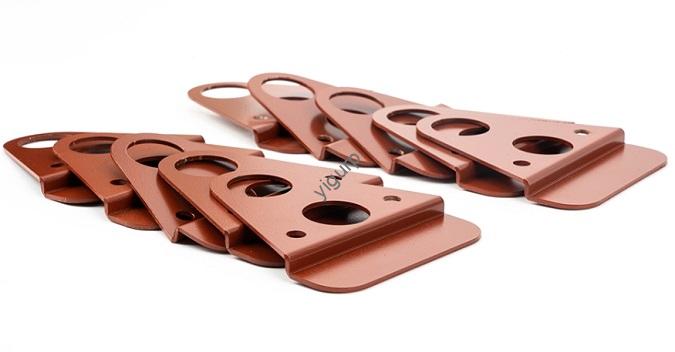
3D printing is no longer just for prototypes—it’s a powerful option for 3D printing mass production, especialmente para lotes pequeños y medianos (10–10.000 piezas). Para empresas que necesitan diseños flexibles, plazos de entrega rápidos, o geometrías complejas, 3La impresión D a menudo supera a los métodos tradicionales como el moldeo por inyección o el mecanizado CNC.. This guide breaks down when to use 3D printing for mass production, which technologies work best, how it compares to traditional processes, and real-world examples of success—so you can decide if it’s right for your next project.
Primero: What Is 3D Printing Mass Production? (And When It Makes Sense)
3D printing mass production uses additive manufacturing to create hundreds or thousands of identical (or customized) parts—without the need for expensive molds. It’s not meant to replace injection molding for ultra-large batches (10,000+ regiones), but it shines in scenarios where traditional methods struggle:
- When you can’t afford injection mold costs (which start at \(3,000 and go up to \)50,000).
- When you need parts in 10 days or less (vs. 4–8 weeks for injection molding).
- When your design has complex features (like internal channels or lattice structures) that CNC or injection molding can’t make.
Key Statistic: A 2023 industry study found that 3D printing reduces lead times for small-batch production (100–1.000 piezas) por 70% en comparación con el moldeo por inyección.
6 Reasons to Choose 3D Printing for Mass Production
3D printing solves common pain points in traditional mass production. Below are the top reasons businesses are switching to additive manufacturing for small-to-medium batches.
1. No Molds = Lower Upfront Costs & Faster Startups
Injection molding requires expensive, time-consuming molds—often a dealbreaker for small batches. 3D printing skips molds entirely, letting you start production in days.
| Método | Costo inicial (Mold/Setup) | Time to Start Production | Best Batch Size |
| Moldeo por inyección | \(3,000–)50,000 | 4–8 semanas | 10,000+ regiones |
| Mecanizado CNC | \(500–)2,000 (estampación) | 1–3 semanas | 500–5.000 piezas |
| 3Impresión D (MJF/SLS) | $0 (no mold) | 3–7 días | 10–10.000 piezas |
Estudio de caso: Se necesita una startup 500 plastic enclosures for a new IoT device. Injection molding would have cost \(8,000 for a mold and taken 6 semanas. Using MJF 3D printing, they started production in 5 días, spent \)0 on setup, and got parts for \(12 each—total cost \)6,000 (33% less than injection molding).
2. Design Flexibility for Complex Parts
Traditional methods struggle with complex features—3D printing turns them into strengths. You can create:
- Internal channels: Closed cooling or fluid channels (p.ej., in aerospace parts) that reduce weight and improve performance.
- Estructuras reticulares: Ligero, strong designs (p.ej., implantes medicos) that maintain strength while cutting material use by 50%.
- Integrated assemblies: Parts with built-in snaps, bisagras, or moving joints (no assembly needed).
Ejemplo: An automotive supplier used SLS 3D printing to make 1,000 heat exchanger parts with internal cooling channels. Injection molding would have required 3 separate parts (y montaje), but 3D printing made them as one piece. This cut assembly time by 80% and improved heat efficiency by 25%.
3. Fast Lead Times = Faster Time to Market
In today’s fast-paced market, speed matters. 3D printing gets parts in your hands in days, not weeks—critical for product launches or emergency replacements.
Real-World Timeline Comparison (para 500 functional plastic parts):
- Moldeo por inyección: 6 semanas (4 weeks for mold + 2 weeks for production).
- Mecanizado CNC: 2 semanas (1 week for setup + 1 week for production).
- 3Impresión D (mjf): 5 días (3 days for printing + 2 days for post-processing).
Estudio de caso: Se necesita una marca de electrónica de consumo 200 prototype phone cases for a trade show in 2 semanas. Injection molding was impossible (molds take 4 semanas), so they used SLA 3D printing. They got the cases in 7 días, showcased the product at the trade show, and secured $500,000 in pre-orders.
4. Mass Customization = Personalized Parts at Scale
3D printing lets you customize every part—without extra cost. This is game-changing for industries like medical, wearables, o bienes de consumo.
Ejemplo: A dental lab used DMLS 3D printing to make 500 coronas dentales personalizadas. Each crown was tailored to a patient’s scan (no two were the same). Traditional methods would have required a separate mold for each crown (costear \(500 cada), but 3D printing made them for \)150 each—saving $175,000 total.
Key Benefit: Customization doesn’t slow you down—you can print 500 unique parts in the same time as 500 identical ones.
5. On-Demand Production = No Inventory Waste
Traditional manufacturing forces you to overproduce (to lower per-part costs), leading to storage fees and obsolete inventory. 3D printing lets you produce only what you need, when you need it:
- No storage costs (parts are printed on demand).
- No waste from obsolete designs (update CAD files, not molds).
- No emergency shortages (print replacements in days).
Estudio de caso: A industrial equipment maker used FDM 3D printing for 200 replacement gears. Instead of storing 500 engranajes (costear $10,000 in storage), they printed 200 según sea necesario. When the gear design updated, they simply edited the CAD file—no leftover obsolete parts.
6. Wide Range of Engineering-Grade Materials
3D printing supports materials that match production-grade performance—no more “prototype-only” plastics. Popular options include:
| Material | Compatible 3D Tech | Propiedades clave | Typical Uses |
| Nylon PA12 | SLS, mjf | Fuerte, durable, dimensionally stable | Viviendas, engranajes, paréntesis |
| TPU | SLS, mjf, MDF | Flexible, resistente al desgaste | Sellos, juntas, soft-touch parts |
| OJEADA | MDF | A prueba de calor, resistente a productos químicos | Implantes medicos, high-temperature parts |
| 316L Stainless Steel | DMLS | Resistente a la corrosión, fuerte | Food-safe tools, piezas marinas |
| ULTEM 1010 | MDF | Retardante de llama, high-heat | Aerospace ducts, armarios electricos |
Ejemplo: A medical device company used FDM 3D printing with PEEK to make 300 surgical implants. PEEK matches bone density and is biocompatible—critical for patient safety. Traditional machining would have taken 3 semanas; 3D printing took 10 días.
Which 3D Printing Technology Is Best for Mass Production?
Not all 3D printing technologies work for mass production. Choose based on your part size, material, y tamaño del lote:
| Tecnología | Max Build Size | Print Speed | Best Batch Size | Part Quality | Costo por pieza | Ideal Uses |
| mjf (Fusión de chorros múltiples) | 380×284×380mm | Rápido | 100–1.000 piezas | Very high | Medio | Functional plastic parts (engranajes, recintos) |
| SLS (Sinterización selectiva por láser) | 340×340×605mm | Medio | 50–1.000 piezas | Alto | Medio | Fuerte, isotropic parts (celosías, bisagras) |
| MDF (Modelado por deposición fundida) | 900×600×900mm | Rápido | 1–100 partes | Medio | Bajo | Piezas grandes (estampación, accesorios) or cost-sensitive projects |
| DMLS (Sinterización directa por láser de metales) | 400×400×400mm | Lento | 10–200 parts | Outstanding | Alto | Metal parts (implantes medicos, componentes aeroespaciales) |
| SLA (Estereolitografía) | 736×635×533mm | Medio | 1–100 partes | Outstanding | Medio-alto | Piezas de alto detalle (cosmetic prototypes, small connectors) |
Para propina: For most plastic mass production projects, MJF or SLS are the best choices—they balance speed, calidad, y costo.
3D Impresión vs.. Traditional Mass Production Methods
Still unsure if 3D printing is right for you? Compare it to injection molding and CNC machining for key factors:
| Factor | 3Impresión D (MJF/SLS) | Mecanizado CNC | Moldeo por inyección |
| Plazo de entrega | 3–7 días | 1–3 semanas | 4–8 semanas |
| Costo inicial | $0 (no mold) | \(500–)2,000 (estampación) | \(3,000–)50,000 (moho) |
| Per-Part Cost (100 regiones) | \(10–)20 | \(15–)25 | \(50–)100 (too high for small batches) |
| Per-Part Cost (10,000 regiones) | \(8–)15 | \(10–)20 | \(1–)5 (cheapest for large batches) |
| Flexibilidad de diseño | Alto (complex features) | Medio (simple geometries) | Bajo (mold limits) |
| Personalización | Easy (sin costo adicional) | Difícil (needs new tooling) | Impossible (molde fijo) |
| Assembly Needs | Bajo (integrated parts) | Alto (multiple parts) | Medio (some integration) |
Key Takeaway: 3D printing is cheaper than injection molding for batches under 10,000 regiones. CNC machining is better for simple, precise parts—but 3D printing wins for complexity and speed.
How to Optimize 3D Printing for Mass Production
To get the most out of 3D printing mass production, follow these 4 tips:
1. Optimize Designs for Additive Manufacturing
- Usar estructuras huecas to reduce material use (y costo) without losing strength.
- Add self-supporting angles (30–45°) to avoid support structures (ahorra tiempo de posprocesamiento).
- Merge multiple parts into one (p.ej., a 3-part assembly becomes 1 printed part) to cut assembly time.
2. Streamline Post-Processing
- Usar batch post-processing: Sandblast or vapor-smooth 100 parts at once (not one at a time).
- Elegir materials that need minimal finishing: MJF nylon parts often only need light sanding—no painting required.
3. Use On-Demand Production Strategies
- Print parts in pequeño, frequent batches (p.ej., 200 parts every 2 semanas) instead of one large batch.
- Store archivos CAD, not parts: When you need more parts, just reprint—no inventory.
4. Test with Small Batches First
- Start with 50–100 test parts to validate design, material, y rendimiento.
- Use feedback from tests to tweak the design before scaling to 1,000+ regiones.
Yigu Technology’s Perspective on 3D Printing Mass Production
En Yigu Tecnología, we help clients leverage 3D printing for mass production where it adds the most value—small-to-medium batches with complex designs or fast timelines. Para piezas de plástico, we recommend MJF or SLS for their speed and durability; para metales, DMLS for high-precision components. We also guide clients on design optimization—like merging assemblies or adding lattice structures—to cut costs and improve performance. 3D printing isn’t about replacing traditional methods; it’s about complementing them—using the right tool for the right job. Our goal is to help you get parts faster, más económico, and more tailored to your needs.
FAQ About 3D Printing for Mass Production
1. Can 3D printing replace injection molding for large batches (10,000+ regiones)?
No—injection molding is still cheaper for large batches. Para 10,000 plastic parts, injection molding costs \(1–)5 por parte, while 3D printing costs \(8–)15 por parte. 3D printing is best for batches under 10,000 regiones, where mold costs make injection molding impractical.
2. Is 3D printed parts quality good enough for mass production?
Yes—modern 3D printing technologies (mjf, SLS, DMLS) produce parts with production-grade quality. MJF nylon parts have similar strength to injection-molded parts, and DMLS metal parts meet aerospace and medical standards. Test small batches first to confirm quality for your specific use case.
3. What’s the minimum batch size for 3D printing mass production?
There’s no strict minimum—3D printing works for batches as small as 10 regiones. The “sweet spot” is 100–1,000 parts, where 3D printing’s low upfront costs and fast speed outweigh its slightly higher per-part cost compared to CNC machining. For batches under 100 regiones, 3D printing is often the only feasible option (no mold/tooling needed).