
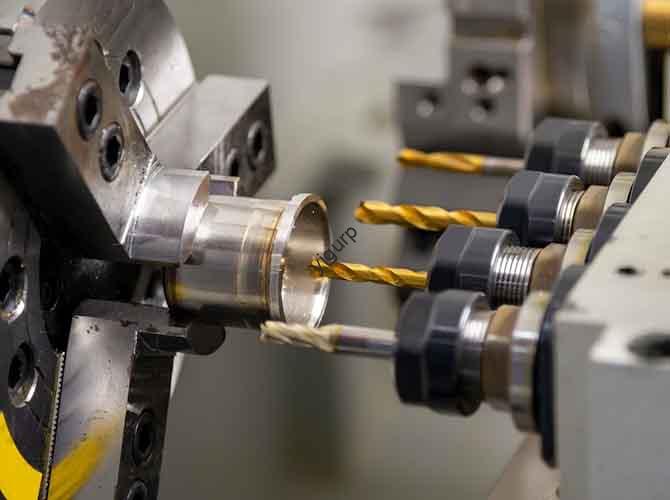
CNC rapid machining has redefined modern manufacturing by merging advanced process optimization, Intelligente Ausrüstung, und datengesteuerte Steuerung – schnelle Lieferung, präzise, und kostengünstige Herstellung komplexer Teile. Im Gegensatz zur herkömmlichen CNC-Bearbeitung, Dabei steht die Minimierung der Zykluszeiten im Vordergrund, ohne die Genauigkeit zu beeinträchtigen, Befriedigung der Nachfrage nach Großserien, flexible Fertigung branchenübergreifend. In diesem Artikel werden die Kerntechnologien aufgeschlüsselt, Hauptvorteile, Anwendungsszenarien, and practical implementation tips, helping you leverage its potential to boost production efficiency.
1. Core Technologies: The Backbone of CNC Rapid Machining
CNC rapid machining relies on three interconnected technology pillars to achieve speed and precision. Below is a 总分结构 explaining each pillar, supported by technical details and examples:
1.1 Dynamic Motion Control: Enabling High-Speed, Smooth Operation
Dynamic motion control eliminates the “start-stop” inefficiencies of traditional machining by optimizing acceleration and deceleration. Its key components include:
- Flexible Acceleration/Deceleration Algorithm: Uses a digital table-based template system to store acceleration curves (analytical and non-analytical). This allows moving parts to accelerate to high speeds (z.B., 60 m/min for linear axes) and stop instantaneously in <0.1 seconds—cutting idle time by 20–30%.
- Independent Control Channels: A dedicated channel handles acceleration calculations and trajectory control separately from the main system program. This breaks free from traditional fixed-curve limitations, improving machine dynamic performance by 15–25% (z.B., reducing vibration during direction changes).
Beispiel: For machining a smartphone heat sink (100 mm × 50 mm), dynamic motion control shortens the total cutting time from 8 Minuten (traditional CNC) Zu 5 Minuten.
1.2 Specialized Fixturing: Reducing Clamping and Setup Time
Efficient fixturing is critical to minimizing non-machining time. The table below compares two key fixturing solutions and their impacts:
| Fixturing Solution | Key Design | Efficiency Impact | Ideal Application |
| Multi-Station Fixtures | Custom designs for complex workpieces (z.B., L-shaped movable plates for limit blocks) that clamp 2–4 parts at once and enable multi-sided processing. | Reduces clamping/tool-setting time by 40–50%; z.B., a single setup completes 2-sided machining of 2 limit blocks (vs. 2 setups for traditional fixturing). | Complex parts requiring multi-face machining (z.B., Komponenten für Automobilgetriebe). |
| Quick-Positioning Mechanisms | Uses precision pins, limit blocks, and hydraulic/pneumatic clamps to achieve ±0.01 mm positioning accuracy in <10 Sekunden. | Lowers setup time per part to 15–30 seconds (vs. 1–2 minutes for manual clamping); improves clamping rigidity by 30% (reducing vibration-induced defects). | Großserienteile (z.B., consumer electronics housings) needing fast changeovers. |
1.3 Intelligent Programming & Data Optimization
Smart programming and data analysis turn raw designs into efficient machining workflows:
- Pre-Programmed Automatic Execution: CAD/CAM software (z.B., Mastercam, UG/NX) generates full-process programs—from roughing to finishing—with a single tool-setting. After initial setup, the machine runs automatically, reducing manual intervention by 80% (z.B., a 5-process machining of an aluminum bracket requires no operator input after program start).
- Big Data-Driven Optimization: IoT platforms analyze MPR (Machining Process Record) files to identify bottlenecks (z.B., inefficient drilling sequences). Zum Beispiel, optimizing drill bit arrangement and hole-drilling order improves equipment utilization by 15–20% (z.B., a furniture panel drilling line increases output from 100 Zu 120 panels/hour).
2. Hauptvorteile: Balancing Speed, Präzision, und Flexibilität
CNC rapid machining delivers three transformative benefits that address modern manufacturing pain points. Below is a 对比式 analysis against traditional CNC machining:
| Nutzen | CNC Rapid Machining | Traditional CNC Machining | Real-World Impact |
| Faster Cycle Times | Combines high-speed cutting (spindle speeds up to 20,000 U/min), Mehrachsgestänge (4–5 Achsen), and composite machining (turn-mill integration). | Relies on single-axis processing and lower speeds (spindle speeds up to 8,000 U/min); requires separate setups for different processes. | A single automotive engine block takes 2 hours to machine (vs. 4 hours for traditional CNC)—cutting production time by 50%. |
| Minimized Downtime | Equipped with automatic tool changers (ATCs, 1–2 second/change) and pallet changers that enable 24/7 continuous production. Non-machining time (tool changes, part loading) drops to 10–15% of total time. | Manual tool changes (30–60 seconds/change) and part loading; non-machining time accounts for 30–40% of total time. | A consumer electronics line runs 22 hours/day (vs. 18 hours for traditional CNC)—adding 4 hours of productive time daily. |
| Uncompromised Precision | Verwendungsmöglichkeiten Regelung im geschlossenen Regelkreis (servo motors + real-time feedback systems) for micron-level accuracy (±0,005 mm) and thermal stability management (coolant spraying, spindle temperature control) to suppress deformation. | Relies on open-loop control for some axes; thermal deformation (z.B., spindle heat) causes ±0.01–0.02 mm deviations. | Medical surgical instruments (requiring ±0.008 mm accuracy) have a defect rate of <0.5% (vs. 3–5% for traditional CNC). |
| Flexible Adaptability | Handles multi-materials (Aluminiumlegierungen, Edelstahl, Titan, technische Kunststoffe) with quick program switches (5–10 minutes for small-batch custom parts). | Requires 30–60 minutes for material/program changes; struggles with difficult-to-machine materials (z.B., Titanlegierungen). | A contract manufacturer switches from aluminum phone cases to titanium brackets in 8 minutes—meeting small-batch (50 Teile) custom orders profitably. |
3. Typical Application Scenarios: Industry-by-Industry Breakdown
CNC rapid machining excels in sectors where speed and precision are equally critical. The table below details key applications and their success factors:
| Industrie | Schlüsselanwendungen | Critical CNC Rapid Machining Features | Performance Outcome |
| Automobil | High-precision machining of engine blocks, Getriebegehäuse, und Aufhängungskomponenten. | Multi-axis linkage, high-torque spindles, and multi-station fixturing. | Reduces production time per engine block by 40%; meets automotive mass-production demands (1,000+ blocks/day). |
| Unterhaltungselektronik | High-speed milling of thin/light parts (z.B., smartphone shells, Kühlkörper) and micro-features (z.B., 0.5 mm-Löcher). | Quick-positioning mechanisms, high-speed spindles (15,000–20.000 U/min), and thermal stability control. | Produces 300 smartphone shells/hour with ±0.01 mm accuracy; heat sink surface roughness reaches Ra 1.6 μm (no post-polishing needed). |
| Medizinisch | Efficient production of precision surgical instruments (z.B., scalpels, Zange) and implants (z.B., titanium bone plates). | Closed-loop precision control, biocompatible material compatibility (Titan, medical-grade stainless steel). | Lowers implant machining time by 30%; ensures ±0.005 mm accuracy for surgical instruments (critical for patient safety). |
| Möbel | Synchronous multi-hole drilling of customized panels (z.B., 32 mm standardized hole arrangements for cabinetry). | Big data-optimized drilling sequences, quick-change drill bits, and high-throughput fixturing. | Increases panel drilling efficiency by 20%; a single line processes 120 customized panels/hour (vs. 100 for traditional setups). |
4. Implementation Tips: Avoid Common Pitfalls
To maximize the value of CNC rapid machining, follow these actionable guidelines:
- Prioritize Fixture-Machine Compatibility: Ensure multi-station fixtures fit the machine’s worktable size and load capacity (z.B., a 5-axis machine with a 500 mm table needs fixtures <450 mm breit). Mismatched fixtures reduce efficiency by 20–30%.
- Calibrate for Material Properties: Adjust cutting parameters for different materials—e.g., verwenden 15,000 RPM spindle speed and 0.1 mm/rev feed rate for aluminum alloys, but lower to 8,000 RPM and 0.05 mm/rev for titanium alloys. Incorrect parameters cause tool wear and defect rates to rise by 15–25%.
- Invest in Operator Training: Train staff to use IoT platforms for data analysis (z.B., identifying MPR bottlenecks) and troubleshoot automatic systems (z.B., ATC jams). Well-trained operators reduce unplanned downtime by 30–40%.
Die Perspektive von Yigu Technology
Bei Yigu Technology, we see CNC rapid machining as a cornerstone of efficient manufacturing. Für Automotive-Kunden, we integrate multi-station fixturing and dynamic motion control to cut engine block production time by 45% while maintaining ±0.008 mm accuracy. For consumer electronics clients, our IoT-driven program optimization boosts smartphone heat sink output by 25%. We also customize quick-positioning mechanisms for medical device manufacturers, reducing implant setup time to 20 seconds/part. Letztlich, CNC rapid machining isn’t just about speed—it’s about creating flexible, data-driven workflows that help clients stay competitive in fast-paced markets.
FAQ
- Can CNC rapid machining handle difficult-to-machine materials like titanium alloys?
Ja. CNC rapid machining uses high-torque, high-speed spindles (bis zu 15,000 U/min) and specialized tooling (z.B., TiAlN-coated carbide tools) für Titan. By adjusting parameters (lower feed rates, higher coolant flow), it achieves efficient machining—though cycle times are 20–30% longer than for aluminum (still 50% faster than traditional CNC for titanium parts).
- What is the minimum batch size for CNC rapid machining to be cost-effective?
CNC rapid machining shines for batches of 50+ Teile. Für kleine Chargen (50–100 Teile), quick setup times (15–30 minutes) offset higher initial costs. Für große Chargen (>1,000 Teile), multi-station fixturing and continuous production drive per-unit costs down to 30–40% below traditional CNC. For batches <50 Teile, manual CNC may be cheaper (unless the part requires complex multi-process machining).
- How does CNC rapid machining maintain precision at high speeds?
It uses two key technologies: Regelung im geschlossenen Regelkreis (servo motors with real-time position feedback correct deviations within 0.001 mm) Und thermal management (coolant sprays target the cutting zone, and spindle temperature sensors adjust speed to prevent heat-induced deformation). These ensure precision remains at ±0.005–0.01 mm even at maximum cutting speeds.