
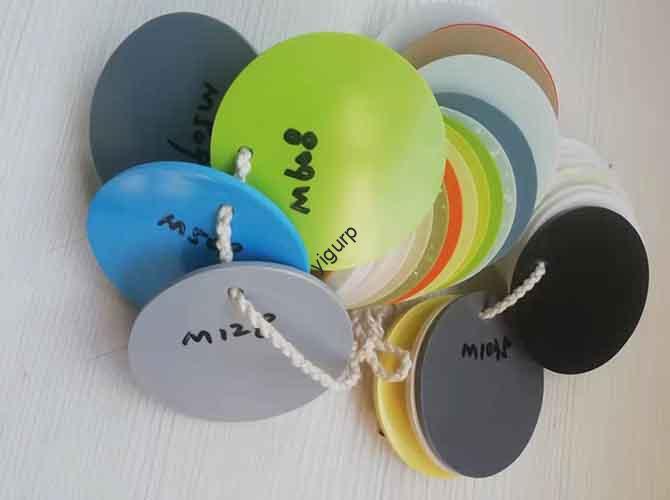
Silicone compounding and steel mold processes are two foundational technologies in mold manufacturing and product forming, Jedes ist für unterschiedliche Produktionsanforderungen optimiert – eines für schnelle, zum anderen für die kostengünstige Kleinserienfertigung und zum anderen für hohe Präzision, langfristige Massenfertigung. Für Unternehmen ist es von entscheidender Bedeutung, ihre Unterschiede zu verstehen, um die richtigen Werkzeuge auszuwählen, ob für Prototyping, kundenspezifische Produkte, oder Produktion im industriellen Maßstab. Dieser Artikel schlüsselt die auf core differences between silicone compounding and steel mold processes across 6 key areas, plus practical guidance on when to use each.
1. Core Difference: Formmaterial & Manufacturing Principle
The fundamental divide between the two processes lies in their mold materials and production methods—a contrast that defines every other aspect of their performance, from cost to lifespan.
| Verfahren | Formmaterial | Manufacturing Principle | Simple Analogy |
| Silicone Compounding | Liquid silicone (z.B., RTV silicone) | Uses a prototype (3D-printed or CNC-machined model) to cast liquid silicone. The silicone cures at room temperature (no high heat/pressure) um eine flexible Form zu bilden. | Making a jello mold: Pour liquid jello around a shape, let it set, then remove the shape to get a flexible mold. |
| Steel Mold Process | High-grade steel (z.B., P20, 718, S136) | Manufactured via precision machining (CNC-Fräsen, EDM) and high-temperature/pressure heat treatment. The steel is carved into a rigid mold with tight tolerances. | Carving a stone mold: Use specialized tools to shape hard stone into a durable, rigid mold that retains its form for years. |
2. Side-by-Side Comparison: Silicone Compounding vs. Steel Mold Process
To quickly evaluate which process fits your production needs, use this comprehensive table comparing their cost, Zykluszeit, Präzision, und mehr.
| Comparison Category | Silicone Compounding | Steel Mold Process | Key Takeaway |
| Mold Cost & Lifespan | – Low initial cost: 1/10 the cost of steel molds (z.B., \(500–)5,000 vs. $10,000+).- Short lifespan: Produces 10–500 parts before wearing out. | – High initial cost: \(10,000–)100,000+ (depends on complexity).- Long lifespan: Produces 100,000–1,000,000+ parts (beständig gegen Verschleiß). | Silicone compounding saves upfront cost; steel molds are a long-term investment for mass production. |
| Production Cycle | – Fast mold making: 1–3 days to create a silicone mold.- Flexible iteration: Re-make molds quickly if designs change. | – Slow mold making: 2–8 Wochen (involves machining, Wärmebehandlung, and debugging).- Long lead time: Not ideal for urgent or frequently updated designs. | Silicone compounding is for rapid prototyping; steel molds suit stable, long-term production. |
| Präzision & Oberflächenqualität | – Lower precision: Tolerances of ±0.1–0.5mm (due to silicone shrinkage/deformation).- Surface quality: Depends on the prototype—may have minor flaws (z.B., Blasen). | – Hohe Präzision: Tolerances of ±0.01mm (suitable for tight-fitting parts).- Superior surface finish: Can be machined to mirror or textured surfaces; no post-processing needed for most parts. | Steel molds deliver industrial-grade precision; silicone works for non-critical, low-tolerance parts. |
| Materialkompatibilität | – Limited to low-temperature/pressure materials: Harze, PU, Wachs, low-melting-point alloys (cannot handle high heat). | – Handles high-temperature/pressure materials: Engineering plastics (ABS, PC), Metalle (for die casting), and high-performance polymers. | Steel molds support industrial materials; silicone is for niche, low-heat applications. |
| Modification Flexibility | – Easy to modify: Re-cast a new silicone mold if design changes (Kosten \(500–)1,000). | – High modification cost: Requires re-machining steel (Kosten \(5,000–)20,000) and delays production. | Silicone compounding adapts to design tweaks; steel molds need final, fixed designs. |
| Applicable Scenarios | – Prototyping: Fast sample production for design testing.- Kleine Chargen: Custom products (z.B., artisanal jewelry, limited-edition toys).- Komplexe Formen: Inverted cavities or deep undercuts (silicone’s flexibility enables easy demolding). | – Massenproduktion: Spritzguss (plastic parts), Druckguss (metal components).- Hochpräzise Teile: Automobilkomponenten, Elektronikgehäuse, medical devices.- Long-term orders: Stable products with no design changes (z.B., Flaschenverschlüsse, Handyhüllen). | Silicone serves small-batch/custom needs; steel dominates industrial mass production. |
3. When to Choose Silicone Compounding vs. Steel Mold Process? (Schritt-für-Schritt-Anleitung)
Use this linear, question-driven process to align the process with your project goals:
Schritt 1: Define Production Volume
- Kleine Chargen (10–500 Teile) oder Prototyping: Wählen silicone compounding. Zum Beispiel, wenn Sie brauchen 100 test samples of a new toy design, a silicone mold can deliver them in a week at low cost.
- Große Chargen (10,000+ Teile): Wählen steel mold process. Zum Beispiel, Herstellung 500,000 plastic water bottle caps requires a steel mold to keep per-part costs low.
Schritt 2: Evaluate Precision & Material Needs
- Low-tolerance parts or low-heat materials: Verwenden silicone compounding. Examples include decorative resin crafts or wax casting for jewelry.
- High-precision parts or high-heat materials: Verwenden steel mold process. Examples include automotive engine components (needing tight fits) or PC plastic phone housings (needing high-temperature molding).
Schritt 3: Consider Timeline & Design Iterations
- Urgent delivery or frequent design changes: Entscheiden Sie sich für silicone compounding (1–3 days for molds, easy rework).
- Stable designs or long-term production: Invest in steel mold process (higher upfront cost, but no repeated mold replacements).
4. Yigu Technology’s Perspective on Silicone Compounding vs. Steel Mold Process
Bei Yigu Technology, we recommend combining both processes for optimal efficiency—don’t choose one over the other prematurely. Many clients waste money by jumping straight to steel molds for untested designs; instead, verwenden silicone compounding first to validate prototypes (Schnitte 70% of upfront costs) and gather user feedback. Sobald der Entwurf fertiggestellt ist, transition to steel mold process für die Massenproduktion. For clients with mixed needs (z.B., 1,000 initial parts + potential mass scaling), we also offer “hybrid solutions”: Start with silicone for small batches, then reuse the final design data to speed up steel mold machining. This approach balances speed, kosten, und Qualität, ensuring every project meets its goals without unnecessary expenses.
FAQ: Common Questions About Silicone Compounding and Steel Mold Processes
- Q: Can silicone compounding be used for high-precision parts (z.B., Komponenten medizinischer Geräte)?
A: NEIN. Silicone molds have tolerances of ±0.1–0.5mm, which is too loose for medical parts (needing ±0.01mm). Steel molds are required for high-precision, safety-critical components.
- Q: If I need 5,000 Teile, should I use silicone compounding or a steel mold?
A: It depends on cost per part. Silicone molds would require 10–15 molds (bei \(500 each = \)5,000–(7,500) plus material costs. A steel mold (\)15,000) would have lower per-part costs—so for 5,000 Teile, steel becomes cheaper in the long run.
- Q: Are silicone molds environmentally friendly compared to steel molds?
A: Silicone molds are easier to dispose of (non-toxic when cured) but have short lifespans (more frequent replacements = more waste). Steel molds are recyclable but require high energy for manufacturing. For sustainability, steel is better for long-term use; silicone is better for short, Projekte mit geringem Volumen.