
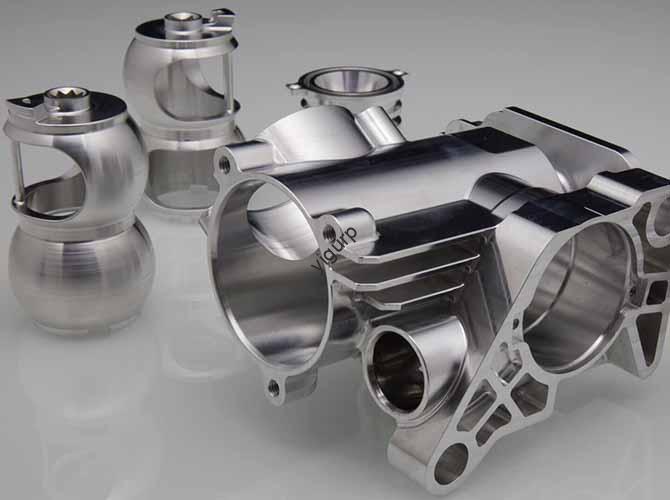
Die Druckgussformung ist ein Grundpfeiler der modernen Metallverarbeitung, revolutioniert die Produktion komplexer, hoch – Präzisionsteile in allen Branchen. Indem geschmolzenes Metall unter hohem Druck und hoher Geschwindigkeit in Präzisionsformen gepresst wird, Dieses Verfahren schließt die Lücke zwischen traditionellem Guss und fortschrittlicher Fertigung. Damit Sie seinen Wert voll und ganz erfassen können, Prinzipien, und Anwendungen, this article breaks down die casting forming from definition to future trends, with actionable insights for practical use.
1. What Exactly Is Die Casting Forming?
Im Kern, die casting forming is a high – pressure metal casting technique designed for efficiency and precision. Let’s clarify its key attributes through a structured overview:
| Aspect | Key Details |
| Core Principle | Molten metal is injected into a precision mold cavity at high pressure (10 – 200 MPa) and high speed (5 – 10 MS), then solidifies rapidly to take the mold’s shape. |
| Kernvorteile | Combines the complex shape capability of traditional casting with the hohe Maßgenauigkeit of plastic processing, enabling one – time forming of thin – walled, komplizierte Teile. |
| Suitable Materials | Primarily non – Eisenmetalle: Aluminiumlegierung (most widely used), Zinklegierung, Magnesiumlegierung, Und Kupferlegierung. |
| Typical Part Features | Dünne Wände (oft 1 – 5 mm), komplexe Geometrien (z.B., side concaves, Threads), und enge Toleranzen (IT6 – IT8). |
2. Der Schritt – von – Step Die Casting Forming Process
Die casting forming follows a linear, sequential workflow that ensures consistency and quality. Each step is critical to the final product, wie unten gezeigt:
2.1 Mold Pretreatment
The process starts with preparing the mold, which directly impacts part release and surface quality:
- Vorheizen: Molds are heated to a material – specific temperature (z.B., 180 – 250°C for aluminum alloy molds, < 150°C for zinc alloy molds) to balance heat conduction and extend mold life.
- Release Agent Spraying: Eine dünne, uniform layer of release agent (z.B., Graphit – based coatings) is applied to create an isolation layer, preventing molten metal from sticking to the mold and aiding demolding.
2.2 Metal Melting and Distribution
Nächste, the raw metal is prepared to ensure optimal fluidity and purity:
- Material Batching: Metal ingots are accurately weighed according to the target alloy composition (z.B., aluminum alloy with specific silicon or magnesium content).
- Melting and Degassing: The metal is melted in a furnace (aluminum at 650 – 700°C, zinc at 400 – 450°C) and treated to remove impurities and gases (z.B., using argon gas to reduce hydrogen content).
- Halten: The molten metal is kept in a holding furnace at a stable temperature to avoid fluctuations that could harm fluidity.
2.3 Hoch – Pressure Injection
This is the defining step of die casting, where molten metal is forced into the mold:
- A pressure injection mechanism pushes the molten metal into the mold cavity at speeds up to 5 – 10 MS.
- Pressure curve control is crucial: Too little pressure leads to incomplete filling, while too much can cause mold damage or turbulence (which traps air).
2.4 Pressure Holding and Cooling
After filling, the process shifts to ensuring part integrity:
- Pressure Holding: Continuous pressure is applied to compensate for volume shrinkage während der Erstarrung, suppressing defects like shrinkage cavities.
- Rapid Cooling: Water – cooled or air – cooled molds accelerate solidification, reducing cycle times (from a few seconds to tens of seconds) and ensuring dimensional stability.
2.5 Mold Opening and Post – Verarbeitung
Endlich, the finished part is extracted and refined:
- Entformen: Once the part is initially solidified, Die Form öffnet sich, and the part is ejected.
- Trimmen: Überschüssiges Material (z.B., gates, risers) is cut off using specialized tools.
- Abschluss: Entgraten, Polieren, or surface treatments (z.B., Galvanisieren, spraying) are performed. Wärmebehandlung (z.B., stress relief annealing) may also be used to improve mechanical properties.
3. Key Process Parameters That Control Die Casting Quality
Process parameters act as the “dials” that fine – tune die casting forming. Misalignment here is a top cause of defects. The table below highlights critical parameters, their optimal ranges, and risks of improper settings:
| Parameter | Optimal Range | Improper Setting Risks |
| Einspritzdruck | 10 – 200 MPa (depends on alloy/part complexity) | – Too Low: Incomplete filling, especially in thin – walled areas.- Too High: Mold damage, increased internal stress in parts. |
| Einspritzgeschwindigkeit | 5 – 10 MS (balanced for no splashing) | – Too Fast: Turbulence, air entrapment (causes porosity).- Too Slow: Premature solidification, flow marks. |
| Formtemperatur | Material – specific (180 – 250°C for Al, < 150°C for Zn) | – Too Low: Poor surface finish, difficult demolding.- Too High: Longer cycle times, mold deformation. |
| Molten Metal Temperature | 650 – 700°C (Al), 400 – 450°C (Zn) | – Too Low: Reduced fluidity, incomplete filling.- Too High: Oxidation of metal, mold erosion. |
4. Die Casting Forming vs. Other Manufacturing Processes
To understand its unique value, let’s compare die casting forming with three common alternatives using a contrast – based structure:
| Verfahren | Entscheidender Vorteil | Key Disadvantage | Am besten für |
| Die Casting Forming | Hohe Präzision (IT6 – IT8), fast cycle times, komplexe Formen | Limited to non – Eisenmetalle, hohe Formkosten (für kleine Chargen) | Mass – produced, hoch – Präzisionsteile (z.B., phone middle frames, Motorteile) |
| Sand Casting | Geringe Formkosten, flexible for large parts | Low precision (IT12 – IT14), rough surface (Ra > 6.3 μm) | Klein – batch large parts (z.B., heavy machinery housings) |
| Spritzguss | Similar efficiency to die casting, low part costs | Only for plastics, not metals | Plastic parts (z.B., Spielzeugkomponenten, Kunststoffgehäuse) |
| Gravity Casting | Simple equipment, low pressure | Poor filling of thin walls, slow cycle times | Dick – walled, low – complexity metal parts (z.B., some plumbing fixtures) |
5. Common Defects in Die Casting Forming and How to Fix Them
Even with precise control, defects can occur. Below is a causal analysis of top issues and actionable solutions:
| Defect | Main Causes | Lösungen |
| Porosity/Looseness | Air entrapment during high – speed filling; high gas content in molten metal | – Optimize exhaust tank design to release air.- Verwenden Vakuum-Druckguss to extract cavity air.- Enhance degassing during metal melting (z.B., argon purging). |
| Shrinkage Cavities | Inadequate pressure holding; uneven cooling | – Extend pressure holding time and increase pressure.- Add overflow grooves and replenishment channels.- Ensure uniform mold cooling (avoid hot spots). |
| Cracks | Rapid cooling causing thermal stress; alloy segregation | – Slow down mold cooling rate in high – stress areas.- Add grain – refining elements (z.B., titanium in aluminum alloys).- Perform post – casting age treatment to relieve stress. |
| Mold Sticking/Strain | Rough mold surface; 失效 release agent | – Regularly polish the mold cavity to reduce roughness.- Replace with high – Leistung, Material – compatible release agent.- Control mold temperature to prevent agent breakdown. |
6. Yigu Technology’s Perspective on Die Casting Forming
Bei Yigu Technology, we see die casting forming as more than a manufacturing process—it’s a catalyst for industrial efficiency and innovation.
Erste, wir priorisieren intelligent process control: We integrate real – time monitoring systems (pressure sensors, infrared thermometers) into die casting machines to track parameters like mold temperature and injection speed. This allows instant adjustments, cutting defect rates by up to 30% compared to traditional manual control.
Zweite, we advocate for green die casting: We promote technologies like semi – solid die casting and vacuum die casting, which reduce metal waste by 15% and energy consumption by 20%—aligning with global sustainability goals.
Endlich, we focus on Material – process synergy: We work with clients to select the right alloy (z.B., hoch – strength aluminum for automotive lightweighting) and tailor process parameters, ensuring parts meet both performance and cost targets. Für uns, die casting forming is not just about making parts—it’s about empowering manufacturers to stay competitive in a fast – changing market.
7. FAQ (Häufig gestellte Fragen)
Q1: Is die casting forming suitable for small – Serienfertigung?
A1: Generally, NEIN. Die casting requires high upfront mold costs (due to precision machining). Für kleine Chargen (z.B., < 1,000 Teile), the cost per part is too high. Sand casting or CNC machining is more economical. Jedoch, for batches > 10,000, die casting’s fast cycle times make it cost – wirksam.
Q2: Can die casting forming produce parts with thick walls?
A2: It’s not ideal. Die casting relies on rapid cooling, so thick walls (z.B., > 10 mm) are prone to shrinkage cavities and internal porosity. For thick – walled parts, gravity casting or investment casting is better. Die casting excels at thin walls (1 – 5 mm) where rapid cooling ensures quality.
Q3: How long does a die casting mold last?
A3: Mold life depends on material and usage: For zinc alloy die casting, molds can last 500,000 – 1,000,000 Zyklen; for aluminum alloy, 100,000 – 500,000 Zyklen. Regelmäßige Wartung (Polieren, lubrication, checking for wear) extends life—we recommend a monthly inspection schedule for high – volume production.