
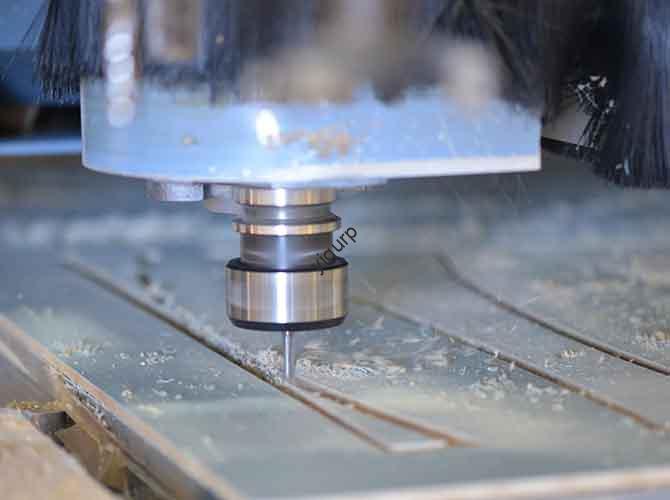
Wenn Sie sich fragen, ob kundenspezifische CNC-Teile die richtige Lösung für Ihr Projekt sind, oder wie man qualitativ hochwertige Teile effizient fertigen lässt, Die kurze Antwort lautet: Bei kundenspezifischen CNC-Teilen handelt es sich um präzisionsgefertigte Komponenten, die auf Ihre individuellen Designvorgaben zugeschnitten sind, Ideal für Branchen von der Luft- und Raumfahrt bis zur Automobilindustrie – und um sie richtig zu machen, kommt es auf die Wahl des richtigen Materials an, Hersteller, and design approach. In diesem Ratgeber, we’ll break down everything you need to know to avoid common pitfalls, save time and money, and get parts that meet your exact needs.
What Are Custom CNC Parts, and Why Do They Matter?
Erste, let’s clarify the basics: CNC (Computer-Numerische Steuerung) Bearbeitung is a manufacturing process where computer programs control machine tools (wie Mühlen, Drehmaschinen, oder Router) schneiden, Form, and finish raw materials into precise parts. Custom CNC parts take this a step further—they’re not off-the-shelf components, but pieces designed specifically for your project’s unique dimensions, Toleranzen, und Funktionalität.
Why does this matter? Off-the-shelf parts often force you to compromise on design or performance. Zum Beispiel, a medical device manufacturer might need a tiny, curved component to fit inside a wearable monitor—something no standard part can provide. A custom CNC part solves that by matching the exact shape and material required.
A Real-World Example: Automotive Prototyping
Last year, a small automotive startup came to our manufacturing partner needing a custom CNC-machined bracket for their electric vehicle (EV) battery pack. The bracket had to hold 50kg of weight while fitting in a 3-inch gap between two components—standard brackets were either too weak or too bulky. By using custom CNC machining with aluminum alloy (6061-T6), the manufacturer produced a bracket that met the weight requirement, fit perfectly, und Kosten 20% less than the startup’s initial estimate (thanks to optimized design). This is the power of custom CNC parts: they turn “impossible” design needs into workable solutions.
Key Industries That Rely on Custom CNC Parts
Custom CNC parts aren’t just for one sector—they’re the backbone of many high-precision industries. Below are the most common fields, along with why they depend on custom solutions:
| Industrie | Use Case for Custom CNC Parts | Critical Requirements |
| Luft- und Raumfahrt | Motorkomponenten, Satellitenhalterungen | Extrem enge Toleranzen (±0,0005 Zoll), heat-resistant materials |
| Medizinisch | Chirurgische Werkzeuge, implantierbare Teile (z.B., Hüftstiele) | Biokompatible Materialien, sterile finishes |
| Automobil | Prototyping EV parts, custom engine sensors | Leichte Materialien, hohes Verhältnis von Festigkeit zu Gewicht |
| Elektronik | Custom enclosures for circuit boards, Verbindungsteile | Small dimensions, precise hole placements |
| Industriemaschinen | Getriebe, Komponenten der Förderanlage | Haltbarkeit, resistance to wear and tear |
Zum Beispiel, in der Luft- und Raumfahrt, a single mistake in a custom CNC part (like a slightly off hole diameter) could lead to catastrophic failure. That’s why manufacturers in this industry rely on CNC machining’s repeatability—each part is identical to the last, meeting strict FAA or EASA standards.
How to Choose the Right Material for Custom CNC Parts
Material selection is make-or-break for custom CNC parts. The wrong material can lead to parts that break, corrode, or fail to perform under stress. Below’s a breakdown of the most popular materials, ihre Profis, Nachteile, und beste Verwendungsmöglichkeiten:
1. Metalle
- Aluminium (6061-T6): The most common choice for custom CNC parts. It’s lightweight (1/3 das Gewicht von Stahl), leicht zu bearbeiten, and affordable. Best for parts that don’t need extreme strength (z.B., EV brackets, Elektronikgehäuse). Fact: 6061-T6 has a tensile strength of 45,000 psi—enough for most consumer and industrial applications.
- Edelstahl (304/316): Ideal for parts exposed to moisture or corrosion (z.B., Marinekomponenten, medizinische Werkzeuge). 316 is more corrosion-resistant than 304 but harder to machine (increasing cost by ~15%). Fallstudie: A marine equipment company switched from 304 Zu 316 for their custom CNC propeller shafts—lifespan increased from 2 Jahre bis 5 Jahre.
- Titan (Grad 5): The gold standard for high-performance parts. It’s stronger than steel but lighter, and biocompatible. Jedoch, it’s expensive (up to 5x the cost of aluminum) and slow to machine. Best for aerospace (z.B., jet engine parts) oder medizinische Implantate.
2. Kunststoffe
- ABS: Cheap and easy to machine, with good impact resistance. Used for consumer products (z.B., custom toy parts, Elektronikgehäuse). Downside: It melts at low temperatures (105°C), so not for high-heat applications.
- Nylon: Flexible and wear-resistant, making it great for custom gears or bushings. It absorbs moisture, though—so parts may need a coating if used in wet environments.
- SPÄHEN: A high-performance plastic that can withstand temperatures up to 260°C. Used in aerospace and medical parts (z.B., Griffe für chirurgische Instrumente). Kosten: ~$100 per pound, so only for critical applications.
Pro Tip: Ask Your Manufacturer for a Material Test
Before committing to a large order, request a small batch of parts (1-5 Stücke) to test the material in your real-world use case. Zum Beispiel, if you’re making a custom CNC part for a lawnmower, test if the plastic can handle rain and temperature changes over 2 Wochen. This avoids wasting money on a material that doesn’t perform.
The Custom CNC Machining Process: Schritt für Schritt
Understanding the process helps you communicate better with manufacturers and set realistic timelines. Here’s a simplified, user-friendly breakdown of how custom CNC parts go from design to finished product:
- Design & CAD File Submission: You start by creating a 3D CAD (Computergestütztes Design) file (using software like SolidWorks or Fusion 360) with your part’s dimensions, Toleranzen, and features. Critical Note: Make sure your CAD file includes “GD&T (Geometrische Bemaßung und Toleranzen)” symbols—these tell the manufacturer exactly how precise each feature needs to be (z.B., a hole that must be within ±0.001” of its position).
- Manufacturer Review & Quotation: The CNC shop reviews your CAD file to check for manufacturability (z.B., “Can we machine that deep groove without breaking the tool?”). They’ll then send a quote with cost, Vorlaufzeit, and any design adjustments (called “DFM—Design for Manufacturability” feedback). Zum Beispiel, a shop might suggest widening a thin wall on your part to prevent it from bending during machining.
- Materialauswahl & Vorbereitung: Once you approve the quote, the manufacturer selects the raw material (z.B., a block of aluminum) and cuts it to a rough size (called “stock”) that’s slightly larger than the final part.
- CNC-Bearbeitung: The machine operator loads the stock into the CNC machine and inputs the program (generated from your CAD file). The machine then uses tools like endmills or drills to cut away excess material. Most parts go through 2-3 Setups (z.B., machining one side, then flipping the part to machine the other) für Präzision. Fact: Modern CNC machines can achieve tolerances as tight as ±0.0001”—finer than a human hair.
- Abschluss: Nach der Bearbeitung, parts may get a finish to improve appearance, Haltbarkeit, oder Leistung. Common finishes include:
- Eloxieren (für Aluminium: adds a protective, colored layer)
- Pulverbeschichtung (dick, durable finish for steel/plastic)
- Polieren (für eine glatte, glänzende Oberfläche)
- Qualitätskontrolle (QC): The final step is checking parts against your CAD specs. Manufacturers use tools like calipers, Mikrometer, und KMGs (Koordinatenmessgeräte) um die Abmessungen zu überprüfen. Reputable shops will send you a QC report with measurements for critical features.
How to Find a Reliable Custom CNC Parts Manufacturer
Choosing the right manufacturer is just as important as designing your part. A bad shop can deliver late, low-quality parts—or even ruin your design. Here’s how to vet potential partners:
1. Check Their Capabilities First
Not all CNC shops can handle every project. Ask:
- What materials do they specialize in? (z.B., if you need titanium, don’t choose a shop that only machines aluminum)
- What’s their maximum/minimum part size? (z.B., a shop that makes large industrial parts may struggle with tiny electronics components)
- What tolerances can they achieve? (z.B., do they offer ±0.0005” for aerospace parts?)
2. Look for Reviews & Fallstudien
Reputable shops will have:
- Customer reviews on platforms like Google, Yelp, or industry forums (z.B., CNC Zone)
- Case studies on their website showing past projects similar to yours (z.B., “How we made custom medical parts for X company”)
- References you can contact (ask for 2-3 past clients to ask about quality and timeliness)
3. Ask About Their Quality Control Process
A good manufacturer will have a documented QC process. Key questions:
- Do they inspect every part, or just a sample? (100% inspection is better for critical parts)
- What tools do they use for QC? (CMMs are a sign of serious precision)
- What happens if a part fails inspection? (Will they rework it for free, or offer a refund?)
4. Compare Lead Times & Preise
- Vorlaufzeit: Most custom CNC parts take 1-2 weeks for small batches (10-100 Stücke), 3-4 weeks for large orders (1,000+ Stücke). Beware of shops that promise “24-hour delivery” for complex parts—this often means cutting corners on QC.
- Preise: Don’t just choose the cheapest quote. A quote that’s 30% lower than competitors may mean the shop uses low-quality materials or skips QC. Instead, look for a fair price that aligns with industry standards (z.B., \(50-\)200 per part for simple aluminum components).
Beispiel: How to Avoid a Bad Manufacturer
A friend in the electronics industry once hired a cheap CNC shop for custom circuit board enclosures. The shop promised a 5-day lead time but delivered parts 2 weeks late—and half of them had misaligned holes (making the enclosures useless). When he asked for a refund, the shop blamed his CAD file (even though other shops had no issues with it). The lesson: Always check reviews and ask for a sample before placing a large order.
Common Mistakes to Avoid When Ordering Custom CNC Parts
Even with a good manufacturer, you can still end up with bad parts if you make these common errors:
1. Overlooking Tolerances
Tolerances are the allowable variation in a part’s dimensions. If you specify a tolerance that’s too tight (z.B., ±0.0001” for a non-critical part), you’ll pay more and wait longer. If you specify a tolerance that’s too loose (z.B., ±0.01” for a gear), the part may not fit with other components. Lösung: Work with your manufacturer to set “functional tolerances”—only as tight as needed for the part to work.
2. Ignoring Design for Manufacturability (DFM)
DFM is about designing parts that are easy (and cheap) to machine. Zum Beispiel, a part with a deep, narrow groove may require a special tool that’s expensive and slow to use. A DFM adjustment (like widening the groove slightly) could cut costs by 15% and reduce lead time by 3 Tage. Pro Tip: Send your CAD file to the manufacturer for a DFM review before finalizing the design—most shops offer this for free.
3. Choosing the Wrong Finish
A finish that’s not suited to your use case can ruin a part. Zum Beispiel, anodizing is great for aluminum parts in dry environments, but it will corrode in saltwater (use stainless steel with a passivation finish instead). Question to ask: “What finish do you recommend for my part’s environment (z.B., wet, high-heat, medizinisch)?”
4. Not Testing a Prototype
Ordering 1,000 parts without testing a prototype is a risky move. Even if the CAD file looks perfect, the physical part may have issues (z.B., a sharp edge that’s uncomfortable to handle). Lösung: Order a prototype batch (5-10 Teile) Erste. Test them for fit, Funktion, and durability before placing a large order.
Yigu Technology’s Perspective on Custom CNC Parts
Bei Yigu Technology, we’ve worked with hundreds of clients across aerospace, medizinisch, and automotive industries to create custom CNC parts. Our key insight? The best custom parts come from collaboration—not just a one-way design submission. We always start with a DFM review to help clients optimize their designs (z.B., simplifying a feature to cut costs without losing performance) and offer material samples so they can test durability firsthand. We also prioritize transparency: every client gets a detailed QC report with measurements for critical features, so they know exactly what they’re receiving. In der heutigen schnelllebigen Fertigungswelt, custom CNC parts aren’t just a “nice-to-have”—they’re essential for innovation. By focusing on precision, collaboration, und Qualität, we help clients turn their unique ideas into reliable, high-performance parts that stand the test of time.
FAQ About Custom CNC Parts
1. How much do custom CNC parts cost?
Costs vary based on material, Komplexität, und Menge. Simple aluminum parts (z.B., a small bracket) can cost \(20-\)50 each for small batches (10 Stücke), while complex titanium parts (z.B., Luft- und Raumfahrtkomponenten) can cost \(200-\)500 each. Larger quantities (1,000+ Stücke) often get a 20-30% discount.
2. Was ist die Mindestbestellmenge? (Mindestbestellmenge) for custom CNC parts?
Most shops have no formal MOQ—you can order 1 part if needed. Jedoch, ordering 1 part is often more expensive per unit (z.B., \(100 für 1 part vs. \)30 each for 10 Teile) because the shop still has to set up the machine and program.
3. How long does it take to get custom CNC parts?
Für Prototypen (1-10 Teile), Die Lieferzeit beträgt in der Regel 3-5 Werktage. Für kleine Chargen (10-100 Teile), 1-2 Wochen. Für Großaufträge (1,000+ Teile), 3-4 Wochen. Eilaufträge (24-48 Std.) are possible for simple parts but cost 50-100% more.
4. Can I use my own material for custom CNC parts?
Most shops allow this, but it’s not always recommended. Shops often have relationships with material suppliers and can get better prices. If you provide your own material, the shop may not take responsibility if the material is defective (z.B., a metal block with hidden cracks that cause the part to break during machining).
5. What if my custom CNC parts don’t meet my specs?
Reputable shops will offer a solution: they’ll rework the parts for free, send a replacement batch, or issue a refund. To avoid this, make sure you have a written agreement that outlines QC standards and what happens if parts fail inspection. Always ask for a QC report before accepting the final order.