
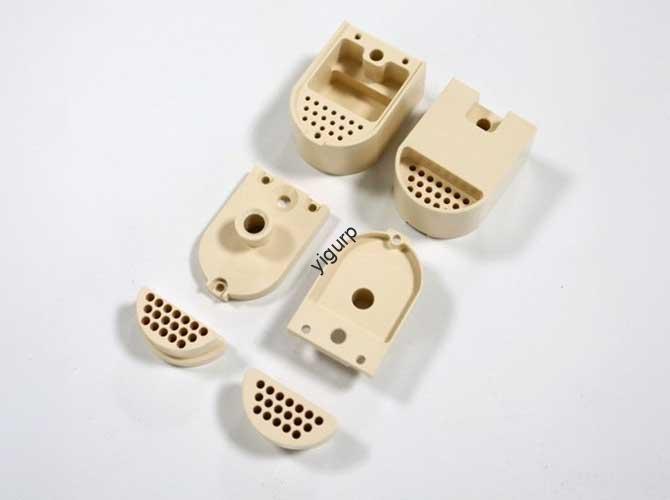
Die Kosten für Druckguss aus Aluminiumlegierungen pro Kilogramm sind keine feste Zahl – sie reichen von nur 1,5 Yen/kg für einfache Standardteile bis zu über 120 Yen/kg für hochkomplexe Präzisionskomponenten. Dieser 80-fache Unterschied ist auf eine Mischung technischer Faktoren zurückzuführen, Produktion, und nachfragebedingte Faktoren. Für Hersteller und Käufer gleichermaßen, understanding what drives these costs is critical to budgeting, negotiating quotes, and avoiding hidden expenses. But what exactly makes up the per-kilogram cost? How do factors like equipment size or surface treatment affect the price? And how can you get an accurate estimate for your specific project? This article answers these questions with detailed data, industry benchmarks, and practical guidance.
1. Breakdown of Aluminum Alloy Die Casting Cost per Kilogram
To understand the final price, we first need to unpack its core components. The table below details each part of the per-kilogram cost, its typical proportion, and calculation logic:
| Cost Component | Typical Proportion (Total per kg Cost) | Key Details & Calculation Basis | Branchen-Benchmarks (Aluminiumlegierungen) |
| Raw Material Cost | 40–60 % | (Aluminum alloy price + waste loss rate × alloy price) × part density- Waste loss rate: 8–15 % (higher for complex parts with thin walls)- Common alloy prices: ADC12 (~¥22/kg), 6061 (~¥28/kg) | ADC12-based parts: ¥9–¥15/kg; 6061-based parts: ¥12–¥20/kg |
| Bearbeitungskosten | 20–35 % | (Equipment hourly operation cost + labor cost) ÷ hourly output- Equipment cost: Includes depreciation (8–10-year lifespan) und Energie (300-ton machine uses ~50kWh/hour)- Labor cost: Depends on automation (fully automated lines need 1–2 workers/line) | Small machines (<300 Tonnen): ¥3–¥8/kg; large machines (>800 Tonnen): ¥10–¥25/kg |
| Surface Treatment Cost | 5–20 % | Billed by area or weight; varies by process complexity- Simple processes (natural oxidation): Near-zero cost- Complex processes (micro-arc oxidation): Higher premium | Sandblasting anodizing: ¥2–¥5/kg; plating/spraying: ¥8–¥15/kg |
| Mold Amortization Cost | 5–15 % | (Mold manufacturing cost + maintenance cost) ÷ total production quantity- Mold life: 50,000–100,000 shots (ADC12 molds)- Mold cost: Simple molds (~¥5,000); complex molds (~¥50,000+) | Kleine Chargen (<10k parts): ¥5–¥20/kg; große Chargen (>100k parts): ¥1–¥3/kg |
2. Key Factors Influencing Cost per Kilogram: Quantitative Analysis
Several factors directly push the per-kilogram cost up or down. Below is a detailed breakdown of the most impactful ones, with data on how much they can shift prices:
A. Equipment Tonnage (Sets the Processing Cost Benchmark)
The size of the die-casting machine determines the base processing cost—larger machines have higher depreciation and energy expenses.
| Machine Tonnage | Suitable Part Types | Processing Cost per kg | Key Reason for Cost Difference |
| <300 Tonnen | Small electronic parts (z.B., LED-Kühlkörper, Steckergehäuse) | ¥3–¥8 | Low energy use (~30kWh/hour); high hourly output (100–200kg/hour) |
| 300–800 Tonnen | Auto parts (z.B., Getriebegehäuse, Sensorhalterungen) | ¥8–¥15 | Medium energy use (~50kWh/hour); balanced output (50–100kg/hour) |
| >800 Tonnen | Große Strukturteile (z.B., EV battery pack housings, Motorblöcke) | ¥15–¥25 | High energy use (~80kWh/hour); low output (20–50kg/hour); specialized maintenance |
B. Part Structural Complexity (Multiplies Processing Costs)
Complex designs require more time, Arbeit, and specialized tools—each adding to the per-kilogram cost.
| Complexity Level | Design Features | Cost Multiplier (vs. Simple Parts) | Example Parts & Cost per kg |
| Einfach | Flat plates, no holes/undercuts; single parting line | 1.0X | Basic brackets: ¥1.5–¥5 |
| Medium | Sliders/cores (1–3), kleine Löcher, simple threads | 1.5–3.0x | Auto sensor housings: ¥30–¥60 |
| Hoch | Multi-core linkage (>3), tiefe Löcher (<3mm Durchmesser), dünne Wände (<2mm), high-precision tolerances (±0,05 mm) | 3.0–8.0x | Drone mounts, phone middle frames: ¥60–¥120+ |
C. Surface Treatment Requirements (Adds Value & Kosten)
Surface treatments enhance aesthetics or performance but increase costs—some processes double the per-kilogram price.
| Oberflächenbehandlung | Zweck | Cost per kg (Hinzugefügt) | Suitable Applications |
| Natural Oxidation | Basic corrosion resistance; no extra finish | ¥0–¥0.5 | Internal structural parts (no visibility requirements) |
| Sandblasting Anodizing | Mattes Finish; improved scratch resistance | ¥2–¥5 | Visible auto parts (z.B., Armaturenbrettverkleidung), Unterhaltungselektronik |
| Micro-Arc Oxidation | Military-grade corrosion/heat resistance | ¥10–¥20 | Hochleistungsteile (z.B., EV motor housings, Luft- und Raumfahrtkomponenten) |
| Überzug (Chrome/Nickel) | Shiny finish; hohe Verschleißfestigkeit | ¥8–¥15 | Dekorative Teile (z.B., luxury car emblems, high-end appliance handles) |
D. Order Volume (Drives Economies of Scale)
Large batches spread fixed costs (like mold manufacturing) across more kilograms—lowering the per-unit cost significantly.
| Order Volume | Cost Impact (pro kg) | Reason | Beispiel: Auto Transmission Housing (Base Cost ¥12/kg) |
| <10,000 Stücke (Kleine Charge) | +¥5–¥20 | High mold amortization (¥50,000 mold ÷ 10,000 pieces = ¥5/piece); startup losses | ¥17–¥32/kg |
| 10,000–100,000 pieces (Medium Batch) | +¥1–¥5 | Balanced mold amortization; optimized production rhythm | ¥13–¥17/kg |
| >100,000 Stücke (Large Batch) | +¥0.5–¥1 | Low mold amortization; bulk material discounts; hohe effizienz | ¥12.5–¥13/kg |
3. Typical Application Scenarios: Cost per Kilogram Examples
Real-world costs vary by industry and part function. The table below shows common use cases with detailed cost breakdowns:
| Industrie | Part Name | Key Design/Process Features | Cost per kg (Gesamt) | Cost Breakdown (pro kg) |
| Beleuchtung | LED Heat Sink | Thin-walled fins (2mm); no surface treatment; 200-ton machine | ¥18–¥25 | Material: ¥10–¥12; Verarbeitung: ¥6–¥8; Mold Amortization: ¥2–¥5 |
| Automobil | Transmission Housing | Multi-layer oil channels; 500-ton machine; sandblasting anodizing | ¥45–¥60 | Material: ¥15–¥20; Verarbeitung: ¥15–¥20; Oberflächenbehandlung: ¥10–¥15; Mold Amortization: ¥5–¥10 |
| Unterhaltungselektronik | Phone Middle Frame | Thin walls (1.5mm); nano injection molding; mirror polishing | ¥80–¥120 | Material: ¥20–¥30; Verarbeitung: ¥40–¥60; Oberflächenbehandlung: ¥15–¥25; Mold Amortization: ¥5–¥10 |
| Luft- und Raumfahrt | Drone Mount | Hochfest 6061 Legierung; hollow design; micro-arc oxidation | ¥55–¥70 | Material: ¥25–¥30; Verarbeitung: ¥20–¥25; Oberflächenbehandlung: ¥10–¥15; Mold Amortization: ¥0.5–¥2 (large batch) |
4. How to Get an Accurate Quote & Reduce Costs
To avoid overpaying and ensure transparency, follow these practical steps:
A. Prepare Information for Quotes
Manufacturers need 4 key details to provide an accurate per-kilogram cost:
- 3D Zeichnungen: Mark tolerances (z.B., ±0,1 mm), wall thicknesses, and critical features (Löcher, Threads).
- Material Specification: Specify alloy grade (z.B., ADC12, 6061) and any material certifications (z.B., RoHS, IATF 16949).
- Jahresvolumen: Estimated yearly production (z.B., 50,000 Stücke) to calculate mold amortization.
- Surface Treatment Code: Reference standards (z.B., Anodize Type II, ISO 10074) to avoid ambiguity.
B. Cost Reduction Strategies
Cut costs without sacrificing quality using these 3 Methoden:
- Simplify Design: Reduce the number of sliders/cores (z.B., merge two holes into one); increase wall thickness to ≥2mm (lowers processing difficulty).
- Leverage Integration: Merge multiple small parts into one integrated die-cast component (reduces assembly and mold costs—e.g., replacing 3 brackets with 1 saves ¥5–¥10/kg).
- Accept Minor Imperfections: For non-visible parts, skip expensive polishing; allow minor burrs (avoids ¥2–¥5/kg in manual sanding costs).
C. Avoid Low-Price Traps
Quotes below market averages (z.B., <¥1.5/kg for simple parts) often hide shortcuts that cost more later:
- Material Cutting: Using recycled aluminum with high impurity content (reduces part strength by 20–30%).
- Process Skipping: Omitting heat treatment (lowers tensile strength; risks part failure under load).
- Low-Quality Release Agents: Leaving residues that cause corrosion or adhesion issues.
5. Yigu Technology’s Perspective on Aluminum Alloy Die Casting per Kilogram
Bei Yigu Technology, we believe transparent cost breakdowns are key to building trust with clients. Für Automotive-Kunden, our 300–800-ton machine fleet delivers auto parts at ¥8–¥15/kg—balancing quality (IATF 16949 zertifiziert) und Kosten. For consumer electronics clients, our modular mold designs cut mold amortization by 30%, lowering the per-kilogram cost of phone frames to ¥80–¥100 (vs. industry averages of ¥100–¥120).
We’re optimizing two areas to reduce costs further: 1) KI-gesteuerte Prozesssteuerung (cuts scrap rates by 15%, lowering material waste costs); 2) Closed-loop recycling (reuses 95% of aluminum scrap, reducing raw material costs by ¥2–¥3/kg). Our goal is to help clients get high-quality aluminum die cast parts at competitive per-kilogram prices—no hidden fees, no compromises on performance.
FAQ
- Why does the same part have different per-kilogram costs from different manufacturers?
Costs vary due to 3 factors: 1) Equipment efficiency (newer machines have lower energy use, reducing processing costs); 2) Material quality (premium alloys cost more but last longer); 3) Automation level (fully automated lines have lower labor costs than semi-automated ones). Always ask for a detailed cost breakdown to compare apples to apples.
- Can I reduce mold amortization costs for small-batch orders (<10,000 Stücke)?
Yes—use shared molds (split mold costs with other clients for similar parts) or short-life molds (simplified designs that cost ¥1,000–¥5,000 vs. ¥50,000+ for standard molds). Zum Beispiel, a shared mold for LED heat sinks can cut amortization from ¥5/kg to ¥1–¥2/kg for small batches.
- How much does changing the alloy grade affect the per-kilogram cost?
Alloy choice impacts material costs significantly: ADC12 (¥22/kg) is 20–30% cheaper than 6061 (¥28/kg). For non-load-bearing parts (z.B., Klammern), ADC12 is ideal. For high-strength parts (z.B., drone mounts), 6061 is worth the extra ¥6–¥8/kg—its tensile strength (310MPa vs. ADC12’s 230MPa) prevents part failure.