
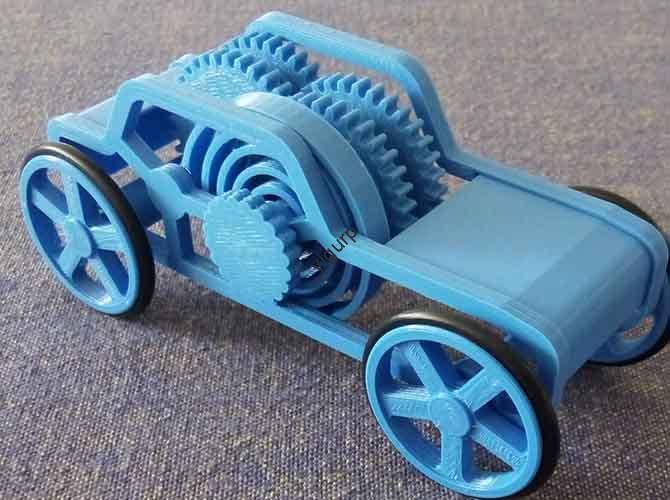
Ob Sie Prototypen erstellen, Funktionsteile, oder medizinische Präzisionsgeräte, Die Genauigkeit des 3D-Drucks wirkt sich direkt auf die Benutzerfreundlichkeit und Qualität Ihres Endprodukts aus. But 3D printing accuracy isn’t a one-size-fits-all metric—it ranges from ±0,02 mm (ultrahohe Präzision) Zu ±0,5 mm (grundlegende Prototypen) je nach Technologie, Materialien, und Parameter. This guide breaks down accuracy ranges for common technologies, wesentliche Einflussfaktoren, application-specific standards, and actionable tips to boost precision.
1. Accuracy Ranges of Mainstream 3D Printing Technologies
Different 3D printing technologies are designed for varying levels of precision. Below is a detailed comparison of accuracy ranges, typical use cases, and key advantages:
| Technologietyp | Accuracy Range (Dimensional) | Industrial-Grade Accuracy | Typical Use Cases | Key Advantage for Accuracy |
| FDM (Modellierung der Schmelzablagerung) | ±0.1mm ~ ±0.5mm | ±0,1 mm (z.B., Stratasys Fortus) | Basic prototypes, low-cost functional parts (z.B., Klammern) | Niedrige Kosten; easy to access |
| SLA (Stereolithographie) | ±0.05mm ~ ±0.1mm | ±0,05 mm (z.B., Formlabs-Formular 4) | Hochdetaillierte Teile (z.B., Schmuck, Zahnmodelle) | Glatte Oberflächen; fine feature resolution |
| DLP (Digitale Lichtverarbeitung) | ±0.05mm ~ ±0.1mm | ±0,05 mm (High-Resolution 4K DLP) | Rapid high-precision parts (z.B., small molds) | Fast printing; near-SLA accuracy |
| SLS (Selektives Lasersintern) | ±0.1mm ~ ±0.3mm | ±0,1 mm (Industrial SLS) | Durable functional parts (z.B., nylon gears) | Keine Stützen erforderlich; good for complex geometries |
| Metall-3D-Druck (SLM/EBM) | ±0.02mm ~ ±0.1mm | ±0,02 mm (High-Precision SLM) | Kritische Teile (z.B., medizinische Implantate, Luft- und Raumfahrtkomponenten) | Ultrahohe Präzision; suitable for metal alloys |
Notiz: Accuracy is often measured as dimensional deviation (how much the final part differs from the 3D model) Und feature resolution (smallest detail the technology can print). Zum Beispiel, SLA can print features as small as 0.1mm, while FDM typically struggles with details under 0.5mm.
2. 5 Core Factors That Impact 3D Printing Accuracy
Achieving consistent accuracy requires controlling key variables. Below is a breakdown of each factor, with specific examples and solutions to mitigate issues:
(1) Technologietyp & Equipment Performance
The foundation of accuracy lies in the technology and hardware:
- Consumer vs. Industrieausrüstung: Consumer-grade FDM printers (z.B., Prusa, Creality) have accuracy limits of ±0.2mm ~ ±0.5mm, while industrial machines (z.B., Stratasys, 3D Systems) use better motors, Sensoren, and build plates to reach ±0.02mm ~ ±0.1mm.
- Technology Strengths: Resin-based technologies (SLA/DLP) excel at fine details because UV light cures resin in precise layers, while extrusion-based FDM is limited by nozzle size and material flow.
(2) Druckparameter
Even top-tier equipment will produce inaccurate parts with poor parameter settings. The three most critical parameters are:
Schichtdicke
Thinner layers reduce visible layer lines and improve dimensional consistency—but overly thin layers cause issues:
| Schichtdicke | Impact on Accuracy | Am besten für |
| 0.025mm ~ 0.05mm | Hohe Genauigkeit; minimal layer lines | SLA/DLP metal parts (z.B., medizinische Implantate) |
| 0.1mm ~ 0.2mm | Balanced accuracy and speed | FDM/SLS functional parts (z.B., Getriebe) |
| > 0.2mm | Lower accuracy; visible layer lines | Rough prototypes (z.B., Konzeptmodelle) |
Nozzle Diameter (FDM Specific)
Smaller nozzles print finer details but slow down production:
- 0.2mm nozzle: Prints details as small as 0.2mm (accuracy ±0.1mm ~ ±0.2mm) but takes 2x longer than a 0.4mm nozzle.
- 0.4mm nozzle: Standard choice (accuracy ±0.2mm ~ ±0.3mm) for balance of speed and precision.
0.6mm nozzle: Fast but limited to large parts (accuracy ±0.3mm ~ ±0.5mm).
Temperaturkontrolle (FDM/Metal Printing)
Temperature fluctuations warp parts and reduce accuracy:
- FDM: ABS shrinks 4% ~ 8% when cooling—uneven bed or nozzle temperatures (±5°C) can cause dimensional 偏差 of 0.2mm ~ 0.5mm. Lösung: Use an enclosed printer and calibrate temperatures to the material’s specifications.
- Metal Printing: SLM machines require precise laser and build chamber temperatures (±1°C) to prevent metal powder warping. Even small deviations can lead to ±0.05mm inaccuracies.
(3) Materialeigenschaften
Material behavior during printing directly affects accuracy:
- Schwindung: Most materials shrink when cured or cooled:
- Harze (SLA/DLP): Shrink 2% ~ 8%—low-shrinkage resins (z.B., dental-specific resin) reduce this to <2%, cutting accuracy 偏差 by half.
- Metalle (SLM): Shrink 5% ~ 10%—suppliers compensate by scaling the 3D model up by 5% ~ 10% to match the final part size.
- Powder Particle Size (SLS/Metal): Finer powder (20 μm ~ 50 μm) sinters more uniformly, leading to ±0.1mm accuracy. Coarser powder (50 μm ~ 100 μm) causes ±0.2mm ~ ±0.3mm deviations.
(4) Stützstrukturen
Poorly designed supports introduce stress and deformation:
- Over-Supporting: Too many supports create hard-to-remove material, leaving indentations that reduce accuracy by ±0.1mm ~ ±0.2mm.
- Under-Supporting: Parts sag during printing—for example, a 100mm-long FDM bridge without supports may droop 0.3mm ~ 0.5mm, ruining dimensional accuracy.
- Lösung: Use software (z.B., Behandlung, PrusaSlicer) to generate tree supports or lattice structures that minimize contact with the part.
(5) Nachbearbeitung
Post-processing can either improve or reduce accuracy:
| Post-Processing Step | Impact on Accuracy | Anwendungsfall |
| CNC-Bearbeitung (Trimmen) | Improves accuracy by ±0.01mm ~ ±0.05mm | Metal parts (z.B., medizinische Implantate) |
| Polishing/Sanding | Reduces accuracy by ±0.05mm ~ ±0.1mm (removes material) | Aesthetic parts (z.B., Schmuck) |
| Secondary UV Curing (Harz) | Stabilizes dimensions; reduces shrinkage by 1% ~ 2% | SLA/DLP parts (z.B., Zahnmodelle) |
| Wärmebehandlung (Metall) | Reduces warping; verbessert die Dimensionsstabilität | SLM/EBM parts (z.B., Luft- und Raumfahrtkomponenten) |
3. Accuracy Standards for Practical Applications
Different use cases demand different accuracy levels. Below is a guide to matching technology to your needs:
| Application Type | Required Accuracy | Recommended Technology | Key Reasoning |
| Basic Prototypes (Concept Checks) | ±0.2mm ~ ±0.5mm | FDM (Consumer-Grade) | Niedrige Kosten; accuracy sufficient for fit testing |
| Aesthetic Parts (Schmuck, Figurines) | ±0.05mm ~ ±0.1mm | SLA/DLP (High-Resolution) | Fine details and smooth surfaces matter |
| Funktionsteile (Getriebe, Snaps) | ±0.05mm ~ ±0.1mm | SLS/Industrial FDM | Haltbarkeit + precision for mechanical fit |
| Medizinische Implantate (Dental Crowns, Bone Plates) | ±0.02mm ~ ±0.05mm | High-Precision SLM/SLA | Critical for biocompatibility and patient safety |
| Luft- und Raumfahrtkomponenten (Motorteile) | ±0.02mm ~ ±0.1mm | Metal SLM/EBM | Ultra-high precision for extreme environments |
4. 6 Step-by-Step Tips to Improve 3D Printing Accuracy
If your parts are inconsistent or off-dimension, follow these actionable steps:
- Choose the right technology: Use SLA/DLP for high detail, metal SLM for critical parts, and FDM only for basic prototypes.
- Calibrate your equipment: For FDM, calibrate nozzle height, Durchflussmenge, and temperature to reduce 偏差 by 0.1mm ~ 0.2mm. For SLA, level the build plate and test resin exposure times.
- Optimize layer thickness: Use 0.025mm ~ 0.05mm layers for precision parts; avoid layers thicker than 0.2mm unless speed is prioritized.
- Select low-shrinkage materials: Choose dental resin (SLA) or high-grade metal powder (SLM) to minimize curing/cooling warping.
- Design smart supports: Use minimal, tree-style supports to reduce stress on the part—avoid over-supporting delicate features.
- Add post-processing strategically: Use CNC trimming for metal parts to boost accuracy; skip aggressive sanding for dimension-critical components.
Yigu Technology’s Perspective on 3D Printing Accuracy
Bei Yigu Technology, we believe matching accuracy to application needs is the key to cost-effective 3D printing. Many clients overspecify accuracy—for example, using metal SLM (±0,02 mm) for basic prototypes that only need ±0.2mm. Our team helps clients select the right technology: for dental models, we recommend 4K DLP (±0,05 mm) instead of SLA to save 30% on time; for industrial gears, we suggest SLS (±0,1 mm) over FDM to improve durability. We also provide calibration services—our experts fine-tune FDM printers to reduce 偏差 from ±0.3mm to ±0.1mm, and optimize SLM parameters for metal parts to hit ±0.02mm targets. By balancing precision, kosten, und Geschwindigkeit, we help clients get the most value from 3D printing.
FAQ
- Why is FDM less accurate than SLA/DLP?
FDM uses a nozzle to extrude melted plastic, which is prone to inconsistencies like stringing (thin plastic strands between features) and layer adhesion issues. SLA/DLP, im Gegensatz dazu, cure resin with precise UV light—this eliminates nozzle-related errors, allowing for finer details and tighter dimensional control (±0,05 mm vs. FDM’s ±0.1mm ~ ±0.5mm).
- Can post-processing improve 3D printing accuracy?
Yes—CNC machining is the most effective method. Zum Beispiel, a metal SLM part with initial accuracy of ±0.05mm can be trimmed with CNC to reach ±0.02mm. Secondary UV curing for resin parts also stabilizes dimensions by reducing residual shrinkage, cutting 偏差 by 1% ~ 2%.
- What’s the smallest feature a 3D printer can accurately print?
It depends on the technology: SLA/DLP can print features as small as 0.1mm (z.B., tiny holes or raised details), while FDM typically struggles with features under 0.5mm. High-precision metal SLM machines can print features as small as 0.05mm, making them ideal for medical implants with fine structures.