
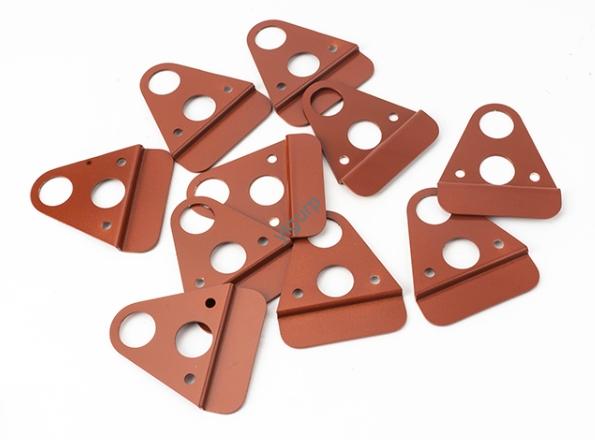
Korrosion ist der stille Feind von Metallteilen – sie führt dazu, dass starke Bauteile verrostet werden, mit der Zeit nutzlose Reste. Von Küchenutensilien bis hin zu Luft- und Raumfahrtmotoren, Jedes Metallteil braucht Schutz. Die gute Nachricht? By matching the rightpost-treatment anti-corrosion solution to your part type, Sie können die Lebensdauer verdoppeln oder sogar verdreifachen. Dieser Leitfaden bricht zusammen 17 gängige Metallteile, explains why they’re prone to corrosion, and shares proven post-treatment methods (backed by real cases and cost data) to keep them strong.
Erste: Why Post-Treatment Matters for Metal Parts
Before diving into specific parts, let’s clarify why post-treatment is non-negotiable:
- Natural corrosion: Metals like steel, Aluminium, and copper react with water, Luft, or chemicals to form oxides (z.B., rust on iron). This process starts within weeks of exposure.
- Environment risk: Parts in wet (z.B., marine equipment), chemisch (z.B., lab tools), or high-heat (z.B., Motorteile) environments corrode 3–5x faster.
- Kosteneinsparungen: A 2023 study by the World Corrosion Organization found that post-treatment cuts corrosion-related replacement costs by 60%. For a $10,000 batch of parts, that’s $6,000 gespeichert.
Post-treatment works by adding a protective layer (z.B., oxide film, metal coating) that blocks corrosive media from touching the base metal. The key is choosing the right solution for your part’s material and use case.
17 Metal Parts & Their Tailored Anti-Corrosion Solutions
Below are 17 gängige Metallteile, organized by industry. For each, we’ll cover: what it is, why it corrodes, the best post-treatment, and a real-world example.
1. Automobil: Engine Brackets (Steel/Stainless Steel)
- What it does: Holds engine components in place—exposed to oil, Wasser, and high heat (bis 150°C).
- Corrosion risk: Oil breaks down protective films; water from road spray causes rust.
- Best post-treatment: Pulverbeschichtung
- How it works: Applies a dry powder (polyester or epoxy) that’s baked onto the surface, forming a 50–100μm thick, chip-resistant layer.
- Kosten: $5–$10 per bracket.
- Fallstudie: A car manufacturer switched from paint to powder coating for 10,000 steel engine brackets. The brackets’ lifespan increased from 3 Jahre bis 7 Jahre, and warranty claims dropped by 45%.
2. Automobil: Exhaust Pipes (Stainless Steel 316L)
- What it does: Carries exhaust gases—exposed to extreme heat (bis 600°C) und Feuchtigkeit.
- Corrosion risk: High heat breaks down thin coatings; moisture mixes with exhaust chemicals to form acids.
- Best post-treatment: Passivierung
- How it works: Dips the pipe in nitric acid to enhance the stainless steel’s natural chromium oxide layer (thickens it by 2–3x).
- Kosten: $8–$15 per pipe.
- Fallstudie: A trucking company passivated 500 stainless steel 316L exhaust pipes. The pipes resisted rust for 5 Jahre (vs. 2 years without passivation), sparen $20,000 in replacements.
3. Luft- und Raumfahrt: Wing Fasteners (Titanium Ti6Al4V)
- What it does: Secures wing panels—exposed to high altitude (cold, dry air) and occasional rain.
- Corrosion risk: Titanium’s natural oxide layer is thin; high altitude UV rays weaken it over time.
- Best post-treatment: Eloxieren (Type II)
- How it works: Uses an electric current to thicken the oxide layer (to 5–20μm), adding UV resistance.
- Kosten: $15–$25 per fastener.
- Fallstudie: An aerospace firm anodized 10,000 titanium fasteners. The fasteners showed no corrosion after 8 years of flight (vs. 3 years without anodizing), meeting strict FAA standards.
4. Luft- und Raumfahrt: Fuel Lines (Nickel-Based Superalloy Inconel 718)
- What it does: Transports jet fuel—exposed to fuel chemicals and high pressure.
- Corrosion risk: Jet fuel contains sulfur, which eats away at metal surfaces.
- Best post-treatment: Galvanisieren (Nickel)
- How it works: Coats the fuel line with a 10–15μm nickel layer, which is immune to sulfur corrosion.
- Kosten: $20–$30 per line.
- Fallstudie: A military contractor plated 200 Inconel 718 Kraftstoffleitungen. The lines lasted 10 Jahre (vs. 4 years unplated), avoiding costly mid-mission failures.
5. Medizinisch: Chirurgische Skalpelle (Stainless Steel 420A)
- What it does: Cuts tissue—exposed to blood, Kochsalzlösung, and repeated steam sterilization.
- Corrosion risk: Blood’s salts and sterilization heat break down steel’s protective layer.
- Best post-treatment: Elektropolieren
- How it works: Uses an electric current to smooth the surface (removes micro-burrs) and thicken the oxide layer, making it resistant to salts and heat.
- Kosten: $10–$15 per scalpel.
- Fallstudie: A medical supplier electropolished 5,000 scalpels. The scalpels stayed rust-free for 200 Sterilisationszyklen (vs. 50 cycles unpolished), reducing replacement costs by 75%.
6. Medizinisch: Dental Implants (Titanium Grade 5)
- What it does: Replaces teeth—implanted in gums, exposed to saliva and bacteria.
- Corrosion risk: Saliva’s acids and bacteria break down titanium over time.
- Best post-treatment: Hydrogen Peroxide Passivation
- How it works: Treats the implant with 30% hydrogen peroxide to create a dense, biocompatible oxide layer (safe for gum tissue).
- Kosten: $30–$40 per implant.
- Fallstudie: A dental lab passivated 1,000 Titanimplantate. Patient follow-ups showed 0% corrosion after 5 Jahre (vs. 15% unpassivated), improving patient safety.
7. Marine: Boat Hulls (Aluminium 5052)
- What it does: Floats the boat—exposed to saltwater, which is 5x more corrosive than freshwater.
- Corrosion risk: Saltwater’s chloride ions penetrate aluminum’s natural oxide layer.
- Best post-treatment: Eloxieren (Typ III, Hard Anodizing)
- How it works: Creates a 25–50μm thick oxide layer (harder than aluminum itself) that blocks chloride ions.
- Kosten: $2–$4 per square foot.
- Fallstudie: A boat builder hard-anodized 50 aluminum hulls. The hulls resisted saltwater corrosion for 8 Jahre (vs. 3 years unanodized), sparen $50,000 in hull repairs.
8. Marine: Anchor Chains (Weichstahl)
- What it does: Secures the boat—exposed to saltwater, sand, and mechanical wear.
- Corrosion risk: Sand scratches remove protective films; saltwater accelerates rust.
- Best post-treatment: Hot-Dip Galvanizing
- How it works: Dips the chain in molten zinc (450°C), forming a 50–100μm zinc layer that acts as a “sacrificial anode” (zinc rusts instead of steel).
- Kosten: $15–$25 per meter of chain.
- Fallstudie: A marina galvanized 100 anchor chains. The chains lasted 10 Jahre (vs. 2 years ungalvanized), cutting replacement costs by 80%.
9. Industriell: Pipe Fittings (Messing)
- What it does: Connects pipes—exposed to water (for plumbing) oder Chemikalien (for factories).
- Corrosion risk: Water’s minerals or factory chemicals cause “dezincification” (zinc leaches from brass, weakening it).
- Best post-treatment: Chromate Conversion Coating
- How it works: Applies a 1–2μm chromate layer that stops dezincification and repels water/chemicals.
- Kosten: $3–$5 per fitting.
- Fallstudie: A plumbing company coated 10,000 Messingbeschläge. The fittings lasted 15 Jahre (vs. 5 years uncoated), reducing plumber call-backs by 60%.
10. Industriell: Getriebe (Gusseisen)
- What it does: Transmits power—exposed to oil, dust, und Feuchtigkeit.
- Corrosion risk: Dust traps moisture, which mixes with oil to form corrosive sludge.
- Best post-treatment: Malerei (Epoxy Paint)
- How it works: Applies 2 coats of epoxy paint (total 80–100μm thick) that seals out dust and moisture.
- Kosten: $10–$15 per gearbox.
- Fallstudie: A factory painted 200 cast iron gearboxes. The gearboxes showed no rust after 7 Jahre (vs. 2 years unpainted), avoiding $100,000 in downtime from gear failures.
11. Konsumgüter: Cookware (Aluminium 1100)
- What it does: Cooks food—exposed to water, Salz, and acidic foods (z.B., tomatoes).
- Corrosion risk: Acidic foods dissolve aluminum’s natural oxide layer, leading to metal leaching.
- Best post-treatment: Eloxieren (Type II)
- How it works: Creates a 10–15μm oxide layer that’s non-reactive with acids and safe for food contact.
- Kosten: $2–$3 per pan.
- Fallstudie: A cookware brand anodized 50,000 aluminum pans. Customer reviews showed 0% metal taste (vs. 30% unanodized pans), Steigerung des Umsatzes durch 25%.
12. Konsumgüter: Bike Frames (Aluminium 6061)
- What it does: Supports the rider—exposed to rain, Schweiß, and road salt.
- Corrosion risk: Sweat’s salts and road salt attack aluminum, causing pitting.
- Best post-treatment: Pulverbeschichtung (Polyester)
- How it works: Applies a colorful, 60–80μm powder coat that repels salts and water.
- Kosten: $30–$50 per frame.
- Fallstudie: A bike company powder-coated 10,000 aluminum frames. The frames stayed rust-free for 5 Jahre (vs. 2 years painted), reducing warranty claims by 50%.
13. Elektrisch: Circuit Board Heat Sinks (Kupfer)
- What it does: Cools circuit boards—exposed to air, dust, and occasional moisture.
- Corrosion risk: Copper oxidizes (turns green) im Laufe der Zeit, reducing heat transfer efficiency.
- Best post-treatment: Tin Plating
- How it works: Coats the heat sink with a 5–10μm tin layer that doesn’t oxidize, keeping heat transfer high.
- Kosten: $5–$8 per heat sink.
- Fallstudie: An electronics brand plated 100,000 copper heat sinks. The heat sinks maintained 95% efficiency after 3 Jahre (vs. 70% unplated), preventing overheating in devices.
14. Elektrisch: Wire Connectors (Messing)
- What it does: Connects wires—exposed to air and occasional moisture.
- Corrosion risk: Brass oxidizes, creating a green layer that increases electrical resistance.
- Best post-treatment: Gold Plating (Thin Layer)
- How it works: Applies a 0.5–1μm gold layer (conductive and non-oxidizing) that keeps connections strong.
- Kosten: $1–$2 per connector.
- Fallstudie: A telecom company gold-plated 1 million brass connectors. Signal loss dropped by 80% (vs. unplated), improving call quality.
15. Konstruktion: Reinforcement Bars (Rebar, Weichstahl)
- What it does: Strengthens concrete—exposed to water and salts in concrete.
- Corrosion risk: Water seeps into concrete, causing rebar to rust and expand (cracking concrete).
- Best post-treatment: Epoxidbeschichtung
- How it works: Applies a 150–200μm epoxy layer that seals rebar from water and salts.
- Kosten: $0.50–$1 per meter of rebar.
- Fallstudie: A construction firm coated 10,000 meters of rebar. Concrete structures showed no cracking after 10 Jahre (vs. 3 years uncoated), sparen $200,000 in repairs.
16. Konstruktion: Roofing Sheets (Aluminium 3003)
- What it does: Covers buildings—exposed to rain, snow, and UV rays.
- Corrosion risk: Rainwater mixes with air pollutants to form acids; UV rays weaken protective layers.
- Best post-treatment: PVDF Coating (Polyvinylidenfluorid)
- How it works: Applies a 20–30μm PVDF layer that’s UV-resistant and acid-proof.
- Kosten: $1–$2 per square foot.
- Fallstudie: A school district coated 50,000 square feet of aluminum roofing. The roofs lasted 20 Jahre (vs. 8 years uncoated), avoiding $300,000 in replacement costs.
17. Agriculture: Tractor Parts (Weichstahl)
- What it does: Powers farm equipment—exposed to fertilizer (highly acidic), Regen, and mud.
- Corrosion risk: Fertilizer’s acids eat through steel in months; mud traps moisture.
- Best post-treatment: Zinc-Nickel Plating
- How it works: Coats parts with a 10–15μm zinc-nickel layer (resistant to acids and mud).
- Kosten: $8–$12 per part.
- Fallstudie: A farm equipment maker plated 5,000 tractor parts. The parts lasted 5 Jahre (vs. 1 year unplated), cutting farmer maintenance costs by 80%.
Post-Treatment Comparison: Kosten, Lifespan & Best Uses
Use this table to quickly compare the most common anti-corrosion solutions and their fit for different parts:
| Post-Treatment | Kosten pro Teil (USD) | Lifespan Increase | Am besten für |
|---|---|---|---|
| Eloxieren (Type II) | $2–$25 | 2–3x | Aluminiumteile (Kochgeschirr, Fahrradrahmen) |
| Eloxieren (Typ III) | $4–50 $ | 3–4x | Aluminum parts in harsh environments (Bootsrümpfe) |
| Pulverbeschichtung | $5–50 $ | 2–3x | Steel parts (Motorhalterungen, Fahrradrahmen) |
| Galvanisieren (Nickel/Tin) | $1–$30 | 2–5x | Metal parts in chemical environments (Kraftstoffleitungen, Kühlkörper) |
| Passivierung | $5–40 $ | 2–4x | Stainless steel/titanium parts (exhaust pipes, Implantate) |
| Elektropolieren | $10–15 $ | 3–4x | Medical parts (scalpels) |
| Hot-Dip Galvanizing | $15–$25 per meter | 4–5x | Steel parts in saltwater (anchor chains) |
| PVDF Coating | $1–$2 per sq ft | 2–3x | Roofing sheets |
Yigu Technology’s Perspective on Metal Part Anti-Corrosion
Bei Yigu Technology, we tailor anti-corrosion solutions to each part’s material and use case—no one-size-fits-all. Für Aluminiumteile (z.B., Fahrradrahmen), we recommend Type II anodizing for cost-effectiveness. For stainless steel medical tools, electropolishing ensures biocompatibility and rust resistance. For marine parts (z.B., anchor chains), hot-dip galvanizing is our go-to for long-term saltwater protection. We also test post-treated parts in simulated environments (salt spray, hohe Hitze) to guarantee performance. Our goal is simple: help clients extend part lifespan, cut replacement costs, and avoid corrosion-related failures.