
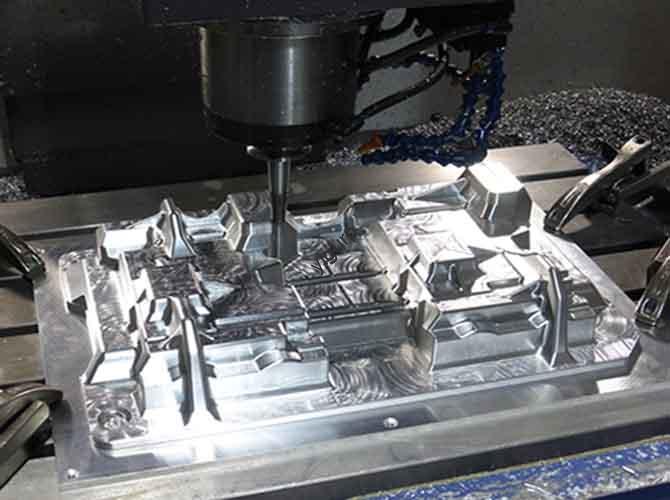
Im Bereich der Präzisionsfertigung, Gleitkopfbearbeitung (angetrieben durch Langdrehmaschinen) hat sich zu einer bahnbrechenden Technologie entwickelt, Standards für kleine Unternehmen neu definieren, komplexe Teilefertigung. Dieser Leitfaden richtet sich an leitende Fertigungsingenieure, Produktionsleiter, und Beschaffungsexperten, die ihr Verständnis für die Gleitkopfbearbeitung vertiefen möchten, bewerten die Eignung für ihre Projekte, and leverage its full potential to enhance productivity and product quality. From foundational definitions and working principles to in-depth comparisons, real-world case studies, and practical decision-making frameworks, we cover all critical aspects of sliding head machining to help you make informed, strategic decisions for your manufacturing operations.
1. Introduction to Sliding Head Lathes & Gleitkopfbearbeitung
Sliding head lathes, often referred to as Swiss-type lathes, are specialized CNC machining tools engineered for high-precision turning of small-diameter parts (typically up to 32mm, though some advanced models handle up to 50mm). At the core of Gleitkopfbearbeitung is the unique design where the headstock slides parallel to the workpiece, rather than the toolpost moving as in traditional lathes. This design minimizes the distance between the cutting tool and the workpiece’s support point (the guide bushing), drastically reducing deflection and enabling exceptional precision.
Industry Context & Growth Trend: The global sliding head lathe market is projected to grow at a CAGR of 5.2% aus 2024 Zu 2030 (source: Grand View Research), driven by increasing demand for miniaturized, high-precision components in industries such as medical devices, Luft- und Raumfahrt, und Elektronik. This growth underscores the rising importance of sliding head machining as a critical enabler of modern manufacturing needs.
Key Distinction from Traditional Lathes: Unlike conventional lathes that rely on a fixed headstock, sliding head lathes’ moving headstock design is tailored for small, intricate parts where even minor deviations can compromise functionality. Zum Beispiel, in the production of medical hypodermic needles (diameter as small as 0.1mm), sliding head machining is the only viable method to achieve the required dimensional accuracy.
2. How Does Sliding Head Machining Work?
The operating principle of sliding head machining revolves around three core components: the guide bushing, the sliding headstock, and the multi-axis tool system. Here’s a step-by-step breakdown of the process:
- Workpiece Loading: A long bar stock is fed through the guide bushing, which provides rigid support at the point closest to the cutting zone. This support is critical for minimizing vibration and deflection, especially for small-diameter workpieces.
- Headstock Sliding: As the cutting tools engage the workpiece, the headstock slides along the Z-axis (parallel to the workpiece). This movement keeps the cutting point consistently close to the guide bushing, maintaining precision throughout the machining process.
- Mehrachsige Bearbeitung: Most sliding head lathes feature 5 or more axes, allowing for simultaneous turning, Mahlen, Bohren, klopfen, and grinding operations. Zum Beispiel, a 5-axis sliding head lathe can machine a complex automotive connector (with multiple holes and threads) in a single setup.
- Part Completion & Bar Advancement: Once the machining operations are complete, the finished part is cut off from the bar stock using a parting tool. The bar stock is then advanced by the length of the next part, and the process repeats—enabling continuous, Großserienproduktion.
Critical Insight: The guide bushing’s quality directly impacts machining precision. High-precision guide bushings (with runout tolerance of ≤0.001mm) are essential for achieving the tightest dimensional tolerances in sliding head machining.
3. Advantages of Sliding Head Machining: Beyond Precision
Sliding head machining offers a range of benefits that make it indispensable for high-precision, Großserienfertigung. Below are the key advantages, supported by real-world examples and data:
3.1 Reduced Cycle Times
Sliding head machining minimizes cycle times through simultaneous multi-axis operations and elimination of secondary setups. According to a case study by Star Micronics (a leading sliding head lathe manufacturer), a manufacturer of electronic connectors reduced cycle time by 42% after switching from traditional lathes to sliding head machines. This is because sliding head lathes can perform turning, Mahlen, and tapping in a single pass, whereas traditional lathes require multiple setups and tool changes.
3.2 One-Hit Machining (Single-Setup Production)
One-hit machining—completing all machining operations in a single setup—is a hallmark of sliding head machining. This eliminates the errors associated with multiple setups (such as misalignment between operations) and reduces handling time. Zum Beispiel, a medical device manufacturer producing catheter tips (which require 8 distinct operations) switched to sliding head machining, reducing setup time by 90% and eliminating setup-related defects (which accounted for 15% of scrap previously).
3.3 Lights Out Machining Capability
Sliding head lathes are well-suited for lights-out machining (unbeaufsichtigter Betrieb) due to their high reliability, automatic bar feeding, and integrated quality control systems. Many modern sliding head machines feature in-process measurement tools (such as laser diameter gauges) that detect defects and adjust machining parameters in real time. A precision fastener manufacturer reported a 35% increase in production output after implementing lights-out sliding head machining for night shifts, with a defect rate of less than 0.05%.
3.4 High Precision and Superior Surface Finish
The proximity of the guide bushing to the cutting zone enables sliding head machining to achieve dimensional tolerances as tight as ±0.0005mm and surface finishes as smooth as Ra 0.05μm. This level of precision is critical for industries such as aerospace, where components like turbine blades (small-diameter cooling holes) require exacting specifications. A study by the American Machinists Association found that sliding head machining produces parts with 3x higher dimensional accuracy than traditional lathes for small-diameter workpieces.
4. Sliding Head Lathes vs. Traditional Lathes: A Detailed Comparison
To understand when to choose sliding head machining over traditional turning, it’s essential to compare the two technologies across key performance metrics. The table below summarizes the core differences:
| Performance Metric | Sliding Head Lathes | Traditional Lathes |
|---|---|---|
| Workpiece Diameter Range | 0.1mm – 50mm (optimal for <32mm) | 10mm – 500mm+ (optimal for >50mm) |
| Maßtoleranz | ±0.0005mm – ±0.005mm | ±0.005mm – ±0.05mm |
| Zykluszeit (Small Complex Parts) | 20-60 Sekunden (one-hit machining) | 60-180 Sekunden (multiple setups) |
| Einrichtungszeit | 30-60 Minuten (komplexe Teile) | 60-120 Minuten (multiple setups) |
| Ideale Anwendungen | Klein, komplexe Teile (medizinisch, Elektronik, Luft- und Raumfahrt) | Groß, simple-to-moderate complexity parts (Automobilgehäuse, Industrieventile) |
| Kosten (Entry-Level) | $80,000 – $150,000 | $30,000 – $80,000 |
Real-World Application Example: A manufacturer of small automotive sensors (diameter 5mm, mit 4 precision holes and a threaded end) switched from traditional lathes to sliding head machines. Das Ergebnis: cycle time reduced from 90 Sekunden zu 35 Sekunden, defect rate dropped from 8% Zu 0.2%, and production volume increased by 128% innerhalb 6 Monate.
5. Sliding Head Lathes vs. Multi-Spindle Lathes: Welches ist das Richtige für Sie??
Both sliding head lathes and multi-spindle lathes are used for high-volume precision production, but they differ in design, Fähigkeiten, and ideal applications. Below is an in-depth comparison to help you choose the right technology:
5.1 What Is a Multi-Spindle Lathe?
A multi-spindle lathe features multiple (typischerweise 4-6) spindles arranged in a circle, each holding a workpiece. The spindles rotate, and tools move sequentially to perform machining operations on each workpiece. Multi-spindle lathes are designed for ultra-high-volume production of small, simple-to-moderate complexity parts (z.B., Schrauben, Schrauben, small bushings).
5.2 Key Comparison: Sliding Head vs. Multi-Spindle Lathes
| Besonderheit | Sliding Head Lathes | Multi-Spindle Lathes |
|---|---|---|
| Complexity of Parts | Hoch (unterstützt 5+ Achsbearbeitung, Mahlen, Schleifen, klopfen) | Low-to-moderate (primarily turning operations) |
| Produktionsvolumen | Medium-to-high (10,000 – 500,000 parts/year) | Ultra-high (500,000 – 10,000,000 parts/year) |
| Flexibilität | Hoch (quick tool changes, easy setup for different parts) | Niedrig (specialized for specific parts; setup time is long) |
| Präzision | Höher (±0.0005mm – ±0.005mm) | Hoch (±0.001mm – ±0.01mm), but less than sliding head |
| Kosten | Untere (entry-level: $80k – $150k; High-End: $200k – $400k) | Höher (entry-level: $250k – $500k; High-End: $1M+) |
| Ideal Parts | Medizinische Katheter, Verbindungselemente für die Luft- und Raumfahrt, elektronische Steckverbinder | Schrauben, Schrauben, Nüsse, simple bushings |
5.3 Decision Framework: Choosing Between the Two
Use this simple framework to determine which technology fits your needs:
- Wählen Gleitkopfbearbeitung if: You need high precision, komplexe Teile, medium-to-high volume, and flexibility to switch between part designs.
- Wählen Mehrspindeldrehmaschinen if: You produce ultra-high volumes of simple parts and can justify the high upfront cost for specialized equipment.
Fallstudie: A manufacturer of orthopedic screws (Volumen: 300,000 parts/year, complex thread design and tapered tip) initially considered multi-spindle lathes but opted for sliding head machines. The decision was driven by the need for 5-axis machining to produce the tapered tip and threaded end in one setup. The sliding head machines delivered a 20% lower cost per part than multi-spindle lathes (due to lower setup costs and reduced scrap) and met the required precision of ±0.001mm.
6. Industries That Benefit Most from Sliding Head Machining
Sliding head machining’s unique combination of precision, Effizienz, and flexibility makes it ideal for industries that demand small, Komplex, hochwertige Komponenten. Below are the key industries and their specific use cases:
6.1 Herstellung medizinischer Geräte
Medical devices require the highest level of precision and biocompatibility. Sliding head machining is used to produce components such as: hypodermic needles, Katheterspitzen, orthopädische Schrauben, and surgical instrument parts. Zum Beispiel, a leading medical device company uses sliding head machines to produce 0.1mm-diameter needle shafts with a surface finish of Ra 0.05μm, ensuring smooth insertion and minimal tissue damage. Regulatory Note: Sliding head machining helps meet FDA and CE requirements for dimensional consistency and traceability.
6.2 Luft- und Raumfahrt & Verteidigung
Luft- und Raumfahrtkomponenten (even small ones) are critical for safety and performance. Sliding head machining produces parts like: turbine blade cooling holes, fuel system connectors, and avionics components. A case study by Boeing found that sliding head machining reduced the production time of small turbine components by 35% while improving dimensional accuracy by 40% im Vergleich zu herkömmlichen Methoden. The technology also supports the use of high-temperature alloys (z.B., Inconel) commonly used in aerospace applications.
6.3 Elektronik & Halbleiter
The miniaturization of electronic devices drives demand for small, Präzise Komponenten. Sliding head machining is used for: Steckerstifte, micro-switches, semiconductor lead frames, and battery contacts. Zum Beispiel, a smartphone manufacturer uses sliding head machines to produce 1mm-diameter connector pins with a tolerance of ±0.002mm, ensuring reliable electrical connections in compact devices. The high-volume capability of sliding head machining also meets the mass-production needs of the electronics industry.
6.4 Automobil
Modern automotive systems (especially electric vehicles) require small, precise components for sensors, Aktoren, and powertrain systems. Sliding head machining produces parts like: Kraftstoffeinspritzdüsen, Sensorgehäuse, and EV battery terminals. A major automotive supplier reported that sliding head machining reduced the defect rate of fuel injector nozzles from 5% Zu 0.3%, improving engine efficiency and reducing emissions.
7. Is Sliding Head Machining Suitable for Your Parts?
To determine if sliding head machining is the right choice for your parts, use the following checklist and evaluation criteria:
7.1 Key Evaluation Criteria
- Workpiece Diameter: Optimal for parts with a diameter of 0.1mm – 32mm (some models handle up to 50mm).
- Komplexität: Suitable for parts requiring multiple operations (drehen, Mahlen, Bohren, klopfen) in a single setup.
- Precision Requirements: Ideal if your parts need tolerances tighter than ±0.005mm or surface finishes smoother than Ra 0.2μm.
- Produktionsvolumen: Cost-effective for medium-to-high volume (10,000 – 500,000 parts/year).
- Materialtyp: Works well with a wide range of materials, einschließlich Metalle (Stahl, Aluminium, Titan), Kunststoffe (SPÄHEN, PTFE), und exotische Legierungen (Inconel, Hastelloy).
7.2 Parts That Are NOT Suitable for Sliding Head Machining
Sliding head machining is not the best choice for: large-diameter parts (>50mm), very simple parts (where traditional lathes are more cost-effective), or ultra-high-volume parts (where multi-spindle lathes offer better efficiency).
7.3 Practical Example: Part Suitability Analysis
Let’s evaluate a hypothetical part: a 8mm-diameter electronic connector with 3 Präzisionslöcher (tolerance ±0.003mm), a threaded end, and a production volume of 50,000 parts/year. This part is suitable for sliding head machining because: the diameter is within the optimal range, it requires multiple operations (drehen, Bohren, klopfen) in einem Setup, the precision requirements are tight, and the volume is medium-to-high. A traditional lathe would require 3 separate Setups, leading to higher cycle times and defect rates.
8. FAQ About Sliding Head Machining
Q1: What is the maximum workpiece diameter that sliding head machining can handle? A1: Most standard sliding head lathes handle workpieces up to 32mm in diameter. Advanced models (z.B., Star Micronics’ SV-50) can handle up to 50mm, but these are specialized for larger small-diameter parts. For diameters larger than 50mm, traditional lathes or machining centers are more suitable.
Q2: How does sliding head machining compare to 5-axis machining centers for small parts? A2: Sliding head machining is specifically designed for small-diameter (≤32mm) parts and offers faster cycle times, lower setup costs, and higher precision for turning-based operations. 5-axis machining centers are better for larger small parts (32mm – 100mm) or parts requiring more complex milling operations. Zum Beispiel, a 5mm-diameter connector is better suited for sliding head machining, while a 50mm-diameter gear housing is better for a 5-axis machining center.
Q3: What is the cost of implementing sliding head machining? A3: Entry-level sliding head lathes cost $80,000 – $150,000, mid-range models cost $150,000 – $250,000, and high-end 5+ axis models cost $250,000 – $400,000. Additional costs include tooling ($5,000 – $15,000), training ($2,000 – $5,000 per operator), and maintenance ($3,000 – $8,000 per year). Jedoch, the reduced cycle times and defect rates often lead to a return on investment (ROI) within 12–24 months for medium-volume production.
Q4: Can sliding head machining be used for plastic parts? A4: Ja, sliding head machining is suitable for plastic parts (z.B., SPÄHEN, PTFE, Nylon) that require high precision. The key is to use specialized tooling (z.B., carbide tools with sharp cutting edges) and adjust machining parameters (geringere Schnittgeschwindigkeiten, higher feed rates) to prevent melting or deformation. Zum Beispiel, sliding head machining is used to produce PEEK medical catheter tips with tight dimensional tolerances.
Q5: What are the most common mistakes to avoid in sliding head machining? A5: The top mistakes include: using low-quality guide bushings (leading to poor precision), incorrect bar stock alignment (causing deflection), using the wrong cutting tools (reducing surface finish), and neglecting in-process measurement (zu Mängeln führen). To avoid these, invest in high-precision guide bushings, ensure proper bar stock alignment, use tooling designed for sliding head machining, and implement real-time quality control systems.
Discuss Your Projects Needs with Yigu
Bei Yigu Technology, we specialize in providing tailored Gleitkopfbearbeitung solutions that align with your production goals, Präzisionsanforderungen, und Budget. Mit über 15 years of experience serving the medical, Luft- und Raumfahrt, Elektronik, und Automobilindustrie, our team of product engineers and machining experts understands the unique challenges of small, komplexe Teilefertigung.
We offer a comprehensive range of services, einschließlich: feasibility analysis for sliding head machining (to determine if your parts are suitable), custom machining process design, tooling selection, and turnkey production solutions. Our state-of-the-art facility is equipped with high-precision sliding head lathes (Star Micronics SV series, Citizen Cincom series) that can achieve tolerances as tight as ±0.0005mm and surface finishes of Ra 0.05μm.
Whether you’re looking to reduce cycle times, improve part precision, or scale up production of small complex components, we’re here to help. Contact our team today to discuss your project needs and learn how Yigu Technology’s sliding head machining solutions can drive efficiency and quality in your manufacturing operations.