
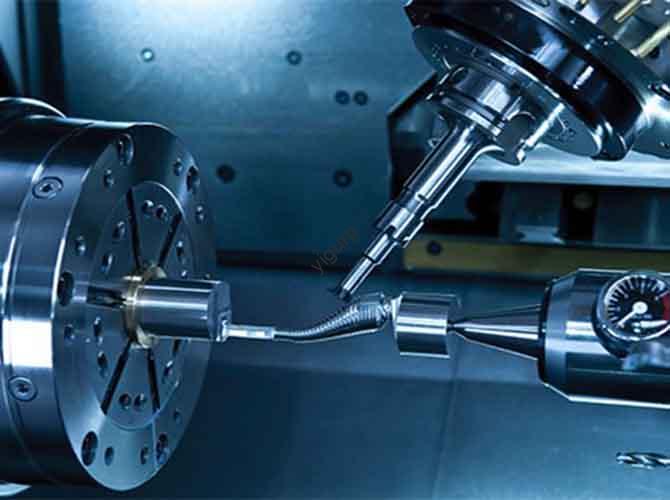
Die medizinische Industrie verlangt Komponenten, die nicht nur funktional sind, aber auch ultrapräzise, biokompatibel, und zuverlässig – Standards, die herkömmliche Bearbeitungsmaschinen oft nur schwer erfüllen können. CNC-Bearbeitung medizinischer Geräte solves this by using digital control to produce parts with microscopic accuracy, Daher ist es für lebensrettende Ausrüstung unverzichtbar. Dieser Leitfaden schlüsselt seinen Kernwert auf, Schritt-für-Schritt-Prozess, reale Anwendungen, und wie man gemeinsame Herausforderungen meistert, helping you deliver medical devices that meet strict industry standards.
1. Core Value of Medical Device CNC Machining: Why It’s Non-Negotiable
Medical devices directly impact patient safety—CNC-Bearbeitung addresses three critical pain points that traditional methods can’t, making it a must for healthcare manufacturing.
1.1 Unmatched Precision: Avoid Life-Threatening Errors
Medical parts like implant screws or surgical instrument tips need tolerances as tight as ±0,001 mm—a margin thinner than a human hair. Traditional machining (z.B., manual milling) can only achieve ±0.01mm, führt dazu:
- Implant misfits (z.B., a hip replacement that doesn’t align, causing pain or failure).
- Surgical tool malfunctions (z.B., a scalpel with a uneven edge that damages tissue).
CNC machining eliminates this risk with:
- Computer-controlled movements (no human error in tool positioning).
- Repeatability of 99.9% (jedes Teil ist identisch, critical for high-volume production like insulin pump components).
Beispiel: A cardiac stent’s tiny pores (0.1mm Durchmesser) control blood flow—CNC machining creates these pores uniformly, ensuring the stent works as intended. Traditional drilling would make inconsistent pores, risking blood clots.
1.2 Versatility for Complex Designs: Turn Innovation Into Reality
Many medical devices have intricate 3D curves (z.B., knee implants that mimic natural joint shapes) or internal channels (z.B., catheters for drug delivery)—designs that traditional machining can’t replicate without multiple assembly steps.
CNC machining handles these with ease:
- Creates one-piece parts (no seams, reducing leakage risks in fluid-carrying devices like IV tubes).
- Machines complex geometries in a single setup (spart 50% of production time vs. traditionelle Methoden).
1.3 Adaptability to Medical-Grade Materials
Medical devices use specialized materials to ensure biocompatibility (no immune rejection) und Haltbarkeit. CNC machining works with all key options, wie unten gezeigt:
| Materialtyp | Schlüsseleigenschaften | Medizinische Anwendungen | CNC Machining Tips |
| Titanlegierungen | Biokompatibel, leicht, korrosionsbeständig | Hüft-/Knieimplantate, Zahnabutments | Verwenden Sie Werkzeuge aus Schnellarbeitsstahl; cool with water-based coolant to avoid heat damage |
| Edelstahl (316L) | Ungiftig, leicht zu sterilisieren | Chirurgische Instrumente (Skalpelle, Zange), hospital bed components | Verwenden Sie Hartmetallwerkzeuge; keep cutting speed moderate (80–100 m/min) to prevent work hardening |
| Kunststoffe in medizinischer Qualität (SPÄHEN, ABS) | Flexibel, niedrige Kosten, compatible with MRI | Catheters, MRI machine casings, inhaler parts | Use sharp tools; lower cutting speed (40–60 m/m) um ein Schmelzen zu vermeiden |
2. Step-by-Step Medical Device CNC Machining Process
Skipping a step or cutting corners leads to non-compliant parts. Follow this structured workflow to ensure quality and safety.
2.1 Prozessdesign & Programmierung: Translate Drawings Into Machine Instructions
This is the “blueprint” stage—get it right, and the rest of the process runs smoothly.
- Analyze Design Drawings: Confirm critical specs:
- Dimensional tolerances (z.B., ±0.005mm for implant parts).
- Oberflächenbeschaffenheit (Ra ≤ 0.8μm for parts that contact skin/tissue).
- Materialtyp (z.B., titanium alloy for implants).
- Write CNC Code: Use CAD/CAM software (z.B., SolidWorks, Mastercam) to convert the drawing into G-code (machine-readable instructions). Include:
- Tool path (optimize to minimize air cuts, sparen 20% of time).
- Cutting parameters (Geschwindigkeit, Vorschubgeschwindigkeit, depth of cut—matched to the material).
Fallstudie: A manufacturer once used generic G-code for a 316L stainless steel surgical clamp. The tool path was inefficient, führt dazu 15% more material waste and 10% longer production time. After optimizing the code, they cut waste to 5% and reduced time by 8%.
2.2 Materialeinrichtung & Spannen: Keep Parts Stable During Machining
A loose part causes vibration, ruining precision. Befolgen Sie diese Regeln:
- Clean the Material: Wipe away oil or dust (prevents slipping).
- Choose the Right Clamp:
| Teiletyp | Spannmethode | Nutzen |
| Small implants (≤50mm) | Vacuum chuck | No marks on the part; gleichmäßiger Druck |
| Long instruments (z.B., Zange) | Vise with soft jaws | Prevents bending; secure grip |
- Align the Material: Use a laser aligner to ensure the part is positioned within ±0.002mm of the machine’s origin.
2.3 Bearbeitungsausführung: Lassen Sie die Maschine die Arbeit machen (With Supervision)
The CNC machine auto-performs tasks like drilling, Mahlen, and turning—but you still need to monitor for issues:
- Check Tool Wear: Replace tools every 200–300 parts (für Titan) or 500–600 parts (für Edelstahl). A dull tool leaves rough surfaces.
- Monitor Temperature: Use coolant to keep the material below 150°C (prevents material warping—critical for plastics like PEEK).
2.4 Nachbearbeitung & Qualitätsprüfung: Ensure Compliance
This stage ensures the part meets medical standards—no exceptions.
Nachbearbeitungsschritte:
- Deburr: Remove sharp edges with a file or ultrasonic cleaner (prevents injury to patients/doctors).
- Sauber: Use medical-grade solvents (z.B., isopropyl alcohol) to remove coolant or debris (critical for sterile applications like surgical tools).
- Oberflächenbehandlung: Add coatings if needed (z.B., a biocompatible coating on titanium implants to reduce rejection risk).
Qualitätsprüfung:
Test every part against these criteria (non-negotiable for FDA/CE approval):
- Dimensional Check: Use a coordinate measuring machine (CMM) um Toleranzen zu überprüfen.
- Material Test: Ensure biocompatibility (z.B., ISO 10993 testing for implants).
- Sterility Test: For reusable tools, confirm they can withstand autoclaving (121°C, 15 psi for 15 Minuten) ohne Schaden.
3. Key Applications of Medical Device CNC Machining
CNC machining is used in nearly every type of medical equipment—here are the most critical areas.
| Medical Device Category | CNC-bearbeitete Komponenten | Why CNC Machining Is Needed |
| Chirurgische Instrumente | Skalpelle, Zange, Hämostatika, Retraktoren | Needs sharp, precise edges; must be sterilizable |
| Implantable Devices | Hip/knee replacements, Zahnimplantate, cardiac stents | Biokompatible Materialien; ultra-tight tolerances (±0,001 mm) |
| Diagnostic Equipment | Ultrasound probe tips, X-ray machine parts, MRI coils | Leichte Materialien; complex shapes for accurate imaging |
| Patient Care Equipment | IV poles, hospital bed rails, inhaler nozzles | Dauerhaft; low cost for high-volume production |
4. Die Perspektive von Yigu Technology
Bei Yigu Technology, we see Medical Device CNC Machining as a lifeline for healthcare innovation. Many clients struggle with balancing precision and cost—our advice is to prioritize material-machine matching (z.B., titanium with high-speed tools) and optimize post-processing to cut waste. We’re developing AI-driven programming tools that auto-adjust cutting parameters for medical materials, reducing error rates by 30% und sparen 15% of production time. As medical tech advances (z.B., smaller implants, more complex diagnostic tools), CNC machining will only grow in importance—and we’re committed to making it accessible, zuverlässig, and compliant for every healthcare manufacturer.
5. FAQ: Antworten auf häufig gestellte Fragen
Q1: What certifications do medical device CNC machined parts need?
A1: Global standards include FDA (UNS.), CE (EU), und ISO 13485 (international for medical device quality management). Parts like implants also need ISO 10993 biocompatibility certification. Without these, you can’t sell or use the parts in medical settings.
Q2: Can CNC machining produce small-batch medical parts (z.B., 10–50 Einheiten)?
A2: Yes—CNC machining is ideal for small batches. Im Gegensatz zur herkömmlichen Bearbeitung (which needs expensive molds for small runs), CNC uses digital code, so setup costs are low. For 10–50 units, it’s 30–40% cheaper than mold-based methods.
Q3: How long does it take to machine a medical device part?
A3: It depends on size and complexity. A small dental implant (10mm long) takes 15–20 minutes. A complex knee replacement (100mm long, with multiple curves) takes 1–1.5 hours. Nachbearbeitung (Reinigung, Inspektion) adds 30–60 minutes per part.