
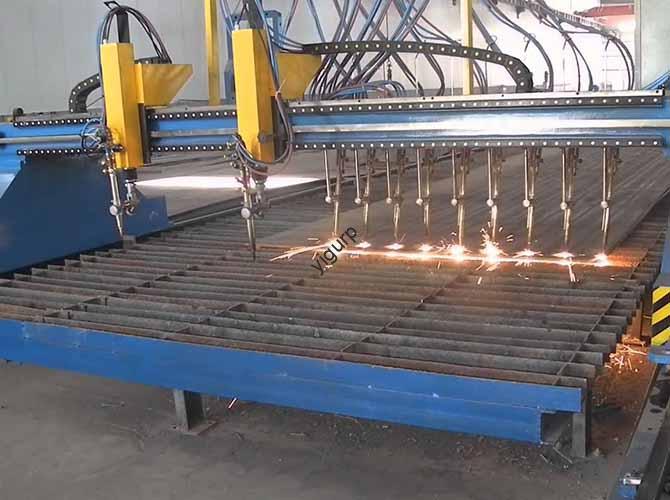
Die Oberflächenbeschaffenheit ist eine entscheidende Messgröße für CNC-bearbeitete Teile, direkten Einfluss auf die Funktionalität, Ästhetik, und Leistung – insbesondere in Branchen wie der Luft- und Raumfahrt, medizinische Geräte, und Automobil. This article breaks down actionable strategies to enhance CNC machining surface finish, anhand klarer Vergleiche, datengesteuerte Erkenntnisse, und praktische Lösungen.
1. Erste: Understand Surface Finish Evaluation Metrics
Before improving surface finish, you need to measure it accurately. The table below compares the most common evaluation indicators, their definitions, und Anwendungsfälle:
| Indicator | Definition | Hauptmerkmal | Ideal Use Case |
| Ra-Wert | Arithmetic average of surface microscopic undulations (in μm) | Most widely used; simple to measure | General CNC parts (drehen, Mahlen) |
| N-level Standard | ISO grading system (N1 to N12) | Smaller number = higher finish | International quality compliance |
| Rz Value | Ten-point height of roughness (peak-to-valley average) | Reflects extreme surface irregularities | Parts with strict wear resistance requirements |
| Grit Size | Measure of sanding/polishing particle fineness | Larger grit number = finer surface | Post-machining polishing (z.B., Aluminiumlegierungen) |
2. Core Factors That Harm CNC Surface Finish: A Contrast
Poor surface finish often stems from mismanagement of key variables. Below is a contrast between detrimental practices Und optimal controls for critical factors:
| Faktor | Detrimental Practices (Causes Roughness) | Optimal Controls (Boosts Smoothness) |
| Tool Conditions | Dull edges, low-wear materials (z.B., HSS), no coating | Ultra-fine grain carbide oder PCD (polykristalliner Diamant) Werkzeuge; TiAlN-coated edges |
| Schnittparameter | Low spindle speed, high feed rate, deep cutting depth | High speed (reduces tool mark spacing), low feed (0.05–0.1 mm/rev), shallow depth (0.1–0,3 mm) |
| Material Prep | Unprocessed alloys (internal stress), soft metals (Grate) | Behandlung zum Stressabbau (für dünnwandige Teile); pre-machining deburring (for aluminum alloys) |
| Cooling/Lubrication | Insufficient coolant, external cooling only (für tiefe Löcher) | Kombiniert high-pressure internal cooling + external cooling; coolant matched to material (z.B., mineral oil for steel) |
| Machine/Fixture Stability | Loose clamps, low-rigidity CNC machines | High-precision 5-axis linkage machines; rigid clamp designs (avoids vibration-induced ripples) |
3. Step-by-Step Strategies to Improve Surface Finish
Follow this linear, actionable process to achieve consistent, high-quality surface finish:
Schritt 1: Optimize Tools and Cutting Parameters
- Verwenden imported PCD tools for non-ferrous metals (z.B., Aluminium) to avoid sticking and burrs.
- Apply a “hohe Geschwindigkeit, low-feed” finishing strategy: For steel parts, set spindle speed to 3,000–6,000 RPM, feed rate to 0.08 mm/rev, and cutting depth to 0.2 mm.
- Conduct 2–3 trimming passes to eliminate residual tool marks from rough machining.
Schritt 2: Enhance Cooling and Chip Evacuation
- For deep-hole machining (z.B., boreholes >10x diameter), verwenden high-pressure internal cooling (30–50 bar) to direct coolant to the cutting zone—this reduces heat and washes away chips immediately.
- Choose water-soluble coolant for aluminum (prevents oxidation) and mineral oil for stainless steel (reduziert die Reibung).
Schritt 3: Upgrade Equipment and Processes
- Replace old 3-axis machines with 5-axis linkage CNC equipment for complex surfaces (z.B., Turbinenschaufeln)—it minimizes re-clamping errors and vibration.
- Adopt turn-mill composite machining for parts with multiple features (z.B., shafts with threads and slots)—completing all operations in one clamping avoids surface scratches from repositioning.
Schritt 4: Implement Quality Control and Post-Processing
- Establish a full-chain quality check: Zum Beispiel, conduct IPQC (In-Process Quality Control) inspections every 2 Std. (as used by Wemet factory) Abweichungen frühzeitig erkennen.
- Add post-processing steps:
- Test oxidation before anodizing to solve “material flowering” (uneven color) in aluminum parts.
- Verwenden blister packaging for transportation to prevent “three injuries”: abrasions, bruises, and hanging injuries.
4. Typical CNC Machining Methods: Finish Ranges and Improvement Tips
Different CNC processes yield varying baseline surface finishes. Use this table to set targets and identify improvement opportunities:
| Machining Method | Baseline Ra Range (μm) | Improvement Tip |
| Ordinary Turning | 1.6–0.8 | Upgrade to mirror turning (use finely ground PCD tools) for Ra 0.04–0.01 μm |
| Rough Milling | 20–5 | Switch to fine milling with carbide tools for Ra 6–0.63 μm |
| Fine Boring (Stahl) | 0.63–0.08 | Add a final honing pass to reach Ra <0.04 μm |
| Ultra-Precision Grinding | 0.04–0.01 | Use mirror grinding (Diamantschleifmittel) for Ra <0.01 μm |
Die Perspektive von Yigu Technology
Bei Yigu Technology, we believe improving CNC surface finish is not just about optimizing single factors—it’s about integrating tool selection, Prozesskontrolle, and quality management into a seamless workflow. Our clients in the medical and automotive sectors often require Ra values below 0.1 μm; to meet this, we combine 5-axis CNC machines with custom PCD tools and real-time coolant monitoring. Zusätzlich, we’ve developed a post-processing oxidation test that reduces “material flowering” rates by 90%, ensuring consistent aesthetics. Für Hersteller, investing in these integrated solutions not only boosts surface finish but also cuts rework costs by up to 30%.
FAQ
- What is the minimum Ra value achievable with CNC machining?
With ultra-precision processes like mirror turning or mirror grinding, Ra values as low as 0.01 μm can be achieved—suitable for high-end optical or medical parts.
- Can soft materials like aluminum achieve the same surface finish as steel?
Ja, but aluminum requires extra steps: Use PCD tools to avoid burrs, apply high-pressure cooling, and conduct post-machining polishing. Aluminum can reach Ra 0.04 μm, comparable to fine-turned steel.
- How does machine rigidity affect surface finish?
Low-rigidity machines cause vibration between the tool and workpiece, leading to ripples or deep tool marks. High-rigidity 5-axis machines suppress this vibration, ensuring Ra values stay consistent across the entire part—critical for complex geometries.