
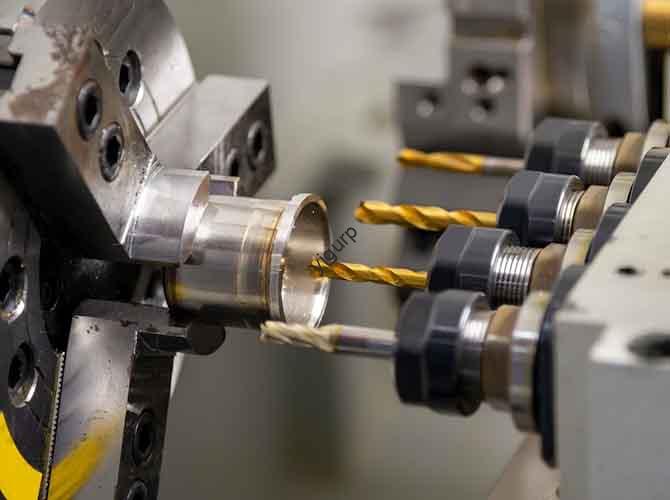
Wenn Sie in der Getriebefertigung tätig sind – egal, ob Sie ein erfahrener Ingenieur sind, ein Werkstattleiter, or a student learning the ropes—you’ve probably heard of hob machining. Es ist eine der am weitesten verbreiteten Methoden zur Herstellung von Zahnrädern, Aber um es zu meistern, bedarf es mehr als nur der Kenntnis der Grundlagen. In diesem Ratgeber, Wir erklären Ihnen alles, was Sie wissen müssen: from how the process works and the tools you’ll need, to optimizing parameters and ensuring top-tier quality. Am Ende, you’ll have the insights to tackle common challenges and make informed decisions for your production line.
1. Understanding Hob Machining: Core Principles & Key Components
Before diving into machines or settings, let’s start with the “why” and “how” of hob machining. Im Kern, this process relies on Generating Motion—a synchronized movement between the hob (the cutting tool) und das Werkstück (der Zahnradrohling) that creates the gear’s teeth profile. Think of it like two gears meshing: the hob rotates to cut, while the workpiece turns at a precise ratio to form each tooth.
The Role of Hob Geometry
The hob itself is a critical component, and its design directly impacts the final gear’s quality. Key features include:
- Rake Angle: This angle determines how easily the hob cuts through material. A positive rake angle (common for soft metals like aluminum) reduces cutting force, while a negative rake angle (used for hard steels) adds durability to the tool.
- Relief Angle: Prevents the back of the hob from rubbing against the freshly cut gear, which would damage the surface finish.
- Number of Starts: A Single-Start Hob creates one tooth per full rotation of the hob, making it ideal for high-precision gears. A Multi-Start Hob (z.B., 2 oder 4 starts) cuts multiple teeth at once, boosting production speed—perfect for mass-produced parts like automotive gears.
Real-World Example: Avoiding Hob Failure
A few years back, a client of mine was manufacturing transmission gears for tractors using a Multi-Start Hob. They noticed frequent tool wear and rough tooth surfaces. After investigating, we found the Relief Angle was too small—causing the hob’s back edge to scrape the gear. By increasing the relief angle by 2 degrees (from 5° to 7°), tool life extended by 30%, and surface finish improved from Ra 1.6 μm zu Ra 0.8 μm. This small adjustment saved them over $10,000 in tool replacement costs in six months.
2. Choosing the Right Hob Machining Equipment
Not all hob machines are created equal. Your choice depends on factors like gear size, Produktionsvolumen, und Präzisionsanforderungen. Let’s break down the main types and their uses.
Horizontal vs. Vertical Hobbing Machines
| Besonderheit | Horizontal Hobbing Machine | Vertical Hobbing Machine |
| Am besten für | Große Zahnräder (z.B., Industriegetriebe) | Small to medium gears (z.B., Automobilkomponenten) |
| Space Requirement | More floor space | Kompakt, ideal for tight workshops |
| Workpiece Handling | Uses a Tailstock for stability on long parts | Often paired with Automated Loading for speed |
| Präzision | Excellent for heavy-duty, Kleinserienproduktion | Superior for high-volume, repeatable jobs |
CNC vs. Conventional Hobbing
CNC Gear Hobbing has revolutionized the industry. Unlike conventional machines (which require manual adjustment for each gear type), CNC machines use computer programming to control the Workpiece Axis Und Hob Axis synchronization. This means:
- Faster setup times (from hours to minutes for new parts).
- Higher accuracy (reduzierend Tonhöhenfehler by up to 50% compared to conventional machines).
- Flexibility to switch between gear types (z.B., aus Spur Gears Zu Helical Gears) with just a program change.
Essential Accessories
Don’t overlook these components—they’re just as important as the machine itself:
- Arbor: Holds the hob in place; a worn arbor can cause Auslaufen (wobbling), leading to uneven tooth profiles.
- Workholding: Secures the workpiece. For high-volume jobs, Automated Loading Systeme (z.B., robotic arms) reduce labor costs and eliminate human error.
3. Mastering Hob Machining Parameters & Strategies
Even the best equipment won’t produce quality gears if your parameters are off. Let’s break down the key settings and how to optimize them.
Critical Cutting Parameters
The “big three” parameters that affect speed, Qualität, and tool life are:
- Cutting Speed: Measured in surface feet per minute (SFM). Zum Beispiel:
- Aluminium: 300–500 SFM (use a high speed to avoid built-up edge).
- Gehärteter Stahl (HRC 50+): 50–100 SFM (slower speed to protect the hob).
- Vorschubgeschwindigkeit: The speed at which the hob moves into the workpiece. There are three types:
- Axial Feed: Hob moves parallel to the workpiece axis (used for most gears).
- Radial Feed: Hob moves toward the workpiece center (for roughing cuts).
- Tangential Feed: Hob moves along the gear’s circumference (selten, used for specialized parts like Worm Wheels).
- Hobbing Cycle: The sequence of cuts (roughing → semi-finishing → finishing). Zum Beispiel, a typical cycle for a Module 3 gear (module = tooth size) might include:
- Roughing: Radial feed of 0.2 mm/rev to remove most material.
- Semi-finishing: Axial feed of 0.1 mm/rev to smooth the profile.
- Abschluss: Slow axial feed (0.05 mm/rev) zu erreichen Tooth Profile Accuracy of DIN 5 (a high-precision standard).
Dry vs. Wet Machining
| Method | Vorteile | Nachteile | Am besten für |
| Dry Machining | No coolant costs; umweltfreundlich; faster cleanup | Higher tool wear; risk of overheating | Aluminium, Messing, or low-volume jobs |
| Wet Machining | Cools tool/workpiece; extends tool life; better surface finish | Coolant disposal costs; messy workspace | Hard steels, Großserienproduktion |
Pro Tip: Climb vs. Conventional Hobbing
- Climb Hobbing: The hob rotates in the same direction as the workpiece’s cutting motion. This reduces cutting force and improves surface finish but requires a rigid machine to avoid chatter.
- Conventional Hobbing: The hob rotates opposite the workpiece. It’s more stable for less rigid machines but can leave slight burrs on the gear teeth.
4. Hob Machining Applications: Getriebe & Darüber hinaus
Hob machining isn’t just for gears—though that’s its primary use. Let’s explore the most common workpieces and their requirements.
Common Gear Types & Spezifikationen
| Gear Type | Key Parameters to Consider | Typical Application |
| Spur Gears | Module (metrisch) oder Diametral Pitch (kaiserlich); Pressure Angle (usually 20°) | Simple machinery (z.B., lawnmowers) |
| Helical Gears | Lead Angle (angle of the teeth); Tooth Depth | Kfz-Getriebe (quieter than spur gears) |
| Worm Wheels | Number of Starts on the worm; Pitch Diameter | Fördersysteme, elevators |
| Splines | Number of Splines; Major/Minor Diameter | Shafts for power transmission (z.B., truck axles) |
Industry-Specific Uses
- Automobil: The largest user of hob-machined parts. Every car has 50–100 gears (z.B., in transmissions, differential) made via CNC Gear Hobbing for high volume (10,000+ Teile pro Tag).
- Luft- und Raumfahrt: Requires ultra-precise gears (Tooth Profile Accuracy of DIN 3 or better) for jet engines. Here, Single-Start Hobs are used, and each gear is inspected with a CMM (Koordinatenmessgerät) to ensure compliance.
- Stromerzeugung: Wind turbines use large Helical Gears (bis zu 2 meters in diameter) machined on horizontal hobbing machines. These gears must withstand high torque, Also Wet Machining is used to prevent overheating.
5. Ensuring Quality: Precision Measurement & Qualitätskontrolle
Even small errors in gear manufacturing can lead to catastrophic failures (z.B., a faulty transmission gear in a truck). That’s why quality control is non-negotiable.
Key Metrics to Measure
- Tooth Profile Accuracy: How closely the tooth matches the ideal Involute Profile (the standard shape for most gears). Errors here cause noise and premature wear.
- Tonhöhenfehler: Variations in the distance between adjacent teeth. A pitch error of more than 0.02 mm can cause vibration in high-speed gears.
- Lead Deviation: How straight the tooth is along its length (kritisch für Helical Gears). Deviations here lead to uneven load distribution.
- Oberflächenbeschaffenheit: Measured in Ra (roughness average). For automotive gears, Ra 0.8–1.6 μm is typical; aerospace gears require Ra 0.4 μm or better.
Tools for Inspection
- CMM (Koordinatenmessgerät): Uses a probe to map the gear’s 3D shape, providing precise data on all key metrics. It’s the gold standard for high-precision parts.
- Post-process Gaging: Spezialwerkzeuge (z.B., gear calipers, pitch gauges) for quick checks on the shop floor. Ideal für die Massenproduktion.
- Tooth Contact Pattern Test: Involves meshing the gear with a master gear and applying dye. The contact pattern shows how evenly the teeth meet—critical for quiet operation.
Fallstudie: Reducing Noise in Wind Turbine Gears
A wind energy client was struggling with excessive noise from their turbine gears. Wir haben ein verwendet Tooth Contact Pattern Test and found the pattern was off-center (caused by Lead Deviation). By adjusting the hob’s axial feed by 0.03 mm/rev, the contact pattern became centered, and noise levels dropped by 15 dB—meeting the industry’s strict noise standards.
6. Why Choose Hob Machining? Vorteile & Einschränkungen
Hob machining is popular for a reason, but it’s not the right choice for every job. Let’s weigh the pros and cons.
Hauptvorteile
- Hohe Produktionsrate: Especially with Multi-Start Hobs—you can produce hundreds of small gears per hour.
- Continuous Motion: Im Gegensatz zu anderen Methoden (z.B., Zahnradformung), hob machining cuts teeth continuously, reducing cycle time.
- Vielseitigkeit: You can machine Spur Gears, Helical Gears, Splines, und sogar Sprockets with the same machine (just swap the hob).
- Hohe Genauigkeit: With CNC machines, you can achieve DIN 3–5 precision—good enough for aerospace applications.
Limitations to Consider
- Initial Cost: CNC hobbing machines are expensive (starting at $100,000 for small models). Not ideal for small shops with low volume.
- Hob Wear: Hobs are consumable—hard steels can wear down a hob after 500–1,000 parts. This adds to ongoing costs.
- Size Constraints: Vertical machines struggle with gears larger than 300 mm im Durchmesser; horizontal machines are needed for bigger parts (but take more space).
Yigu Technology’s Perspective on Hob Machining
Bei Yigu Technology, we see hob machining as the backbone of modern gear manufacturing—especially as industries like electric vehicles (Elektrofahrzeuge) demand quieter, more precise gears. EV transmissions, Zum Beispiel, require gears with minimal Tonhöhenfehler und glatt Oberflächenbeschaffenheit to reduce noise (a key consumer demand). We’ve noticed a trend toward Dry Machining in EV production, as automakers aim to cut coolant costs and reduce environmental impact. Jedoch, dry machining requires high-quality hobs (with advanced coatings like TiAlN) to avoid tool wear. We recommend manufacturers invest in CNC machines with real-time monitoring (to track Cutting Speed Und Vorschubgeschwindigkeit) and integrate Automated Loading to keep up with EV production volumes. By combining these technologies, businesses can balance precision, Geschwindigkeit, and sustainability—key to staying competitive in today’s market.
FAQ: Common Questions About Hob Machining
- What’s the difference between a Single-Start and Multi-Start Hob?
A Single-Start Hob has one cutting edge, so it creates one tooth per full hob rotation—great for precision. A Multi-Start Hob has multiple edges (z.B., 2 oder 4), cutting multiple teeth at once to speed up production.
- How do I choose between Dry and Wet Machining?
Verwenden Dry Machining for soft metals (Aluminium, Messing) or low-volume jobs to save on coolant costs. Verwenden Wet Machining for hard steels, Großserienproduktion, or when you need a better surface finish.
- What’s the minimum precision I can achieve with hob machining?
CNC hobbing machines can achieve DIN 3 Präzision (very high) für Luft- und Raumfahrtteile. For general industrial use, DIN 5–7 is common and more cost-effective.
- How often should I replace my hob?
Es kommt auf das Material an: für Aluminium, a hob can last 1,000–2,000 parts; for hardened steel (HRC 50+), expect 500–1,000 parts. Signs of wear include rough surface finish or increased Tonhöhenfehler.
- Can hob machining be used for non-gear parts?
Ja! It’s often used to machine Splines (for shafts) Und Sprockets (for chains). You just need a specialized hob designed for the part’s profile.