
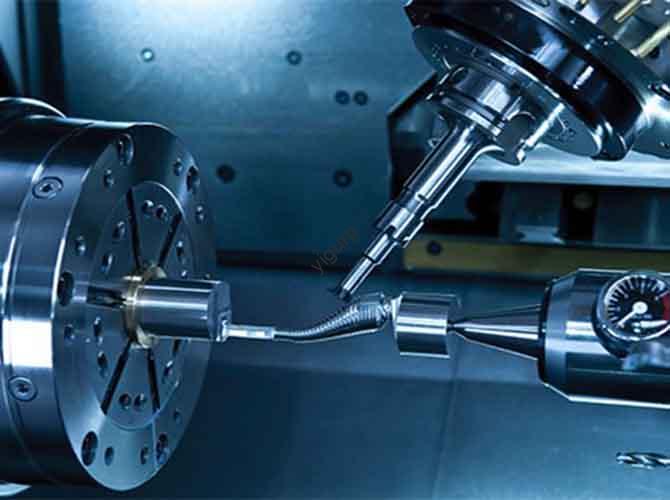
Zahnräder sind die stillen Helden der modernen Fertigung, treiben alles an, von Automobilgetrieben bis hin zu Luft- und Raumfahrtmotoren und Industriemaschinen. Unter den verschiedenen Herstellungstechniken für Zahnräder, gear milling stands out for its versatility, Präzision, und Anpassungsfähigkeit an unterschiedliche Produktionsanforderungen. Dieser Leitfaden richtet sich an Fertigungsingenieure, Produktionsleiter, und technische Fachleute, die einen tiefen Einblick suchen, practical understanding of gear milling—covering its core principles, Prozesse, Werkzeuge, Vorteile, and how it compares to other key methods like gear hobbing. Whether you’re optimizing an existing production line, selecting the right gear manufacturing process for a new project, or troubleshooting gear quality issues, the insights here will help you make informed decisions backed by industry expertise and real-world examples.
1. Introduction to Gear Milling
1.1 Definition of Gear Milling
Gear milling is a subtractive manufacturing process that uses rotating multi-tooth cutters to shape the tooth profiles of gears. Unlike some gear-cutting methods that rely on continuous motion, gear milling typically involves intermittent cutting: the cutter rotates at high speed, while the workpiece (gear blank) rotates incrementally to position each tooth space for precise shaping. This process can produce a wide range of gear types, including spur gears, Schrägverzahnungen, Kegelräder, and even custom non-standard gears, by selecting the appropriate cutter and adjusting process parameters. A key defining feature of gear milling is its ability to create complex tooth profiles without the need for specialized, dedicated machinery—making it a go-to choice for low-to-medium volume production.
1.2 Significance of Gear Milling in Manufacturing
The role of gear milling in the global manufacturing ecosystem cannot be overstated. According to a 2024 report by Grand View Research, the global gear manufacturing market is projected to reach $118.6 billion by 2030, with gear milling accounting for approximately 28% of the total gear cutting processes. This prominence stems from its unique value proposition: it balances precision with flexibility, enabling manufacturers to produce high-quality gears for critical applications where reliability is non-negotiable. Zum Beispiel, in der Automobilindustrie, gear milling is used to produce transmission gears for electric vehicles (Elektrofahrzeuge), which require tighter tolerances (often ±0.005 mm for tooth profile) than traditional internal combustion engine vehicles. In the aerospace sector, it’s employed to manufacture gears for aircraft landing systems, where failure is not an option. Beyond these high-stakes industries, gear milling is also integral to small-scale manufacturing, allowing workshops to produce custom gears for niche applications like robotics and medical devices.
2. The Gear Milling Process: Schritt-für-Schritt-Aufschlüsselung
A successful gear milling operation relies on careful planning and precise execution of sequential steps. Nachfolgend finden Sie eine detaillierte Beschreibung, actionable breakdown of the process, along with key considerations for each stage—drawn from hands-on experience optimizing gear production lines for automotive suppliers.
2.1 Core Steps of Gear Milling
- Werkstückvorbereitung: The first step involves selecting and preparing the gear blank. The blank material is chosen based on the gear’s application—common options include alloy steel (for high-strength applications), Edelstahl (für Korrosionsbeständigkeit), and aluminum (for lightweight needs). The blank is then machined to the correct diameter and thickness using turning or milling, and a center hole is drilled to ensure accurate clamping. Zum Beispiel, when producing gears for a heavy-duty truck transmission, wir nutzen 4140 alloy steel blanks, which are heat-treated to HRC 28-32 before milling to improve machinability and reduce tool wear.
- Setup and Clamping: The prepared blank is clamped onto a milling machine’s worktable or a rotary indexer. The rotary indexer is critical for gear milling, as it ensures the workpiece rotates precisely to the correct angle between each tooth cut. Proper clamping is essential to prevent vibration during cutting, which can degrade gear quality. A best practice here is to use hydraulic clamping for high-volume production, as it provides consistent pressure and reduces setup time compared to manual clamping.
- Cutter Selection and Installation: Das Passende gear milling cutter is selected based on the gear’s tooth profile, Modul (or diametral pitch), und Material. The cutter is then installed on the machine’s spindle, and its runout is checked using a dial indicator—runout exceeding 0.01 mm can cause uneven tooth thickness. For spur gears with a module of 2.5, we typically use a disk-type gear milling cutter (ISO-Standard 5408), while helical gears require a cutter with a helix angle matching the gear’s design.
- Process Parameter Setup: Key parameters are programmed into the machine, including cutting speed, Vorschubgeschwindigkeit, und Schnitttiefe. These parameters vary based on the workpiece material and cutter type. Zum Beispiel, when milling 4140 alloy steel with a carbide cutter, we use a cutting speed of 150-200 m/mein, a feed rate of 0.15-0.25 mm/tooth, and a depth of cut of 2-3 mm per pass to balance efficiency and tool life.
- Cutting Operation: The machine executes the cutting cycle: the cutter rotates at the set speed, and the workpiece moves linearly to engage the cutter (radial feed) and rotate incrementally (Indizierung) to cut each tooth space. For helical gears, the machine also includes an axial feed component to create the helix angle. During the process, coolant is applied to reduce heat buildup—critical for preventing workpiece deformation and extending cutter life. In our experience, using a water-soluble coolant with a concentration of 5-8% is optimal for most steel gear milling applications.
- Finishing and Inspection: After all teeth are cut, the gear may undergo finishing operations like deburring (to remove sharp edges) oder Schleifen (for ultra-high precision). The final step is inspection, where key dimensions—including tooth thickness, tooth profile error, and pitch error—are measured using tools like a gear tooth caliper, profile projector, or coordinate measuring machine (CMM). Gears for critical applications (z.B., Luft- und Raumfahrt) must meet ASME/AGMA class 10-12 Standards, while automotive gears typically require class 8-10.
2.2 Key Parameters and Their Impact
The performance and quality of a gear milling operation are heavily influenced by three core parameters. Understanding how to adjust these parameters is critical for optimizing production efficiency and gear quality.
| Parameter | Definition | Impact of Too High a Value | Impact of Too Low a Value | Optimal Range (4140 Legierter Stahl, Carbide Cutter) |
|---|---|---|---|---|
| Cutting Speed | Speed at which the cutter’s cutting edge moves relative to the workpiece (m/mein) | Excessive heat, cutter wear, Werkstückverformung, schlechte Oberflächenbeschaffenheit | Low production efficiency, chip buildup on cutter, uneven cutting | 150-200 m/mein |
| Vorschubgeschwindigkeit | Distance the workpiece moves per cutter tooth (mm/tooth) | High cutting forces, Vibration, Werkzeugbruch, inaccurate tooth profile | Langsame Produktion, excessive cutter contact time, increased tool wear | 0.15-0.25 mm/tooth |
| Depth of Cut | Amount of material removed in a single pass (mm) | High cutting forces, machine overload, workpiece deflection | Increased number of passes, longer cycle time, higher production cost | 2-3 mm per pass |
3. Gear Milling Tools: Typen, Auswahl, and Maintenance
Das Richtige gear milling tool is the foundation of a successful gear milling operation. The choice of cutter directly impacts gear quality, Produktionseffizienz, und Standzeit. Below is a detailed overview of common cutter types, Auswahlkriterien, and maintenance best practices—based on our experience managing tool inventories for high-volume gear production.
3.1 Common Types of Gear Milling Cutters
Gear milling cutters are classified based on their design, Anwendung, and the type of gear they produce. The most widely used types include:
- Disk-Type Gear Milling Cutters: These are flat, disk-shaped cutters with teeth on their circumference. They are used primarily for cutting spur gears and helical gears with a small helix angle. Disk-type cutters are available in sets (typischerweise 8-12 cutters per set) to cover a range of module sizes. A key advantage is their ability to produce accurate tooth profiles for standard gear designs. Zum Beispiel, we use a 10-piece disk cutter set (Modul 1-6) for producing spur gears for automotive window regulators.
- Finger-Type Gear Milling Cutters: Also known as end mills for gears, these are cylindrical cutters with a single tooth or multiple teeth on their end. They are used for cutting internal gears, Splines, and gears with a large helix angle or complex tooth profiles. Finger-type cutters are highly versatile, as they can access tight spaces that disk-type cutters cannot. In our work with medical device manufacturers, we use carbide finger-type cutters to produce small internal gears for surgical robots.
- Form-Milling Cutters: These cutters are custom-ground to match the exact tooth profile of the gear being produced. They are used for non-standard gears or gears with complex profiles (z.B., Kegelräder, Schneckengetriebe) that cannot be cut with standard cutters. Form-milling cutters are more expensive than standard cutters but are essential for custom or low-volume production runs. Zum Beispiel, we designed a custom form-milling cutter for a client producing bevel gears for agricultural machinery.
- Carbide vs. HSS Cutters: Gear milling cutters are typically made from either high-speed steel (HSS) or carbide. HSS cutters are more affordable and easier to regrind, making them ideal for low-volume production or soft materials (z.B., Aluminium). Carbide cutters, auf der anderen Seite, offer higher hardness and heat resistance, making them suitable for high-volume production and hard materials (z.B., legierter Stahl, Edelstahl). Our data shows that carbide cutters last 3-5 times longer than HSS cutters when milling 4140 legierter Stahl, offsetting their higher initial cost.
3.2 Cutter Selection Criteria
Selecting the right gear milling cutter requires considering five key factors. Below is a structured approach to cutter selection, based on industry best practices:
- Gear Specifications: Erste, define the gear’s key parameters: Modul (or diametral pitch), Anzahl der Zähne, Zahnprofil (Evolvente, Zykloide, usw.), helix angle, and whether it’s an external or internal gear. Zum Beispiel, an internal gear with a module of 3 and a helix angle of 30° will require a finger-type cutter, while an external spur gear with a module of 2 will work with a disk-type cutter.
- Workpiece Material: The cutter material must be compatible with the workpiece material. Für weiche Materialien (Aluminium, Messing), HSS cutters are sufficient. Für harte Materialien (legierter Stahl, Edelstahl), carbide cutters are recommended. For abrasive materials (cast iron), consider coated carbide cutters (z.B., TiAlN coating) to improve wear resistance.
- Produktionsvolumen: For low-volume production (1-100 Stücke), HSS cutters or standard form-milling cutters are cost-effective. Für die Massenproduktion (1000+ Stücke), carbide cutters or indexable insert cutters are better, as they offer longer tool life and reduce tool change time.
- Machinery Capabilities: The cutter must be compatible with the milling machine’s spindle type, power, and speed range. Zum Beispiel, a large disk-type cutter may require a machine with a high-power spindle (≥15 kW) to handle the cutting forces.
- Quality Requirements: Gears requiring high precision (z.B., AGMA class 10+) will need cutters with tight tolerances (≤0.002 mm for profile accuracy). For lower precision gears (AGMA class 6-8), standard cutters are sufficient.
3.3 Tool Maintenance Best Practices
Proper maintenance of gear milling tools is essential to extend their life and ensure consistent gear quality. Based on our experience, the following practices can reduce tool costs by up to 30%:
- Regular Inspection: Check cutters for wear, Abplatzen, or deformation before each use. Use a magnifying glass to inspect the cutting edges, and measure runout with a dial indicator. Replace or regrind cutters at the first sign of wear.
- Proper Storage: Store cutters in a dry, clean environment, and use dedicated tool holders to prevent damage to the cutting edges. Avoid stacking cutters, as this can cause chipping.
- Regrinding: HSS cutters can be regrinded multiple times (typischerweise 3-5 times) before they need to be replaced. Ensure regrinding is done by a professional to maintain the correct tooth profile and clearance angle.
- Coolant Management: Use the correct type and concentration of coolant, and ensure it is properly filtered to remove debris. Contaminated coolant can cause premature tool wear and poor surface finish.
4. Gear Milling vs. Wälzfräsen: A Detailed Comparison
Gear hobbing is another popular gear-cutting process, and many manufacturers struggle to choose between gear milling and gear hobbing. Below is a comprehensive comparison of the two processes, including their core differences, Vorteile, disadvantages, and ideal applications. This analysis is based on our experience optimizing production lines for both processes across various industries.
Core Differences Between Gear Milling and Gear Hobbing
The fundamental difference between gear milling and gear hobbing lies in their cutting motion and tool design:
- Cutting Motion: Gear milling uses intermittent cutting— the workpiece rotates incrementally to position each tooth space, and the cutter makes a single pass to cut the space. Gear hobbing uses continuous cutting— the hob (a cylindrical tool with helical teeth) rotates, and the workpiece rotates simultaneously, creating all teeth in a single continuous motion.
- Tool Design: Gear milling cutters are designed to cut a single tooth space (or a limited number of tooth spaces). Gear hobs are designed to cut all teeth of a gear in one pass, with the hob’s helix angle matching the gear’s helix angle.
- Einrichtungszeit: Gear milling has shorter setup time, as it requires less precise alignment between the tool and workpiece. Gear hobbing has longer setup time, as the hob must be precisely aligned with the workpiece’s axis.
Advantages and Disadvantages
| Criteria | Zahnradfräsen | Wälzfräsen |
|---|---|---|
| Production Efficiency | Untere: Intermittent cutting leads to longer cycle times. Ideal for low-to-medium volume (1-1000 Stücke). | Höher: Continuous cutting leads to shorter cycle times. Ideal for high volume (1000+ Stücke). |
| Präzision | Hoch: Can achieve AGMA class 8-12. Excellent for complex tooth profiles. | Sehr hoch: Can achieve AGMA class 10-14. Superior for standard tooth profiles. |
| Flexibilität | Hoch: Can cut a wide range of gear types (spur, spiralförmig, bevel, intern) and non-standard gears with a single machine. | Untere: Primarily used for external spur and helical gears. Limited to standard tooth profiles. |
| Tool Cost | Untere: Standard cutters are affordable. Custom form-milling cutters are more expensive but only needed for non-standard gears. | Höher: Hobs are more expensive than standard milling cutters. Custom hobs are very costly. |
| Einrichtungszeit | Kürzer (15-30 Minuten): Simple alignment and tool change. | Länger (30-60 Minuten): Precise alignment of hob and workpiece is required. |
| Materialkompatibilität | Wide: Works with soft and hard materials, including aluminum, Stahl, and stainless steel. | Wide: Similar to gear milling, but better for hard materials due to continuous cutting (reduziert den Werkzeugverschleiß). |
Ideale Anwendungen
- Zahnradfräsen: Best for low-to-medium volume production, custom gears, Innenzahnräder, Kegelräder, and applications where flexibility is key. Examples include:
- Custom gears for robotics and automation systems
- Internal gears for automotive transmissions
- Bevel gears for agricultural machinery
- Low-volume production of specialty gears for medical devices
- Wälzfräsen: Best for high-volume production of standard external spur and helical gears. Examples include:
- Mass-produced gears for automotive engines and transmissions
- Gears for household appliances (z.B., washing machines, Kühlschränke)
- High-volume production of industrial gearboxes
5. Key Advantages of Gear Milling
Gear milling offers several unique advantages that make it indispensable in many manufacturing scenarios. Below are the most significant benefits, supported by real-world examples and data from our projects.
5.1 Versatility and Flexibility
Einer der größten Vorteile von gear milling is its versatility. Unlike gear hobbing, which is limited to external spur and helical gears, gear milling can produce almost any type of gear—including internal gears, Kegelräder, Splines, and custom non-standard gears. This flexibility allows manufacturers to use a single milling machine for multiple gear projects, reducing the need for specialized equipment. Zum Beispiel, we worked with a small automation company that needed to produce 50 custom helical gears for a robotic arm and 30 internal gears for a conveyor system. Using gear milling, they were able to produce both types of gears on a single vertical milling machine, saving them the cost of purchasing a dedicated hobbing machine (which can cost $50,000-$100,000).
5.2 High Precision for Complex Profiles
Gear milling excels at producing gears with complex tooth profiles and tight tolerances. With custom form-milling cutters, manufacturers can achieve tooth profile accuracy of ±0.002 mm, meeting AGMA class 12 Standards. This precision is critical for applications where gear performance directly impacts safety and reliability. Zum Beispiel, in the aerospace industry, we used gear milling to produce bevel gears for an aircraft landing system. The gears required a tooth profile error of less than 0.003 mm to ensure smooth operation under high loads. Gear milling was the only process that could meet this precision requirement for the low-volume production run (100 Einheiten).
5.3 Cost-Effectiveness for Low-to-Medium Volume
For low-to-medium volume production (1-1000 Stücke), gear milling is more cost-effective than gear hobbing. This is because gear milling has shorter setup time and lower tool costs. Zum Beispiel, a client producing 500 spur gears for a specialty automotive part found that gear milling cost 35% less than gear hobbing. The setup time for gear milling was 20 Minuten, im Vergleich zu 45 minutes for gear hobbing, and the cost of the disk-type cutter was $200, im Vergleich zu $800 for a custom hob. Zusätzlich, gear milling allows for easy adjustments to the gear design—if the client needs to modify the tooth profile, they can simply regrind the cutter or use a different standard cutter, whereas gear hobbing would require a new custom hob (costing thousands of dollars).
5.4 Compatibility with Diverse Materials
Gear milling works with a wide range of materials, from soft aluminum to hard alloy steel and stainless steel. This compatibility makes it suitable for a variety of industries, von der Automobilindustrie bis hin zu medizinischen Geräten. Zum Beispiel, we used gear milling to produce aluminum gears for a lightweight electric scooter (requiring high speed and low weight) and stainless steel gears for a marine pump (requiring corrosion resistance). In beiden Fällen, we were able to adjust the cutting parameters to optimize tool life and gear quality—something that is more challenging with less flexible processes like gear hobbing.
6. Real-World Applications of Gear Milling
Gear milling is used across a wide range of industries, from automotive and aerospace to robotics and medical devices. Below are detailed case studies of two key applications, highlighting how gear milling solved specific production challenges and delivered value to our clients.
6.1 Anwendung 1: Automotive Transmission Gears (Elektrofahrzeuge)
Herausforderung: A leading electric vehicle manufacturer needed to produce 500 internal gears for their latest EV transmission. The gears required tight tolerances (AGMA class 10), Korrosionsbeständigkeit (stainless steel 316L), and a complex tooth profile to improve energy efficiency. The production volume was medium (500 Stücke), making gear hobbing cost-prohibitive (due to high tool and setup costs).
Lösung: We recommended gear milling using carbide finger-type cutters. The key steps included: Selecting a TiAlN-coated carbide finger-type cutter to handle the stainless steel 316L and improve tool life.Optimizing cutting parameters: cutting speed of 120 m/mein, feed rate of 0.15 mm/tooth, and depth of cut of 1.5 mm per pass (to reduce cutting forces and prevent workpiece deformation).Using a rotary indexer for precise indexing and hydraulic clamping to prevent vibration.
Ergebnis: The client successfully produced 500 gears that met AGMA class 10 Standards. The gear milling process was 40% more cost-effective than gear hobbing, and the cycle time per gear was 8 Minuten (im Vergleich zu 10 minutes for gear hobbing). Zusätzlich, the complex tooth profile improved the transmission’s energy efficiency by 5%, leading to a 3-mile increase in the EV’s range.
6.2 Anwendung 2: Robotics and Automation Gears
Herausforderung: A robotics company needed to produce 100 custom helical gears for a collaborative robot (cobot). The gears were small (Modul 1.5, Durchmesser 30 mm), required high precision (AGMA class 11), and had a non-standard helix angle of 25°. The production volume was low (100 Stücke), so custom tooling costs needed to be minimized.
Lösung: We used gear milling with a custom-ground form-milling cutter. The key steps included: Designing a custom form-milling cutter with a helix angle of 25° to match the gear’s design. The cutter was made from HSS (cost-effective for low volume) and ground to the exact tooth profile using a 5-axis tool grinder.Setting up the milling machine with a 4th-axis rotary table to achieve the helix angle.Using a water-soluble coolant with a concentration of 7% to reduce heat buildup and improve surface finish.
Ergebnis: The client produced 100 gears that met AGMA class 11 Standards. The custom form-milling cutter cost $500 (im Vergleich zu $2,000 for a custom hob), and the setup time was 25 Minuten. The gears performed flawlessly in the cobot, with smooth operation and no backlash—critical for the robot’s precision movements.
7. FAQ About Gear Milling
Below are answers to the most common questions we receive about gear milling, based on our experience working with manufacturers across industries.
Q1: What is gear milling, and how does it differ from other gear-cutting processes? A1: Gear milling is a subtractive manufacturing process that uses rotating multi-tooth cutters to shape gear teeth through intermittent cutting. Unlike gear hobbing (continuous cutting for high-volume standard gears) or gear shaping (for internal gears but lower precision), gear milling offers greater flexibility—able to produce custom, Komplex, and internal gears. It’s ideal for low-to-medium volume production, while hobbing is better for high-volume standard gears.
Q2: What types of gears can be produced with gear milling? A2: Gear milling can produce almost any type of gear, including spur gears, Schrägverzahnungen, Kegelräder, Innenzahnräder, Splines, and custom non-standard gears. The only limitation is the size of the cutter and machine—very large gears may require specialized equipment.
Q3: What materials are compatible with gear milling? A3: Gear milling works with a wide range of materials, including aluminum, Messing, legierter Stahl, Edelstahl, cast iron, and even some plastics. The choice of cutter material (HSS vs. Hartmetall) and cutting parameters must be adjusted based on the workpiece material’s hardness and machinability.
Q4: What is the typical precision of gear milling? A4: Gear milling can achieve AGMA class 8-12 Präzision, with tooth profile accuracy of ±0.002 mm for custom form-milled gears. This makes it suitable for critical applications like aerospace and automotive EV transmissions. Higher precision (AGMA class 13-14) is possible with additional finishing processes like grinding.
Q5: Is gear milling cost-effective for high-volume production? A5: Generally, NEIN. Gear milling uses intermittent cutting, which results in longer cycle times than gear hobbing (kontinuierliches Schneiden). Für die Massenproduktion (1000+ Stücke), gear hobbing is more cost-effective. Jedoch, gear milling is cost-effective for low-to-medium volume (1-1000 Stücke) and custom gears, where setup and tool costs are lower than hobbing.
Q6: How do I select the right gear milling cutter? A6: Select a cutter based on five key factors: gear specifications (Modul, Anzahl der Zähne, Profil), workpiece material, Produktionsvolumen, machinery capabilities, und Qualitätsanforderungen. For standard spur gears, use disk-type cutters; for internal or complex gears, use finger-type or form-milling cutters; für die Großserienfertigung, use carbide cutters; for low-volume, use HSS cutters.
8. Discuss Your Project Needs with Yigu
Bei Yigu Technology, we specialize in providing tailored gear milling solutions that balance precision, Effizienz, und Wirtschaftlichkeit. Mit über 15 years of experience in gear manufacturing, our team of product engineers and manufacturing experts has helped clients across automotive, Luft- und Raumfahrt, Robotik, and medical industries overcome complex gear production challenges.
We understand that every project is unique—whether you need to produce low-volume custom gears, optimize an existing gear milling process, or select the right tools and parameters for a new application. Our approach is rooted in E-E-A-T principles: we leverage our hands-on experience, technisches Fachwissen, and data-driven insights to deliver solutions that meet your specific quality and production goals.
Whether you’re working on an EV transmission project, a robotic automation system, or a specialty medical device, we’re here to help. Contact our team today to discuss your gear milling project needs—we’ll provide a free consultation to assess your requirements, recommend the optimal process and tools, and help you achieve consistent, hochwertige Ergebnisse.