
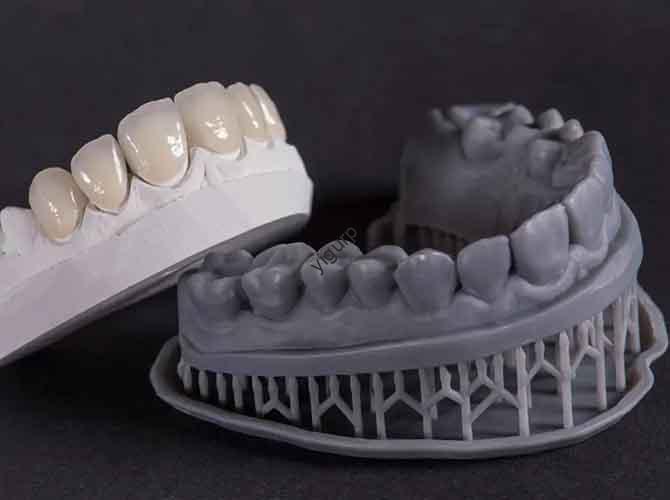
Wenn Sie sich jemals gefragt haben, was additiv gefertigte Teile sind und warum sie Branchen von der Luft- und Raumfahrt bis zum Gesundheitswesen revolutionieren, Du bist am richtigen Ort. Einfach gesagt, additive manufactured parts are components created through 3D printing technologies, where material is built up layer by layer—unlike traditional “subtractive” methods that cut or drill material away from a solid block. This process lets designers create complex shapes, Abfall reduzieren, and speed up production, making it a game-changer for both small businesses and large corporations. In diesem Ratgeber, Wir erklären Ihnen alles, was Sie wissen müssen: how these parts are made, their key benefits, reale Anwendungen, gemeinsame Herausforderungen, and what the future holds.
What Are Additive Manufactured Parts, Exactly?
Beginnen wir mit den Grundlagen. Additive Fertigung (BIN)—often called 3D printing—builds parts by depositing material (wie Plastik, Metall, or even ceramic) one thin layer at a time. Each layer is a cross-section of the final part, and when stacked, they form a fully functional component. This is a stark contrast to traditional methods like machining, Gießen, oder Schmieden, which start with a large piece of material and remove excess to get the desired shape.
Key Terms to Understand
To avoid confusion, let’s clarify a few common terms you’ll hear alongside additive manufactured parts:
- FDM (Modellierung der Schmelzablagerung): The most common consumer 3D printing method, where plastic filament is melted and extruded layer by layer.
- SLS (Selektives Lasersintern): Uses a laser to fuse small particles of plastic, Metall, or ceramic into a solid shape.
- SLA (Stereolithographie): Uses a UV laser to cure liquid resin into solid layers.
- Binder Jetting: Deposits a liquid binder onto a bed of powder (Metall, sand, oder Kunststoff) to bind particles together.
A Real-World Example
Take a small aerospace company that needs a custom bracket for a drone. Using traditional machining, they’d have to order a metal block, program a machine to cut away excess material, and wait weeks for the part—plus, much of the metal would end up as waste. With additive manufacturing, they can 3D print the bracket directly from a digital file in 24 Std., using only the material needed. Das Ergebnis? A lighter, stronger part that costs 50% less and gets the drone to market faster.
Why Choose Additive Manufactured Parts? 5 Hauptvorteile
Additive manufactured parts aren’t just a “trend”—they solve real problems for businesses and designers. Here are the top advantages that make them a go-to choice across industries:
1. Design Freedom for Complex Shapes
Traditional manufacturing struggles with intricate designs: Unterschneidungen, Hohlstrukturen, or organic shapes (like bones or leaves) often require multiple parts or expensive tooling. Additive manufacturing eliminates this barrier—you can print parts with internal channels, Gitterstrukturen, or even moving components in a single piece.
Fallstudie: Nike’s Flyprint running shoe upper is made using SLS 3D printing. The design includes a lattice structure that’s 40% lighter than traditional woven materials while still providing support. This level of complexity would be impossible to achieve with traditional manufacturing.
2. Reduced Waste and Lower Costs
Subtractive manufacturing can generate up to 90% Abfall (Zum Beispiel, machining a metal part from a solid block). Additive Fertigung, im Gegensatz dazu, uses only the material needed to build the part—cutting waste to as little as 5%. This not only saves money on raw materials but also reduces environmental impact.
Zusätzlich, additive manufacturing eliminates the need for expensive molds or tooling. Für die Produktion von Kleinserien (like custom medical devices or prototype parts), this can cut costs by 30-50% im Vergleich zu herkömmlichen Methoden.
3. Faster Production Times
Waiting for molds or tooling to be made can take weeks or even months. With additive manufacturing, you can go from a digital design to a finished part in hours or days. This is a game-changer for industries where speed matters—like aerospace (where quick repairs can keep planes in the air) oder Gesundheitswesen (where custom implants need to be made fast for patients).
Data Point: According to a 2024 report by Deloitte, companies using additive manufacturing for prototyping reduce lead times by an average of 70% im Vergleich zu herkömmlichen Methoden.
4. Lightweight Parts Without Sacrificing Strength
Additive manufacturing lets designers create Gitterstrukturen—patterns of small, interconnected beams—that are lightweight but incredibly strong. This is critical for industries like aerospace and automotive, where reducing weight improves fuel efficiency or performance.
Zum Beispiel, GE Aviation used additive manufacturing to create a fuel nozzle for jet engines. The nozzle is 25% lighter than the traditional version (which was made from 20 separate parts) and 5x more durable. This single part saved GE over $3 million in production costs per year.
5. Customization at Scale
Traditional manufacturing makes customization expensive—each new design requires new tooling. Additive Fertigung, Jedoch, lets you customize parts easily by adjusting the digital file. This is a game-changer for healthcare (custom prosthetics or implants), Konsumgüter (personalized phone cases or jewelry), and even food (3D-printed chocolate with custom shapes).
Beispiel: Stryker, a medical device company, uses additive manufacturing to create custom hip implants. Each implant is tailored to a patient’s unique anatomy, reducing recovery time and improving long-term outcomes. Before additive manufacturing, custom implants took months to make; now, they can be produced in 3-5 Tage.
What Materials Are Used for Additive Manufactured Parts?
Additive manufactured parts can be made from a wide range of materials, each with its own strengths and uses. The choice of material depends on the part’s purpose—whether it needs to be strong, flexibel, hitzebeständig, or biocompatible.
Common Materials for Additive Manufactured Parts
| Materialtyp | Beispiele | Am besten für | Schlüsseleigenschaften |
| Kunststoffe | PLA, ABS, PETG, Nylon | Prototypen, Konsumgüter, leichte Teile | Niedrige Kosten, einfach zu drucken, good for non-structural parts |
| Metalle | Titan, Aluminium, Edelstahl, Cobalt-Chromium | Luft- und Raumfahrt, Automobil, medizinische Implantate | Hohe Festigkeit, hitzebeständig, dauerhaft |
| Harze | Photopolymerharze | Detaillierte Teile (Schmuck, Zahnmodelle) | Hohe Präzision, smooth surface finish |
| Keramik | Aluminiumoxid, Zirkonoxid | Hochtemperaturteile (Motorkomponenten, Zahnkronen) | Hitzebeständig, chemikalienbeständig, biokompatibel |
| Verbundwerkstoffe | Kohlenstofffaserverstärkter Kunststoff (CFK) | Hochfest, leichte Teile (Drohnenrahmen, Sportgeräte) | Stronger than plastic, leichter als Metall |
Professional Insight: When choosing a material, consider the part’s end use. Zum Beispiel, if you’re making a part that will be exposed to high temperatures (wie ein Motorbauteil), metal or ceramic is better than plastic. If you’re making a prototype, PLA (a biodegradable plastic) ist eine kostengünstige Wahl.
Where Are Additive Manufactured Parts Used? 4 Key Industries
Additive manufactured parts are used in almost every industry, from healthcare to aerospace. Here are the sectors where they’re making the biggest impact:
1. Aerospace and Defense
The aerospace industry was one of the first to adopt additive manufacturing, and for good reason. Additive manufactured parts sind leicht (reducing fuel costs) and can be made quickly (critical for repairs). Some common aerospace applications include:
- Fuel nozzles (GE Aviation’s example, mentioned earlier)
- Motorhalterungen
- Satellitenkomponenten (which need to be lightweight and durable)
Data Point: According to the Aerospace Industries Association, 70% of new aircraft designs now include at least one additive manufactured part.
2. Gesundheitspflege
Healthcare is another industry where additive manufacturing shines, thanks to its ability to create custom parts. Common applications include:
- Maßgeschneiderte Prothetik (tailored to a patient’s size and needs)
- Zahnimplantate (made from biocompatible metals like titanium)
- Chirurgische Werkzeuge (which can be 3D printed quickly for specific procedures)
- Even 3D-printed organs (though this is still in the experimental stage)
Fallstudie: A patient in the UK needed a custom skull implant after a tumor removal. Using 3D printing, doctors created an implant that matched the patient’s skull exactly—something that would have been impossible with traditional manufacturing. The surgery was a success, and the patient recovered in half the time of a traditional procedure.
3. Automobil
The automotive industry uses additive manufactured parts for both prototyping and production. Für den Prototypenbau, 3D printing lets designers test new parts quickly (like dashboard components or engine parts). Für die Produktion, 3D printing is used to make custom parts for high-performance cars or electric vehicles (Elektrofahrzeuge), where lightweight parts improve battery life.
Common automotive applications include:
- Batteriegehäuse für Elektrofahrzeuge (lightweight and durable)
- Custom interior components (like personalized steering wheels)
- Prototypes for new car models (reducing development time by months)
4. Konsumgüter
From jewelry to furniture, additive manufactured parts are becoming more common in consumer goods. Some examples include:
- 3D-printed jewelry (custom designs at a lower cost than traditional jewelry making)
- Individuelle Handyhüllen (personalized with photos or logos)
- 3D-printed furniture (einzigartig, leichte Designs)
- Even 3D-printed food (like chocolate or pasta with custom shapes)
What Are the Challenges of Additive Manufactured Parts?
While additive manufactured parts have many benefits, they’re not without challenges. Understanding these can help you decide if 3D printing is the right choice for your project:
1. High Upfront Costs for Industrial-Grade Printers
Consumer 3D printers (für Kunststoffteile) can cost as little as \(200, but industrial-grade printers (for metal or ceramic parts) can cost \)100,000 oder mehr. This makes it hard for small businesses to adopt additive manufacturing for large-scale production.
2. Limited Production Speed for Large Volumes
Additive manufacturing is fast for small batches or prototypes, but it’s slower than traditional methods (wie Spritzguss) for large-scale production. Zum Beispiel, you can 3D print 10 plastic parts in a day, but injection molding can produce 10,000 parts in the same time.
3. Material Limitations
While the range of materials for additive manufacturing is growing, it’s still limited compared to traditional methods. Zum Beispiel, some high-performance metals (like certain types of steel) are hard to 3D print, and some materials (like glass) are still in the experimental stage.
4. Quality Control and Consistency
Ensuring that every additive manufactured part is consistent (gleiche Stärke, same dimensions) can be a challenge. Factors like temperature, Luftfeuchtigkeit, and printer calibration can affect the final part. This is especially critical for industries like healthcare or aerospace, where part failure can have serious consequences.
Lösung: Many companies now use software to monitor the 3D printing process in real time, catching errors before they affect the part. Zusätzlich, standards organizations like ASTM International have created guidelines for additive manufacturing quality control.
The Future of Additive Manufactured Parts: What’s Next?
The future of additive manufactured parts is bright, with new technologies and applications emerging every year. Here are three trends to watch:
1. Larger and Faster Printers
As demand for additive manufactured parts grows, companies are developing larger printers that can make bigger parts (like entire car bodies or airplane wings) and faster printers that can handle large-scale production. Zum Beispiel, Carbon (a 3D printing company) has developed a printer that can produce 100x more parts per hour than traditional FDM printers.
2. New Materials
Researchers are constantly developing new materials for additive manufacturing. Some exciting developments include:
- Biodegradable plastics: For eco-friendly consumer goods.
- Self-healing materials: Parts that can repair themselves if damaged (useful for aerospace or automotive).
- Leitfähige Materialien: For 3D-printed electronics (like sensors or circuit boards).
3. On-Demand Production and Distributed Manufacturing
Imagine a world where you don’t have to wait for parts to be shipped—you can 3D print them on demand, wherever you are. This is the vision of distributed manufacturing, where companies have small 3D printing facilities (or even home printers) instead of large factories. This would reduce shipping costs, cut down on waste, and make parts available faster.
Beispiel: The US Army is testing “mobile 3D printing labs” that can 3D print parts (like vehicle components or tools) in remote locations. This means soldiers don’t have to wait for parts to be shipped—they can make them on-site, saving time and improving readiness.
Yigu Technology’s Perspective on Additive Manufactured Parts
Bei Yigu Technology, we believe additive manufactured parts are no longer just a “nice-to-have”—they’re a necessity for businesses looking to stay competitive. Over the years, we’ve worked with clients in aerospace, Gesundheitspflege, and automotive to integrate 3D printing into their production processes, and we’ve seen firsthand how it reduces costs, beschleunigt die Produktion, and unlocks new design possibilities.
One of our key insights is that the biggest barrier to adoption isn’t technology—it’s education. Many businesses don’t realize how accessible additive manufacturing has become, or how it can solve their specific problems. That’s why we focus on providing end-to-end solutions: from helping clients design parts for 3D printing to training their teams on how to use the technology.
Looking ahead, we’re excited about the potential of additive manufacturing to drive sustainability. By reducing waste and enabling on-demand production, 3D printing can help businesses meet their environmental goals while still delivering high-quality parts. We’re investing in research to develop new, eco-friendly materials and faster printers, and we’re committed to helping our clients use additive manufacturing to build a more efficient, sustainable future.
FAQ About Additive Manufactured Parts
1. Are additive manufactured parts as strong as traditionally made parts?
Yes—depending on the material and process. Metal additive manufactured parts (made with SLS or binder jetting) can be just as strong (or even stronger) than traditionally machined parts. Zum Beispiel, titanium parts made with SLS have a tensile strength of 900 MPa, which is comparable to traditionally forged titanium. Plastic parts are generally less strong than metal, but they’re still suitable for non-structural applications (like prototypes or consumer goods).
2. How much does it cost to make an additive manufactured part?
Cost depends on the material, Größe, and complexity of the part. A small plastic prototype (made with FDM) can cost as little as \(5, während ein großes Metallteil (made with SLS) can cost \)1,000 oder mehr. Für die Produktion von Kleinserien, additive manufacturing is often cheaper than traditional methods (since there’s no tooling cost). Für Großserienfertigung, traditionelle Methoden (wie Spritzguss) are usually cheaper.
3. Can additive manufactured parts be recycled?
Yes—many materials used for additive manufacturing are recyclable. Zum Beispiel, PLA (a common plastic) is biodegradable, and nylon can be melted down and reused. Metal powder from SLS printers can also be recycled (though it may need to be mixed with new powder to maintain quality). Jedoch, not all materials are recyclable—some resins, Zum Beispiel, are difficult to recycle, so it’s important to check the material’s properties before using it.
4. How long does it take to make an additive manufactured part?
Time depends on the size, Komplexität, and printer speed. A small plastic part (like a phone case) can be printed in 1-2 Std.. A larger, more complex part (like a metal engine bracket) can take 24-48 Std.. For industrial-grade parts, Nachbearbeitung (like sanding or heat treatment) may add extra time, but it’s still faster than traditional manufacturing for small batches.
5. Is additive manufacturing suitable for mass production?
It depends on the part and volume. For very large volumes (10,000+ Teile), traditional methods like injection molding are faster and cheaper. But for medium volumes (100-1,000 Teile) oder kundenspezifische Teile, additive manufacturing is often the best choice. As printer speeds improve, we expect additive manufacturing to become more common for mass production—especially for parts that are hard to make with traditional methods.