
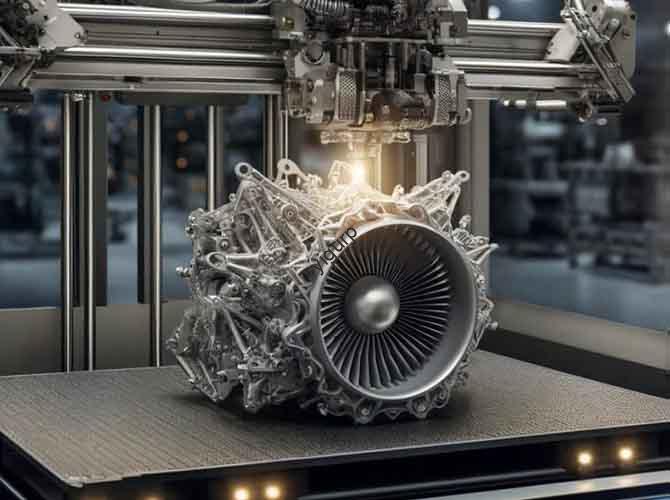
Fällt es Ihnen schwer, komplexe Dinge zu schaffen?, Hochleistungskomponenten, die extremen Temperaturen standhalten, Chemikalien, oder mechanischer Belastung? 3D-Druck von Aluminiumoxid (Al₂O₃) könnte die Lösung sein. This advanced additive manufacturing technique transforms alumina powder into durable, kundenspezifische Teile – Lösung von Problemen, die mit der herkömmlichen Fertigung nicht gelöst werden können. This guide breaks down everything you need to know to leverage 3D-Druck von Aluminiumoxid for your projects.
1. What Is 3D Printing Alumina? A Foundational Breakdown
Im Kern, 3D-Druck von Aluminiumoxid uses additive manufacturing to build parts layer by layer from alumina powder, guided by a computer-aided design (CAD) Modell. Im Gegensatz zu herkömmlichen Methoden (like casting or machining), it doesn’t require complex molds or tooling—making it ideal for unique or low-volume parts.
Think of it like building a sandcastle with precision: instead of shaping a big pile of sand all at once, you add tiny layers of sand (alumina powder) one by one, following a detailed blueprint (CAD-Modell). The result is a strong, detailed structure that’s hard to replicate with other methods.
Key Traits of 3D Printed Alumina
| Trait | Beschreibung | Why It Matters |
| Hohe Temperaturbeständigkeit | Withstands temperatures up to 1,700°C (3,092°F). | Critical for aerospace engine parts or industrial furnaces. |
| Chemische Inertheit | Resists corrosion from acids, Basen, und aggressive Lösungsmittel. | Perfect for chemical reactor liners or lab equipment. |
| Elektrische Isolierung | Blocks electrical current while withstanding heat. | Ideal for microelectronic circuit boards or insulators. |
| Mechanische Festigkeit | Harder than steel (Mohs hardness of 9) and resistant to wear. | Great for durable parts like surgical tools or industrial gears. |
2. 3 Unbeatable Benefits of 3D Printing Alumina
Why choose 3D-Druck von Aluminiumoxid over traditional manufacturing? Here are three game-changing advantages that solve common industry problems:
- No Molds, No Limits: Traditional alumina manufacturing requires expensive molds—especially for complex shapes. Mit 3D-Druck, you can create parts with intricate designs (like hollow channels or thin walls) without any molds. This cuts tooling costs by 50–70% and lets you iterate on designs in days, nicht Monate.
- Beispiel: A aerospace company used to spend $20,000 on molds for a single engine component. Mit 3D-Druck, they eliminated mold costs entirely and reduced design time from 3 Monate bis 2 Wochen.
- Kleine Chargen, Big Savings: Brauchen 5 parts instead of 5,000? Traditional methods charge a premium for small runs (due to mold setup). 3D-Druck von Aluminiumoxid lets you print small batches affordably—each part costs roughly the same, whether you print 1 oder 100.
- Question: Why is this a big deal?
- Antwort: It’s perfect for custom medical implants (each patient needs a unique size) or prototype parts (where you test a few designs before mass production).
- Design Freedom for High-Performance Parts: Traditional manufacturing struggles with shapes like lattice structures (lightweight but strong) or internal cavities. 3D-Druck von Aluminiumoxid lets you create these designs easily—making parts lighter (saving fuel in aerospace) or more efficient (better fluid flow in chemical reactors).
3. Anwendungen aus der Praxis: Where 3D Printing Alumina Shines
3D-Druck von Aluminiumoxid isn’t just a lab technology—it’s transforming industries by solving tough challenges. Let’s look at four key use cases:
Fall 1: Luft- und Raumfahrtindustrie
Aerospace engineers need parts that are lightweight, hitzebeständig, und stark. 3D-Druck von Aluminiumoxid delivers:
- They print engine components (like combustion chambers) that weigh 30% less than metal parts but handle extreme heat.
- Thermal protection systems (TPS) for rockets use 3D printed alumina tiles—these tiles shield the rocket from 1,600°C (2,912°F) heat during re-entry.
Fall 2: Medical Field
Customization is key in medicine, Und 3D-Druck von Aluminiumoxid delivers:
- Surgeons use 3D printed alumina hip implants that match a patient’s exact bone structure. This reduces post-surgery pain and improves implant lifespan by 20%.
- Chirurgische Werkzeuge (like scalpels or forceps) made from 3D printed alumina are sharp, korrosionsbeständig, and easy to sterilize—lowering infection risks.
Fall 3: Chemical Industry
Chemical plants need equipment that can handle harsh chemicals and high temperatures. 3D-Druck von Aluminiumoxid solves this:
- Reactor liners made from 3D printed alumina resist corrosion from sulfuric acid and nitric acid—last 3x longer than stainless steel liners.
- Heat exchangers with 3D printed alumina channels transfer heat more efficiently (due to custom channel shapes) und erfordern weniger Wartung.
Fall 4: Elektronikindustrie
Microelectronics need parts that insulate electricity and withstand heat. 3D-Druck von Aluminiumoxid ist ideal:
- Circuit boards for high-power LEDs use 3D printed alumina insulators—they keep electrical components cool while blocking current.
- Insulators for 5G antennas are 3D printed from alumina—they’re small, leicht, and handle the heat generated by 5G signals.
4. Future Trends: What’s Next for 3D Printing Alumina?
The future of 3D-Druck von Aluminiumoxid is all about making it faster, more affordable, and more versatile. Here’s a timeline of upcoming innovations:
| Timeline | Trend | Impact |
| 2025 | High-Performance Composites | New alumina-matrix composites (z.B., Aluminiumoxid + Kohlefaser) will be stronger and lighter—perfect for next-gen aerospace parts. |
| 2026 | AI-Optimized Printing | AI will analyze CAD models and adjust printing settings (like powder layer thickness or heat) to reduce defects by 40% and speed up printing by 25%. |
| 2027 | Nachhaltige Praktiken | Recycled alumina powder will become mainstream (Reduzierung der Materialkosten um 30%) and printing processes will use less energy—making 3D printing alumina greener. |
5. Die Perspektive von Yigu Technology
Bei Yigu Technology, wir sehen 3D-Druck von Aluminiumoxid as a cornerstone of next-gen manufacturing. We’re developing AI-driven software that optimizes alumina printing parameters for different industries—from medical to aerospace—reducing trial-and-error and improving part quality. Our recent tests show our software cuts printing time by 30% while increasing part strength by 15%. For businesses looking to adopt 3D-Druck von Aluminiumoxid, now is the time: it’s no longer a niche tech, but a practical solution to build stronger, günstiger, and more custom parts.
FAQ
- Q: How long does it take to 3D print an alumina part?
A: It depends on size and complexity. A small part (like a 2x2x2 cm surgical tool) dauert 4–6 Stunden. A larger part (like a 10x10x5 cm aerospace component) takes 24–36 hours.
- Q: Is 3D printed alumina safe for medical implants?
A: Ja! 3D printed alumina is biocompatible (doesn’t react with human tissue) and easy to sterilize. It’s approved by the FDA and EU’s CE for use in implants like hips, Knie, und Zahnkronen.
- Q: Can 3D printed alumina be recycled?
A: Ja! Unused alumina powder from printing can be collected, gereinigt, und in zukünftigen Drucken wiederverwendet werden. New technologies (launching in 2025) will let you recycle up to 80% of the powder—cutting material waste and costs.