
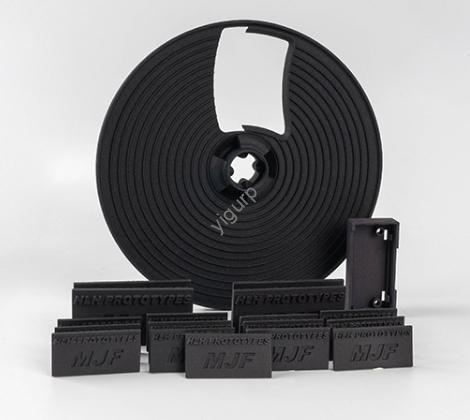
Wenn es um 3D-Druck geht, Festigkeit und Haltbarkeit sind bei vielen Projekten entscheidende Faktoren – ganz gleich, ob es sich um die Herstellung von Automobilteilen handelt, Luft- und Raumfahrtkomponenten, oder Industriewerkzeuge. Nicht alle 3D-Druckmaterialien sind für hohe Belastungen ausgelegt, hohe Temperaturen, oder aggressive Chemikalien. Aus diesem Grund haben wir diesen Leitfaden zusammengestellt 10 high-strength 3D printing materials from industry leader Xometry. Each material is broken down by key features, 3D-Drucktechnologie, reale Anwendungen, and performance data to help you make the right choice for your next project.
What Makes a 3D Printing Material “High-Strength”?
Before diving into the materials, let’s clarify what “high-strength” really means for 3D printing. A high-strength material (or parts made from it) must excel in several core areas:
- Zugfestigkeit: The ability to resist breaking when pulled.
- Compressive strength: The ability to hold up under pressure.
- Shear strength: The ability to resist sliding or tearing.
- Schlagfestigkeit: The ability to absorb force without shattering.
- Environmental resistance: Tolerance to heat, Chemikalien, or harsh weather.
Keep in mind, a part’s final strength isn’t just about the material. It also depends on 3D printing design (z.B., Schichthaftung), Nachbearbeitung (z.B., Wärmebehandlung), Und print settings (z.B., nozzle temperature). Zum Beispiel, a well-designed part with a lower-strength material might outperform a poorly designed part with a high-strength material.
The Top 10 Hochfeste 3D-Druckmaterialien
Below are 10 high-performance materials that stand out for their strength, Vielseitigkeit, and real-world usability. Each entry includes key specs, compatible technologies, and practical examples to show how they’re used.
1. PA12 Carbon-Filled Nylon
What it is: PA12 nylon resin mixed with 35% chopped carbon fiber by weight—this blend boosts structural strength while keeping parts lightweight.
Key strengths: It’s widely recognized as the FDM material with the highest strength-to-weight ratio, making it a great metal alternative in some cases. It also offers good hardness and design flexibility, perfect for prototyping.
3D-Drucktechnologie: FDM (Modellierung der Schmelzablagerung)
Real-world applications:
- Automobil: Drill dies and press-fit inserts.
- Industriell: Fixtures and drill guides.
- Entertainment: Custom props or mechanical components.
Zugfestigkeit: 76 MPa (per Xometry’s quotation engine).
2. Polycarbonat (PC)
What it is: A ductile, amorphous plastic known for its tough, shatter-resistant properties.
Key strengths: Außergewöhnlich Schlagfestigkeit, wide operating temperature range, and excellent electrical insulation. It can be mixed with flame retardants without losing quality, and its thermal deformation temperature hits 140°C.
3D-Drucktechnologie: FDM
Real-world applications:
- Safety gear: Helmet shells (resists impacts during accidents).
- Automobil: Headlamp lenses (handles heat and weather).
- Medizinisch: Equipment housings (needs durability and electrical safety).
Zugfestigkeit: 60 MPa.
3. Edelstahl 17.4 / 1.4542
What it is: A chromium-nickel-copper stainless steel—one of the strongest metals for 3D printing.
Key strengths: Boasts ultra-high Zugfestigkeit (1070 N/mm²) and excellent toughness. It’s corrosion-resistant and can be heat-treated to adjust hardness or flexibility.
3D printing technologies: DMLS (Direktes Lasersintern von Metallen), bond molding, SLM (Selektives Laserschmelzen)
Real-world applications:
- Luft- und Raumfahrt: Turbine blades and shafts (need strength at high altitudes).
- High-tech industry: Gears and dies (handle repeated stress).
Zugfestigkeit: 1103 MPa (the highest on this list for metals).
4. ULTEM 1010
What it is: A high-performance polyetherimide (PEI) thermoplastic—often called the strongest FDM material available.
Key strengths: Unübertroffen Hitzebeständigkeit and chemical resistance among FDM plastics. It has a very low coefficient of thermal expansion (so parts don’t warp) and is food-contact safe (biokompatibel). Available in clear, undurchsichtig, or glass-filled grades.
3D-Drucktechnologie: FDM
Real-world applications:
- Food industry: Custom molds for candy or baked goods (needs food safety).
- Medizinisch: Chirurgische Werkzeuge (requires biocompatibility and sterility).
- Industriell: Heat-resistant tooling (handles high temperatures during manufacturing).
Zugfestigkeit: 105 MPa.
5. SPÄHEN
What it is: A high-performance thermoplastic with industrial-grade durability.
Key strengths: Resists harsh chemicals (like oils and solvents) and maintains hardness at high temperatures—can be used continuously at 170°C. It also has great Ermüdungsbeständigkeit (handles repeated use) and stress cracking resistance.
3D-Drucktechnologie: FDM
Real-world applications:
- Oil and gas: Seals and valves (resist corrosive fluids).
- Luft- und Raumfahrt: Leichte Strukturteile (need high strength and heat tolerance).
- Semiconductor production: Precision components (require chemical resistance).
Zugfestigkeit: 110 MPa.
6. ULTEM 9085
What it is: A lighter, flame-retardant cousin of ULTEM 1010—optimized for weight-sensitive projects.
Key strengths: Hoch Verhältnis von Festigkeit zu Gewicht and good impact resistance. It’s flame-retardant (critical for aerospace) and performs similarly to 6.68 Nylon (9800).
3D-Drucktechnologie: FDM
Real-world applications:
- Luft- und Raumfahrt: Prototype parts for planes (need flame resistance and light weight).
- Automobil: Fixtures and composite molds (handle manufacturing stress).
Zugfestigkeit: 70 MPa.
7. AlSiMg Aluminum / IN 1706: 1998
What it is: A high-strength aluminum alloy designed for high-temperature use.
Key strengths: Maintains strength at 200°C, has excellent corrosion resistance, and is easy to polish. It’s also weldable, making post-processing simple.
3D-Drucktechnologie: SLM
Real-world applications:
- Automobil: Motorkomponenten (handle heat and vibration).
- Luft- und Raumfahrt: Leichte Halterungen (need strength without extra weight).
Zugfestigkeit: 230–290 MPa; Dauerfestigkeit: 110 N/mm².
8. 316L Stainless Steel / 1.4404
What it is: A low-carbon, chromium-nickel-molybdenum stainless steel—ideal for corrosive environments.
Key strengths: Exzellent Korrosionsbeständigkeit in chlorine-based media (like saltwater) and non-oxidizing acids. It has a melting point of 1400°C and the smoothest surface finish of all 3D-printed metals.
3D-Drucktechnologie: SLM
Real-world applications:
- Essen & Getränk: Equipment parts (need hygiene and corrosion resistance).
- Pharmazeutisch: Lab tools (require chemical safety and sterility).
- Industriell: Heat exchangers and bolts (handle harsh fluids).
Zugfestigkeit: 490–690 MPa.
9. Glass-Filled ULTEM 1010
What it is: ULTEM 1010 reinforced with glass fibers—adds extra stiffness without losing heat resistance.
Key strengths: Builds on ULTEM 1010’s core benefits (Hitze, chemische Beständigkeit) with improved Dimensionsstabilität (parts stay true to size) and stiffness. Still food-contact safe and biocompatible.
3D-Drucktechnologie: FDM
Real-world applications:
- Medizinisch: Custom instrument handles (need stiffness and sterility).
- Industriell: Precision tooling (requires consistent sizing).
Zugfestigkeit: ~115 MPa (slightly higher than standard ULTEM 1010).
10. Kohlenstoffgefülltes PEEK
What it is: PEEK mixed with carbon fiber—boosts strength and reduces weight for high-stress applications.
Key strengths: Combines PEEK’s chemical and heat resistance with carbon fiber’s Zugfestigkeit und Steifigkeit. Perfect for parts that need to be both strong and lightweight.
3D-Drucktechnologie: FDM
Real-world applications:
- Luft- und Raumfahrt: Strukturelle Halterungen (need strength and light weight).
- Oil and gas: High-pressure valve components (resist chemicals and stress).
Zugfestigkeit: ~130 MPa (higher than standard PEEK).
Comparison Table: Zugfestigkeit & Key Specs
To make it easy to compare, here’s a table of the 10 materials’ critical specs—based on Xometry’s data and industry standards:
| Material | 3D Drucktechnologie | Zugfestigkeit | Entscheidender Vorteil | Primary Applications |
| PA12 Carbon-Filled Nylon | FDM | 76 MPa | Höchstes Verhältnis von Festigkeit zu Gewicht (FDM) | Automobilwerkzeuge, Prototyping |
| Polycarbonat (PC) | FDM | 60 MPa | Hervorragende Schlagfestigkeit | Safety helmets, headlamp lenses |
| Edelstahl 17.4 | DMLS/SLM/Bond Molding | 1103 MPa | Ultrahohe Festigkeit + Zähigkeit | Turbinenschaufeln für die Luft- und Raumfahrt, Getriebe |
| ULTEM 1010 | FDM | 105 MPa | Best heat/chemical resistance (FDM) | Food industry molds, medizinische Werkzeuge |
| SPÄHEN | FDM | 110 MPa | Chemisch + Hochtemperaturbeständigkeit | Oil/gas seals, semiconductor parts |
| ULTEM 9085 | FDM | 70 MPa | Flammhemmend + geringes Gewicht | Aerospace prototypes, automotive tools |
| AlSiMg Aluminum | SLM | 230–290 MPa | High strength at 200°C | Teile für Automobilmotoren, Halterungen für die Luft- und Raumfahrt |
| 316L Stainless Steel | SLM | 490–690 MPa | Best corrosion resistance (Metalle) | Food equipment, lab tools |
| Glass-Filled ULTEM 1010 | FDM | ~115 MPa | Verbesserte Dimensionsstabilität | Medizinische Instrumente, precision tooling |
| Kohlenstoffgefülltes PEEK | FDM | ~130 MPa | Hohe Festigkeit + geringes Gewicht | Halterungen für die Luft- und Raumfahrt, Hochdruckventile |
Yigu Technology’s Perspective on High-Strength 3D Printing Materials
Bei Yigu Technology, we’ve seen firsthand how the right high-strength 3D printing material transforms projects—from cutting production time for automotive parts to enabling lighter, safer aerospace components. We recommend matching materials to your project’s “pain points”: wenn das Gewicht entscheidend ist, choose AlSiMg Aluminum or Carbon-Filled PEEK; if corrosion is a risk, 316L Stainless Steel is unbeatable; for food/medical use, ULTEM 1010 checks all boxes. Partnering with suppliers like Xometry ensures access to these top-tier materials, but we also emphasize testing—even the strongest material needs proper design to perform. Our team helps clients select, prüfen, and optimize high-strength materials for real-world success.
FAQ: Common Questions About High-Strength 3D Printing Materials
1. Can high-strength 3D printed parts replace metal parts entirely?
It depends on the application. Materials like PA12 Carbon-Filled Nylon or Carbon-Filled PEEK can replace metal for lightweight, low-to-medium stress parts (z.B., Vorrichtungen, Prototypen). But for ultra-high stress (z.B., Turbinenschaufeln für die Luft- und Raumfahrt), metals like Stainless Steel 17.4 are still necessary.
2. Which high-strength material is best for food-contact applications?
ULTEM 1010 (and its glass-filled variant) is the top choice—it’s food-contact safe (entspricht den FDA-Standards), biokompatibel, und hitzebeständig. It’s used for custom molds, food processing tools, and even packaging components.
3. Do high-strength 3D printing materials require special post-processing?
Some do. Zum Beispiel, Edelstahl 17.4 often needs heat treatment to adjust hardness, while AlSiMg Aluminum may require polishing for a smooth finish. FDM plastics like PEEK or ULTEM may need annealing (Wärmebehandlung) to reduce internal stress and boost strength. Always check the material’s guidelines for post-processing steps.