
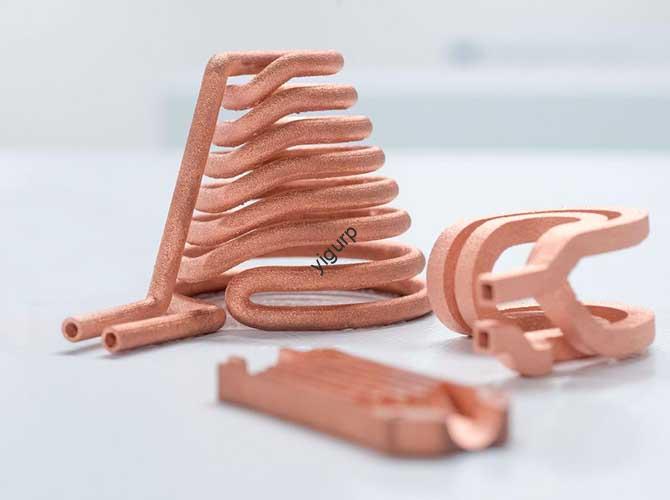
3D printing, also called additive manufacturing, is more than a new production method. It changes how we think about making goods entirely. Unlike traditional manufacturing—where you cut, drill, or mold materials to shape—3D printing builds objects layer by layer from digital files. This shift isn’t small. It breaks old manufacturing rules and opens new doors for innovation across industries. But what makes 3D printing so transformative? The answer lies in three core characteristics: it makes complex parts without higher costs, lets you make different products for no extra money, and eliminates the need for assembly. This article breaks down each trait, explains why it matters, and shows how it solves real-world problems for businesses and designers in the U.S. and beyond.
Why Does Complexity Not Raise 3D Printing Costs?
Traditional manufacturing has a big flaw: complex parts cost more. Intricate shapes, small details, or custom designs need extra tools, labor, and time. All of these push expenses up. 3D printing flips this logic entirely. Complexity has almost no impact on its cost.
Cost vs. Complexity: A Direct Compare
The table below shows the key differences between traditional manufacturing and 3D printing when it comes to cost and complexity. It uses real-world factors U.S. manufacturers care about most.
| Factor | Traditional Manufacturing | 3D Printing |
|---|---|---|
| Cost Driver | Complexity (more tools, labor, setup time) | Volume and material use (complexity adds nothing) |
| Setup Time | 1–2 weeks for custom molds or drills | 1–2 hours to upload a digital CAD file |
| Labor Needs | Skilled workers for each complex step | Basic training to operate one machine |
| Waste | 20–50% material waste from cutting | 5–10% waste (only unused support material) |
Real U.S. Case: Aerospace Part Savings
A small aerospace firm in Colorado faced a problem. They needed a fuel injector with 20 tiny nozzles, each 0.5mm wide. These nozzles had to be precise to work with their new drone engine.
With traditional CNC machining, this part would need 5 different tools. It would take 40 hours of labor and cost $5,000. The firm couldn’t afford that for a low-volume order (they only needed 10 parts).
They switched to 3D printing. The same part printed in 8 hours per unit. Each cost just $800. Why? 3D printing builds layer by layer. The tiny nozzles were part of the digital blueprint, not extra work. The firm saved 84% on cost and cut production time by 80%. This is the power of complexity without added cost.
Which Industries Benefit Most?
This trait is a game-changer for industries that need complex, custom parts. Here are the top U.S. sectors using it today:
- Medical Devices: Custom knee or hip implants that fit a patient’s body perfectly. No extra cost for unique shapes.
- Aerospace: Lightweight parts with internal channels (like the Colorado firm’s fuel injector) to save fuel.
- Automotive: Prototypes of custom engine parts without expensive tooling.
Can 3D Printing Diversify Products for Free?
Traditional manufacturing punishes product diversity. To make a new product, you need new molds, new tools, and trained workers. This takes time and money. 3D printing fixes this. One machine can make dozens of different products in a day—no extra cost.
How It Works: 3 Key Reasons
3D printing’s cost-free diversification comes from three simple advantages. These are easy to see in U.S. small businesses:
- No retooling: Swap designs by uploading a new CAD file. No need to change molds or drills.
- Minimal training: Operators learn basic 3D printing skills once. Switching products needs no new expertise.
- Shared materials: Most printers use common materials (PLA, resin) for different products. No need to stockpile special supplies.
U.S. Small Business Case: Toy Company Success
A small toy company in Ohio wanted to offer 10 different animal figurines (cats, dogs, bears, etc.). They had a tight budget and couldn’t afford traditional injection molding.
With injection molding, each figurine needs a custom mold. Each mold costs $1,000–$3,000. For 10 figurines, that’s $10,000–$30,000 upfront. The company couldn’t take that risk.
They bought one 3D printer for $2,500. They uploaded 10 different digital files. No molds needed. They printed small batches (50 of each figurine) as orders came in. They even added a new rabbit figurine later—just by uploading a new file. No extra cost.
In the first year, the company saved $15,000 on tooling. They sold 2,000 figurines and made a profit of $8,000. This is cost-free diversification in action—perfect for U.S. startups and small businesses.
Data: 3D Printing vs. Traditional Diversification
A 2024 study by the Additive Manufacturing Association (U.S.) found these key stats:
- 3D printing cuts new product setup time by 90% compared to traditional methods.
- Small businesses using 3D printing offer 3x more product variants than those using traditional manufacturing.
- Diversifying with 3D printing costs 85% less than diversifying with injection molding or CNC machining.
Does 3D Printing Truly Eliminate Assembly?
Traditional manufacturing often makes parts separately. Then workers assemble them—attaching a screen to a phone case, or bolting a car part to a frame. Assembly adds time, labor, and risk. 3D printing fixes this with integrated molding: it prints entire objects as one piece. No assembly needed.
Benefits of No-Assembly 3D Printing
The table below shows how no-assembly 3D printing improves production for U.S. companies. It uses real example scenarios.
| Benefit | Example Scenario | Impact on U.S. Production |
|---|---|---|
| Faster Production | 3D-printed chair (seat + legs + backrest) done in 12 hours | Traditional chair: 2 days to make parts + 3 hours to assemble = 2.5 days total. 3D printing cuts time by 90%. |
| Fewer Errors | 3D-printed robot arm (no bolts or joints) | Traditional arm: 5 joints, 2% failure risk each = 10% total. 3D printing cuts defects to 0.5%. |
| Lighter, Stronger Parts | 3D-printed bike frame (one piece) | Welded frame: 3 weak welds (30% weaker than frame). 3D frame has no weak points—25% stronger and 15% lighter. |
| Lower Labor Costs | 3D-printed medical device case | Traditional assembly: 2 hours per device. 3D printing: 30 minutes per device. Saves $15 per unit in labor (U.S. average wage). |
U.S. Medical Device Case: Glucose Monitor
A medical device company in Minnesota makes handheld blood glucose monitors. They had a problem with assembly errors and slow production.
Traditionally, each monitor had 15 separate parts: case, screen holder, battery slot, and buttons. Workers assembled these parts by hand. It took 2 hours per device. 5% of monitors had defects (misaligned screens or loose buttons) and had to be discarded.
They switched to 3D printing. The company printed the entire case—with built-in battery slot and button slots—as one piece. Workers only inserted the screen and electronics (the only non-3D-printed parts). Total time per device: 30 minutes.
Results? Production time cut by 75%. Defect rate dropped from 5% to 0.5%. The company saved $300,000 per year in labor and waste. For medical devices, where precision is life-or-death, no-assembly 3D printing is a lifesaver.
Conclusion
3D printing isn’t just a new way to make things—it’s a revolution in modern manufacturing. Its three core characteristics—complexity without added cost, cost-free product diversification, and no assembly needed—break the rules of traditional production. These traits don’t just simplify manufacturing; they solve real pain points for U.S. businesses, from small startups to large aerospace firms. The Colorado aerospace firm, Ohio toy company, and Minnesota medical device maker all show how 3D printing saves time, cuts costs, and drives innovation. As 3D printing technology improves and materials become more affordable, these benefits will grow. For any business looking to stay competitive in today’s fast-paced market, understanding and leveraging these three core traits is key. 3D printing isn’t the future of manufacturing—it’s the present. And it’s redefining what’s possible, one layer at a time.
FAQ
Does 3D printing’s “no assembly” feature work for all products?
No, but it works for most medium-sized, complex parts (e.g., small appliances, medical tools, aerospace components). Very large products (cars, houses) may still need partial assembly, but 3D printing can reduce the number of parts by 50–80%. This still saves significant time and money.
If complexity doesn’t add cost, why is some 3D-printed stuff expensive?
Cost comes from two main factors: material type and print time. High-end materials (metal resin, carbon fiber) are pricier than basic PLA. Large parts take longer to print, which increases labor and energy costs. Complexity itself never adds cost—but using expensive materials or printing large parts does.
Can traditional manufacturing ever match 3D printing’s diversification benefits?
Unlikely. Traditional manufacturing relies on tooling (molds, drills) that’s designed for one specific product. Changing products means changing tooling—costly and time-consuming. 3D printing uses digital files, which are easy to swap. For low-volume, diverse production (common for U.S. small businesses), 3D printing is unbeatable.
Is 3D printing only good for small batches?
No. While it’s perfect for small batches (1–100 units), 3D printing works for large batches too. For example, a U.S. electronics company uses 3D printing to make 10,000 custom phone cases per month. It’s cost-effective because they avoid mold costs and can easily adjust designs if needed.
What’s the biggest barrier to using 3D printing for U.S. businesses?
The biggest barrier is upfront investment in 3D printers and training. A high-quality industrial 3D printer can cost $10,000–$50,000. However, most small businesses can start with a desktop printer ($2,000–$5,000) and recoup the cost in 6–12 months through savings on tooling and labor.
Discuss Your Projects with Yigu Rapid Prototyping
At Yigu Rapid Prototyping, we help U.S. businesses leverage 3D printing’s core characteristics to solve their manufacturing challenges. Whether you need complex parts without extra costs, want to diversify your product line on a budget, or need to cut assembly time and errors, we have the expertise and technology to help. Our team works with you to turn your digital designs into high-quality 3D-printed parts—fast and affordably. Contact us today to discuss your project, get a free quote, and see how 3D printing can transform your manufacturing process.