
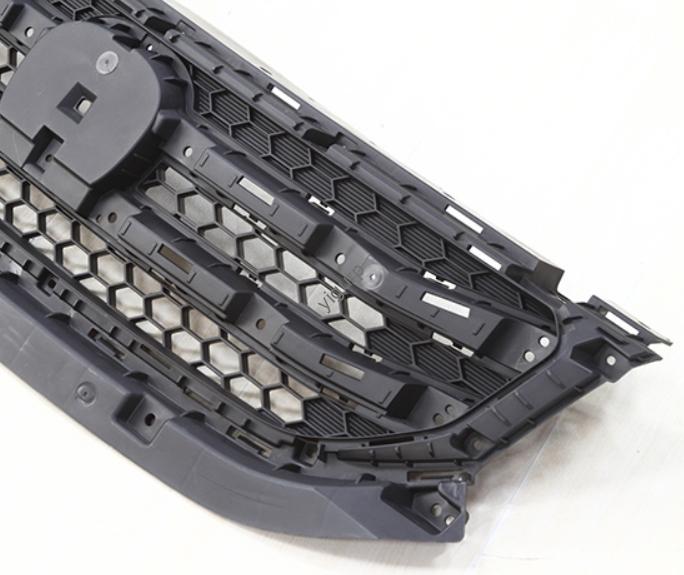
The automotive industry is undergoing a revolution, driven by the urgent demands for electrification, autonomous driving, and hyper-customization. In this high-stakes race, the ability to innovate swiftly and cost-effectively separates the leaders from the laggards. Enter 3D printed prototypes: no longer just a tool for simple visual models, they have become the central nervous system of modern automotive R&D. By slashing development cycles from months to days, enabling once-impossible lightweight designs, and allowing for radical design validation, 3D printing is fundamentally altering how cars are conceived, tested, and brought to market. This guide explores the pivotal applications of this technology in 2026, providing a roadmap for automotive engineers and executives to harness its full potential.
How Does 3D Printing Create Unprecedented Speed in the Design Cycle?
The primary superpower of 3D printing, or Additive Manufacturing (AM), is its profound compression of the prototyping timeline. Traditional processes like CNC machining or injection molding for a single prototype component can easily consume 2 to 6 weeks, factoring in toolpath programming, mold fabrication, and material sourcing. 3D printing collapses this to a matter of hours or days, creating a paradigm of rapid iteration.
The mechanism is elegantly direct: a digital CAD model is sent to a printer, which builds the object layer by layer, adding material only where needed. This tool-less manufacturing eliminates the single biggest time sink—the creation of hard tooling. A 2024 benchmark study by the Additive Manufacturing Research Group found that automotive engineering teams integrating AM for prototyping reduced their concept-to-validation phases by an average of 65%. For instance, a leading electric vehicle startup recently developed a complex thermal management duct for its battery pack. Using Multi Jet Fusion (MJF) with Nylon PA12, they produced and tested five distinct design iterations within one week—a process that would have taken over a month with traditional methods, potentially delaying their crucial time-to-market.
Where Is 3D Printing Most Impactful for Functional Prototyping?
The application of 3D printing extends far beyond “looks-like” models. Today, it is indispensable for creating functional prototypes that undergo real-world testing, providing critical data before any metal is cast or tooling is cut.
Can You Truly Test Complex Assemblies as One Part?
Yes, and this is a game-changer. Design for Additive Manufacturing (DfAM) allows engineers to consolidate complex assemblies into single, optimized components. A prominent example is in engine bays and HVAC systems. German automaker Audi has famously used Selective Laser Sintering (SLS) to produce prototype water pumps for performance testing. The 3D printed unit consolidated 12 separate parts into one, eliminating gaskets and potential leak points, while an integrated lattice structure improved coolant flow. Testing this monolithic prototype provided validation data that directly informed the final cast metal design, improving reliability and reducing part count.
How Do You Validate Ergonomics and Aerodynamics Early?
For interior components and external body elements, 3D printing enables rapid, high-fidelity prototyping for human interaction and environmental testing.
- Ergonomics: Stereolithography (SLA) can produce dashboard clusters, control knobs, and steering wheel elements with a surface finish akin to production plastics. These prototypes are used in driver-in-loop simulators to assess feel, usability, and sightlines long before injection molds are commissioned.
- Aerodynamics: Large-format Fused Deposition Modeling (FDM) using ABS or composite-filled materials can produce full-scale mirror housings, spoilers, and ducting for wind tunnel testing. A UK-based motorsport team uses carbon-fiber reinforced 3D printed parts to prototype aerodynamic components overnight, allowing them to test new geometries at every race weekend.
Key Prototype Types and Their AM Technology Match:
| Prototype Goal | Recommended AM Technology | Ideal Material | Primary Test Objective |
|---|---|---|---|
| Form & Fit Check | FDM, SLA | PLA, Standard Resin | Dimensional accuracy, assembly clearance |
| Functional & Mechanical Test | SLS, MJF | Nylon PA11/PA12, TPU | Durability, impact resistance, snap-fit function |
| High-Temp Under-Hood Test | SLS (with high-temp resin), FDM (with PEI/Ultem) | PEKK, PEEK, Nylon CF | Heat resistance, chemical exposure, structural load |
| Full-Scale Visual & Aero Model | Large-Format FDM | ABS, ASA | Aerodynamic flow, styling review, wind tunnel testing |
How Is 3D Printing Enabling the Lightweighting Revolution?
The push for greater energy efficiency and extended EV range makes weight reduction a non-negotiable priority. 3D printing empowers this through topology optimization—an AI-driven design process that creates organic, lattice-like structures that are both stronger and lighter than solid blocks. This allows engineers to redistribute material only along critical stress paths.
A landmark case comes from General Motors. In collaboration with Autodesk, they used generative design and metal 3D printing (DMLS) to prototype a new seat bracket. The resulting single-piece prototype was 40% lighter and 20% stronger than the traditional eight-part assembly it replaced. While the final production part may be cast, the 3D printed prototype provided the definitive proof of concept and performance data needed to justify the radical new design. For electric vehicles, this approach is being applied to prototype battery enclosures, motor mounts, and suspension knuckles, where saving kilograms directly translates to kilometers of added range.
What Role Does 3D Printing Play in the Electric Vehicle (EV) Ecosystem?
The EV sector is particularly reliant on 3D printing for prototyping due to its rapid innovation cycles and novel engineering challenges.
- Battery System Development: Prototyping battery module housings, cooling plates with complex internal channels, and electrical interconnect components is a prime application. Companies like Tesla and Rivian extensively use 3D printing to iterate on thermal management solutions, which are critical for safety and performance. A silicone 3D printing process is now being used to prototype custom gaskets and seals for battery packs, allowing for instant iteration on sealing geometries.
- Electric Motor Components: Prototypes of lightweight motor housings, heat sinks, and stator components can be 3D printed in metals like aluminum or high-conductivity alloys to test thermal dissipation and electromagnetic performance.
- Charging Infrastructure: Startups developing novel charging connectors, cable management systems, and portable chargers use 3D printing to rapidly iterate form factors and test durability in real-world conditions.
How Does 3D Printing for Prototyping Deliver Tangible Cost Savings?
The financial argument for 3D printed prototypes is compelling, especially in the early and middle stages of development. The savings are realized not merely in per-part cost, but in the avoidance of catastrophic downstream expenses.
A Comparative Cost Analysis: Traditional vs. Additive Prototyping
| Cost Factor | Traditional Machining/Molding | 3D Printing (Additive) | Impact |
|---|---|---|---|
| Upfront Tooling | High ($10k – $100k+ for molds/fixtures) | Near Zero (Digital tooling) | Eliminates sunk cost on designs that may change. |
| Per-Part Cost | Low at high volume, very high for single digits. | Consistently low for 1-100 parts; independent of volume. | Makes small-batch testing economically viable. |
| Design Change Cost | Extremely High (New tooling required). | Minimal (Only a modified CAD file). | Encourages iterative improvement; no penalty for innovation. |
| Error/Flaw Discovery | Cost discovered late, after tooling is made. | Cost discovered early, with minimal investment. | Prevents million-dollar recalls or production halts. |
The most significant saving is risk mitigation. Discovering a fitment issue or a stress fracture with a $500 3D printed prototype is a valuable learning moment. Discovering the same flaw after commissioning $250,000 worth of production injection molds is a financial disaster. A major Tier 1 supplier estimated that its integrated 3D prototyping workflow prevents an average of $2M in tooling rework costs per vehicle platform.
What Are the Emerging Trends and Future Outlook?
As we move through 2026, several key trends are shaping the future:
- Multi-Material and Polyjet Printing: Technologies like Stratasys Polyjet can now prototype parts with multiple material properties—rigid and flexible, transparent and opaque—in a single print. This is revolutionizing the prototyping of overmolded components, seals, and integrated sensors.
- Direct Digital Manufacturing of Prototype Tooling: 3D printed soft tooling (using high-temp resins or metals) for low-volume injection molding or carbon fiber layup is allowing for the creation of hundreds of pre-production parts for extended testing, bridging the gap between prototype and pilot run.
- Integration with AI and Simulation: Generative design software, powered by AI, now works in tandem with 3D printing. Engineers input design goals and constraints, and the AI proposes optimized geometries that are then instantly viable for prototyping via AM, creating a closed-loop of simulation and physical validation.
Conclusion
In 2026, 3D printed prototypes are not merely a supporting tool in automotive development; they are the catalyst for a faster, leaner, and more courageous innovation process. By decoupling design freedom from manufacturing constraints, they empower engineers to explore optimal solutions for weight, performance, and complexity. The technology delivers irrefutable value through dramatically shortened development cycles, significant cost avoidance, and the de-risking of billion-dollar vehicle programs. For any automotive organization aiming to lead in the age of electrification and autonomy, building a mature, integrated additive prototyping capability is no longer optional—it is a strategic imperative for survival and success.
Frequently Asked Questions (FAQ)
What are the strength limitations of 3D printed prototypes compared to final production parts?
While material properties of 3D printed polymers can now closely match their injection-molded counterparts, especially with technologies like SLS and MJF, anisotropy (directionally dependent strength) can be a factor in layer-based processes like FDM. For metal prototypes, DMLS parts can achieve 95-99% of the density and strength of wrought material. The key is to prototype with the end-use material in mind and understand that the primary goal is functional validation, not necessarily matching the final production part’s ultimate strength exactly.
Can 3D printed prototypes be used for regulatory or safety certification testing?
Currently, regulatory crash testing and certification for homologation typically require parts made from production-spec materials and processes. However, 3D printed prototypes are extensively used for pre-certification testing—conducting iterative impact, thermal, and fatigue tests in-house to ensure a design is robust before committing to the costly process of making certified production parts. They are indispensable for finding and fixing failures early in the development funnel.
How does the surface finish of a 3D printed prototype compare to a production part?
Surface finish varies greatly by technology. SLA and material jetting can produce very smooth, injection-molding-like finishes straight off the printer. SLS, MJF, and FDM typically have a more granular or layered texture. However, a vast array of post-processing techniques—from sanding and priming to vapor smoothing and professional painting—can bring 3D printed prototypes to a show-car quality finish suitable for consumer clinics and executive reviews.
Is it feasible to 3D print a prototype of an entire car body panel?
Yes, it is now technically and economically feasible. With the advent of large-format pellet extrusion systems (like those from CEAD or Thermwood) that can print parts measuring meters in length, automotive companies are prototyping full-scale bumper fascias, door panels, and even hoods. These prototypes are used for fitment checks, aerodynamic testing, and styling validation, providing a true-scale model without the need for a full-scale clay model or prototype tooling.
Discuss Your Automotive Prototyping Projects with Yigu Rapid Prototyping
At Yigu Rapid Prototyping, we are more than a service bureau; we are a strategic partner to the automotive industry. Our engineers specialize in navigating the complex landscape of additive technologies to deliver prototypes that do more than just look right—they validate, inform, and de-risk your most critical designs. From selecting the perfect material and process for a functional under-hood component to managing a full-scale aerodynamic prototyping program for an EV startup, we provide end-to-end expertise.
We offer access to a full spectrum of industrial 3D printing technologies, including SLS, MJF, DMLS, and large-format FDM, coupled with comprehensive design for additive manufacturing (DfAM) consultation and professional post-processing and finishing. Let us help you compress your development timeline, unlock new design possibilities, and bring your innovative automotive concepts to life with confidence and speed.
Contact Yigu today to discuss how our 3D printing solutions can accelerate your path from concept to road-ready reality.