
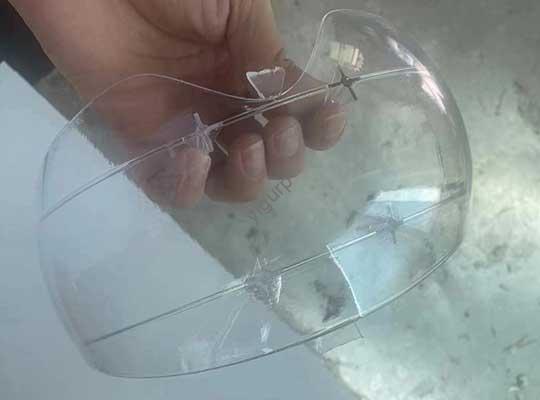
Imagine prototyping a medical fluidic device where you need to visualize flow patterns, an automotive headlight lens to test light diffusion, or a premium cosmetic package that demands crystal-clear aesthetics. For decades, achieving true transparency in prototypes meant expensive CNC machining of acrylic or glass. Today, transparent resin 3D printing has revolutionized this space, offering unprecedented design freedom and rapid iteration. But the path from a milky, layer-lined print to optical-grade clarity is paved with specific challenges. It’s a process that demands precision, patience, and specialized knowledge. This comprehensive guide cuts through the common misconceptions to show you not only that you can use transparent resin for prototypes, but exactly how to master it for functional, reliable, and visually stunning results.
Why is Transparent Resin a Game-Changer for Functional Prototyping?
Beyond mere aesthetics, transparent resin enables a category of prototyping that was previously impractical or impossible.
Beyond “See-Through”: Enabling Visual Verification and User Experience Testing
The value of a transparent prototype lies in what it allows you to see and validate.
- Internal Mechanism Verification: Prototype gearboxes, pump housings, or multi-material assemblies to visually confirm part interaction, alignment, and potential interference during operation. A client developing a micro-dosing pump used transparent resin to visualize air bubble formation and fluid meniscus movement, leading to critical design tweaks that eliminated priming issues.
- Light and Optical Performance: Directly test light guides, diffusers, lenses, and LED housings. You can evaluate brightness distribution, hotspot formation, and color mixing in-situ, rather than relying on simulation alone. According to a 2023 SME report, using transparent prototypes for optical testing can reduce development cycles for lighting products by up to 40%.
- Fluidic and Medical Device Development: Create clear microfluidic channels, catheter tips, or surgical tool housings to observe fluid dynamics, particle flow, or tissue interaction. This is crucial for FDA submission packages where demonstrating device function is required.
What Are the Real Challenges in Achieving True Clarity?
Understanding the obstacles is the first step to overcoming them. The main enemies of clarity are scattering and absorption.
The Science Behind the Cloud: Layer Lines, Scattering, and Refractive Index
A raw transparent resin print is hazy because light doesn’t pass through cleanly; it gets scattered.
- Surface Roughness (Layer Lines): Each micro-layer creates a “stair-step” texture. This texture acts like millions of tiny lenses and prisms, diffracting and scattering light in random directions, creating a frosted appearance.
- Internal Inhomogeneity: Incomplete curing, micro-bubbles, or density variations within the cured resin act as internal scattering centers. This is often worse with improper exposure settings.
- Refractive Index (RI) Mismatch: The goal is for light to pass from air into the resin and out again with minimal bending. The RI of most clear resins is around 1.50, similar to polycarbonate. Surface imperfections cause light to bend at unpredictable angles, reducing direct transmission.
How Do You Select the Right Transparent Resin?
Not all “clear” resins are equal. Your choice must align with your functional requirements and printer capabilities.
Key Resin Properties for Optical Applications
| Property | What It Means | Why It Matters | Target Value for Clarity |
|---|---|---|---|
| Light Transmission (%) | Percentage of visible light that passes through. | Defines the ultimate potential clarity. | >90% (post-processed) |
| Haze (%) | Percentage of light scattered, causing cloudiness. | Lower is better. Raw prints have very high haze. | <2% (post-processed) |
| Viscosity (cP) | Resistance to flow. | Lower viscosity reduces trapped bubbles and improves layer smoothness. | 200-350 cP |
| Yellowing Index | Tendency to discolor under UV exposure. | Critical for parts exposed to light. Low yellowing ensures longevity. | As low as possible (per ASTM D1925) |
| Shrinkage (%) | Volume reduction during curing. | High shrinkage induces internal stresses and micro-cracks that scatter light. | <0.5% |
Pro Tip: For applications needing high impact resistance alongside clarity (e.g., protective covers), look for “Clear Tough” or “ABS-Like Clear” resins. They sacrifice a small amount of ultimate transmission for much higher durability.
What is the Non-Negotiable Post-Processing Pipeline for Clarity?
This is where the magic happens. Moving from a hazy print to a clear part is a multi-step, systematic polishing process.
The Professional Clarity Workflow: A Step-by-Step Guide
- Initial Cleaning & Support Removal: Wash thoroughly in two baths of 99%+ Isopropyl Alcohol (IPA). Use an ultrasonic cleaner for complex internal channels. Remove supports carefully to minimize surface damage.
- Wet Sanding (The Foundation): This is the most critical step. You must progress through increasingly fine grits under a stream of water (to carry away debris and prevent clogging).
- Start at 400 grit to remove major layer lines.
- Progress sequentially: 600 → 800 → 1000 → 1500 → 2000 grit.
- Key Insight: At each stage, sand until the surface has a uniform matte finish with scratches only from that grit. You must completely erase the scratches from the previous, coarser grit before moving on.
- Polishing with Compounds: After 2000-grit sanding, switch to polishing compounds.
- First Stage Polish: Use a diamond paste (3-5 micron) or a cerium oxide slurry with a felt polishing wheel.
- Final Polish: Use a fine finishing polish (1 micron or less).
- Clear Coating (The Secret Weapon): After polishing, apply a high-clarity, UV-resistant clear coat (e.g., a two-part polyurethane or acrylic spray). This does two things:
- Fills any remaining sub-micron scratches.
- Provides a protective layer with a consistent surface RI, effectively “hiding” the final micro-scratches beneath a perfect optical surface.
Case Study: To achieve near-optical clarity for a camera lens prototype, we followed this exact process. The final result achieved 92% light transmission and <1% haze, as measured by a hazemeter, making it suitable for initial optical path testing.
How Do You Optimize the Printing Process for Clarity?
Perfect post-processing can’t fix a fundamentally bad print. Start with excellence.
Critical Print Parameters and Orientation
- Orientation is Everything: Position the part so that critical optical surfaces are built at an angle (30-45 degrees) or vertically. This minimizes the “stair-step” effect on those surfaces. Never orient a critical lens surface flat on the build plate.
- Layer Height: Use the smallest layer height your printer can reliably manage (often 25 or 10 microns). This reduces the height of each “step,” making them easier to sand out.
- Exposure Calibration: Over-exposure is your enemy. It causes light to “bleed” sideways, curing extra resin and creating a rough, pixelated edge between layers (the “bloom” effect). Use calibration tests to find the minimum exposure for full curing.
- Hollowing & Drain Holes: For thick parts, hollow them to save resin and reduce internal cure stress. Include multiple large drainage holes (>3mm) to ensure all uncured resin is washed out. Trapped resin will cure opaque and cloud the interior.
How Does 3D Printed Transparency Compare to Traditional Methods?
Understanding the trade-offs helps set the right expectations.
| Aspect | 3D Printed Transparent Resin | CNC-Machined Acrylic/Polycarbonate | Injection Molded Copolyester |
|---|---|---|---|
| Lead Time & Cost (Low Volume) | Fast & Low. Ideal for 1-10 prototypes. | Moderate. Requires programming and machining. | Very High. Requires expensive mold. |
| Design Complexity | Exceptional. Freeform, internal channels, undercuts. | Limited. Restricted to toolpath access. | High, but limited by mold design. |
| Achievable Clarity | Very Good to Excellent (with skilled post-process). | Excellent. Near-optical grade. | Excellent. Production-grade. |
| Material Properties | Good, but can be brittle. Varied grades available. | Excellent and consistent. Wide range of engineering grades. | Excellent and consistent. |
| Best For | Complex prototypes, optical testing, iterative design. | Simple clear parts, functional testing of final material. | High-volume end-use production parts. |
Conclusion
Yes, 3D printing prototypes with transparent resin is not only possible but profoundly powerful. It transforms additive manufacturing from a tool for opaque forms into a medium for functional optical prototyping and intricate visual validation. Success demands a commitment to meticulous process control—from resin selection and precision printing to a rigorous, multi-stage polishing regimen. By embracing this disciplined approach, you gain the ability to rapidly prototype and test designs that interact with light and fluid in ways that were once the exclusive domain of costly traditional manufacturing. It allows you to fail fast, learn quickly, and innovate with confidence in the realm of the clear.
FAQ
Do 3D printed prototypes using transparent resin require post-processing?
Absolutely, and extensive post-processing is the key to clarity. A part straight from the printer will be translucent at best. Achieving true transparency requires a sequential process of wet sanding, polishing, and often clear coating to eliminate the microscopic layer lines that scatter light.
Can transparent resin prototypes be used for functional testing?
Yes, within defined parameters. They are excellent for form, fit, fluid flow, and light transmission testing. For example, they can validate the fit of a clear housing or the function of a fluidic channel. However, their long-term chemical resistance, UV stability, and impact strength may not match production-grade thermoplastics like polycarbonate, so environmental testing should be material-specific.
How do I prevent yellowing in transparent resin prototypes?
Choose a resin with a low yellowing index and high UV stability. After printing and polishing, apply a UV-protective clear coat. Store prototypes away from direct sunlight when not in use. For critical applications, consider resins advertised as “non-yellowing” or “UV stable.”
Why does my transparent print have bubbles or cloudiness inside?
Internal cloudiness is usually caused by trapped uncured resin or overcuring. Ensure adequate drainage holes for hollow parts and follow a two-stage washing process. Calibrate your exposure time carefully—overexposure can cause light scattering within the resin itself, creating a milky core.
Is it possible to achieve different levels of transparency (e.g., frosted vs. crystal clear) with the same resin?
Yes, through controlled post-processing. For a frosted, diffused look, stop after sanding to around 400-600 grit. For high clarity, continue through the full sanding progression to 2000+ grit and then polish. The same base resin can yield different finishes based on the surface texture you create.
Discuss Your Projects with Yigu Rapid Prototyping
Achieving laboratory-grade clarity with 3D printed resin is an art form that requires specialized equipment, controlled environments, and practiced skill. For prototypes where optical performance cannot be compromised, partnering with experts ensures your vision is realized with precision.
At Yigu Rapid Prototyping, we have mastered the science of transparent 3D printing. Our dedicated process delivers predictable, high-quality results:
- Optical-Grade Material Selection & Testing: We use a curated selection of high-transmission, low-shrinkage resins and pre-test each for optimal exposure settings on our industrial SLA and DLP systems.
- Controlled Production Environment: Our printing and post-processing areas are climate-controlled (managing temperature and humidity) and clean-room adjacent to prevent dust contamination, a critical factor for clarity.
- Professional Post-Processing Facility: We employ a standardized, multi-stage polishing protocol performed by experienced technicians, equipped with ultrasonic cleaners, progressive wet-sanding stations, and buffing/polishing tools capable of achieving true optical surfaces.
Need a crystal-clear prototype for critical validation? Submit your 3D model for a free feasibility and design optimization review. Let Yigu’s expertise bring unparalleled transparency to your development process.